

330
220 M Yr
135 M Yr
J.e. Montgomery and lA. Macdonald
Elopomorpha
Salmoniformes 515
Paracanthopterygii
Atherinomorpha
Percomorpha
N otocaDthiformes 2/2§
Angui1liformes 9111
Gadiformes 6/8
Ophidiiformes 515
Lophiiformes 8/9
Gobiesociformes 011
CyprinodoDtiformes 012
Beryciformes 7/9
Zeiformes 4/4
Syngnathiformes 114
Scorpeaniformes 3/5
Perciformes 8/46
Pleuronectiformes 1/3
Tetradontiformes 4/5
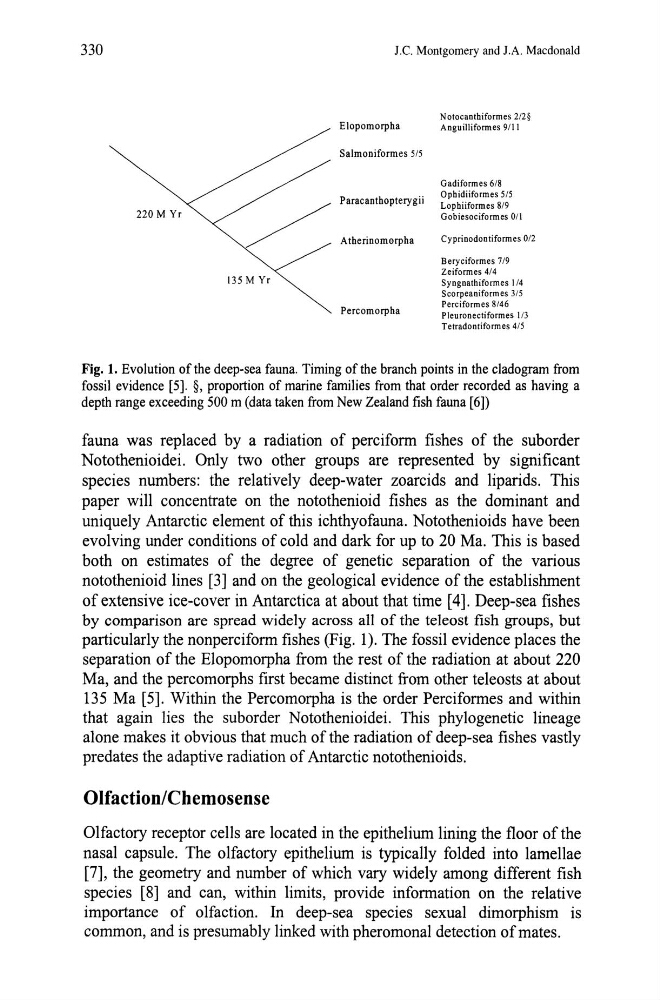
Fig. 1. Evolution of the deep-sea fauna. Timing of the branch points in the cIadogram from
fossil evidence [5]. §, proportion of marine families from that order recorded as having a
depth range exceeding 500 m (data taken from New Zealand fish fauna [6])
fauna was replaced by a radiation of perciform fishes of the suborder
Notothenioidei. Only two other groups are represented by significant
species numbers: the relatively deep-water zoarcids and liparids. This
paper will concentrate on the notothenioid fishes as the dominant and
uniquely Antarctic element of this ichthyofauna. Notothenioids have been
evolving under conditions of cold and dark for up to 20 Ma. This is based
both on estimates of the degree of genetic separation of the various
notothenioid lines [3] and on the geological evidence of the establishment
of extensive ice-cover in Antarctica at about that time [4]. Deep-sea fishes
by comparison are spread widely across all of the teleost fish groups, but
particularly the nonperciform fishes (Fig. 1). The fossil evidence places the
separation of the Elopomorpha from the rest of the radiation at about 220
Ma, and the percomorphs first became distinct from other teleosts at about
135 Ma [5]. Within the Percomorpha is the order Perciformes and within
that again lies the suborder Notothenioidei. This phylogenetic lineage
alone makes it obvious that much of the radiation of deep-sea fishes vastly
predates the adaptive radiation of Antarctic notothenioids.
Olfaction/Chemosense
Olfactory receptor cells are located in the epithelium lining the floor of the
nasal capsule. The olfactory epithelium is typically folded into lamellae
[7], the geometry and number of which vary widely among different fish
species [8] and can, within limits, provide information on the relative
importance of olfaction. In deep-sea species sexual dimorphism IS
common, and is presumably linked with pheromonal detection of mates.
220 M Yr
135 M Yr
J.e. Montgomery and lA. Macdonald
Elopomorpha
Salmoniformes 515
Paracanthopterygii
Atherinomorpha
Percomorpha
N otocaDthiformes 2/2§
Angui1liformes 9111
Gadiformes 6/8
Ophidiiformes 515
Lophiiformes 8/9
Gobiesociformes 011
CyprinodoDtiformes 012
Beryciformes 7/9
Zeiformes 4/4
Syngnathiformes 114
Scorpeaniformes 3/5
Perciformes 8/46
Pleuronectiformes 1/3
Tetradontiformes 4/5
Fig. 1. Evolution of the deep-sea fauna. Timing of the branch points in the cIadogram from
fossil evidence [5]. §, proportion of marine families from that order recorded as having a
depth range exceeding 500 m (data taken from New Zealand fish fauna [6])
fauna was replaced by a radiation of perciform fishes of the suborder
Notothenioidei. Only two other groups are represented by significant
species numbers: the relatively deep-water zoarcids and liparids. This
paper will concentrate on the notothenioid fishes as the dominant and
uniquely Antarctic element of this ichthyofauna. Notothenioids have been
evolving under conditions of cold and dark for up to 20 Ma. This is based
both on estimates of the degree of genetic separation of the various
notothenioid lines [3] and on the geological evidence of the establishment
of extensive ice-cover in Antarctica at about that time [4]. Deep-sea fishes
by comparison are spread widely across all of the teleost fish groups, but
particularly the nonperciform fishes (Fig. 1). The fossil evidence places the
separation of the Elopomorpha from the rest of the radiation at about 220
Ma, and the percomorphs first became distinct from other teleosts at about
135 Ma [5]. Within the Percomorpha is the order Perciformes and within
that again lies the suborder Notothenioidei. This phylogenetic lineage
alone makes it obvious that much of the radiation of deep-sea fishes vastly
predates the adaptive radiation of Antarctic notothenioids.
Olfaction/Chemosense
Olfactory receptor cells are located in the epithelium lining the floor of the
nasal capsule. The olfactory epithelium is typically folded into lamellae
[7], the geometry and number of which vary widely among different fish
species [8] and can, within limits, provide information on the relative
importance of olfaction. In deep-sea species sexual dimorphism IS
common, and is presumably linked with pheromonal detection of mates.