

Four Years in Notothenioid Systematics: A Molecular Perspective
265
considered unsatisfactory [1] due to the lack of clearly defined
synapomorphies.
- N ototheniinae
_ ---r--Tremat ominae
i
- - - Pleuragramminae
--- Eleginopinae
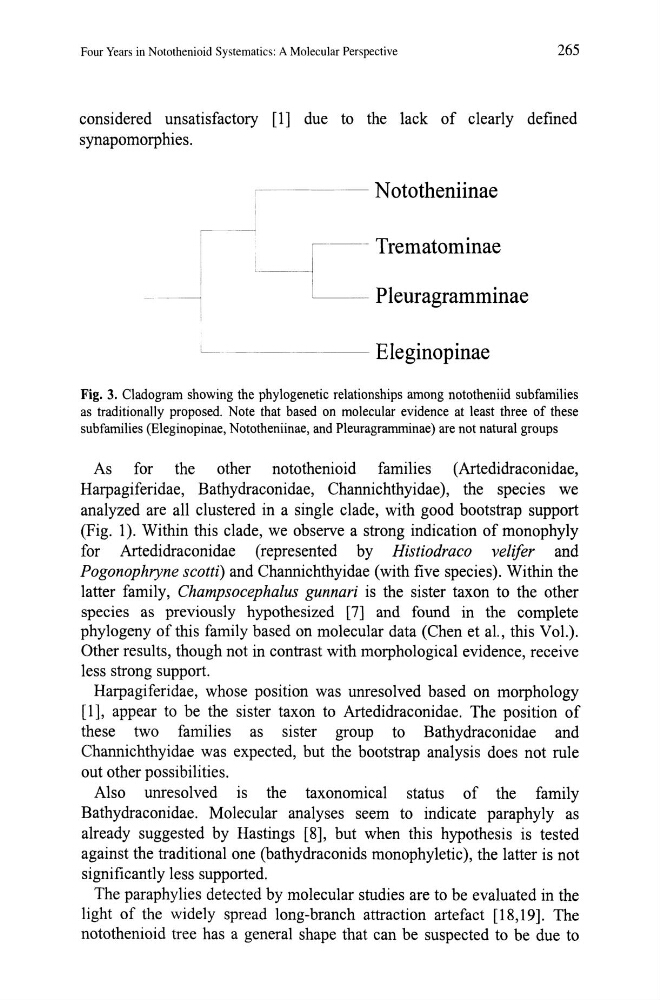
Fig. 3. Cladogram showing the phylogenetic relationships among nototheniid subfamilies
as traditionally proposed. Note that based on molecular evidence at least three of these
subfamilies (Eleginopinae, Nototheniinae, and Pleuragramminae) are not natural groups
As for the other notothenioid families (Artedidraconidae,
Harpagiferidae, Bathydraconidae, Channichthyidae), the species we
analyzed are all clustered in a single clade, with good bootstrap support
(Fig. 1). Within this clade, we observe a strong indication of monophyly
for Artedidraconidae (represented by Histiodraco velifer and
Pogonophryne scotti) and Channichthyidae (with five species). Within the
latter family, Champsocephalus gunnari is the sister taxon to the other
species as previously hypothesized [7] and found in the complete
phylogeny of this family based on molecular data (Chen et at, this Vol.).
Other results, though not in contrast with morphological evidence, receive
less strong support.
Harpagiferidae, whose position was unresolved based on morphology
[1], appear to be the sister taxon to Artedidraconidae. The position of
these two families as sister group to Bathydraconidae and
Channichthyidae was expected, but the bootstrap analysis does not rule
out other possibilities.
Also unresolved is the taxonomical status of the family
Bathydraconidae. Molecular analyses seem to indicate paraphyly as
already suggested by Hastings [8], but when this hypothesis is tested
against the traditional one (bathydraconids monophyletic), the latter is not
significantly less supported.
The paraphylies detected by molecular studies are to be evaluated in the
light of the widely spread long-branch attraction artefact [18,19]. The
notothenioid tree has a general shape that can be suspected to be due to
265
considered unsatisfactory [1] due to the lack of clearly defined
synapomorphies.
- N ototheniinae
_ ---r--Tremat ominae
i
- - - Pleuragramminae
--- Eleginopinae
Fig. 3. Cladogram showing the phylogenetic relationships among nototheniid subfamilies
as traditionally proposed. Note that based on molecular evidence at least three of these
subfamilies (Eleginopinae, Nototheniinae, and Pleuragramminae) are not natural groups
As for the other notothenioid families (Artedidraconidae,
Harpagiferidae, Bathydraconidae, Channichthyidae), the species we
analyzed are all clustered in a single clade, with good bootstrap support
(Fig. 1). Within this clade, we observe a strong indication of monophyly
for Artedidraconidae (represented by Histiodraco velifer and
Pogonophryne scotti) and Channichthyidae (with five species). Within the
latter family, Champsocephalus gunnari is the sister taxon to the other
species as previously hypothesized [7] and found in the complete
phylogeny of this family based on molecular data (Chen et at, this Vol.).
Other results, though not in contrast with morphological evidence, receive
less strong support.
Harpagiferidae, whose position was unresolved based on morphology
[1], appear to be the sister taxon to Artedidraconidae. The position of
these two families as sister group to Bathydraconidae and
Channichthyidae was expected, but the bootstrap analysis does not rule
out other possibilities.
Also unresolved is the taxonomical status of the family
Bathydraconidae. Molecular analyses seem to indicate paraphyly as
already suggested by Hastings [8], but when this hypothesis is tested
against the traditional one (bathydraconids monophyletic), the latter is not
significantly less supported.
The paraphylies detected by molecular studies are to be evaluated in the
light of the widely spread long-branch attraction artefact [18,19]. The
notothenioid tree has a general shape that can be suspected to be due to