

70
10
9
(/)
Z
8
0
~
7
~
n:: 6
W
(/)
III
5
0
u.
. .
0
n:: 3
W
III
:!:
2
::J
Z
0
urller
Herm.
Outero.sed
Urger
Herm.
Selled
Smaller
Herm.
Outerolsed
MATED INDIVIDUALS
Smaller
Herm.
Selled
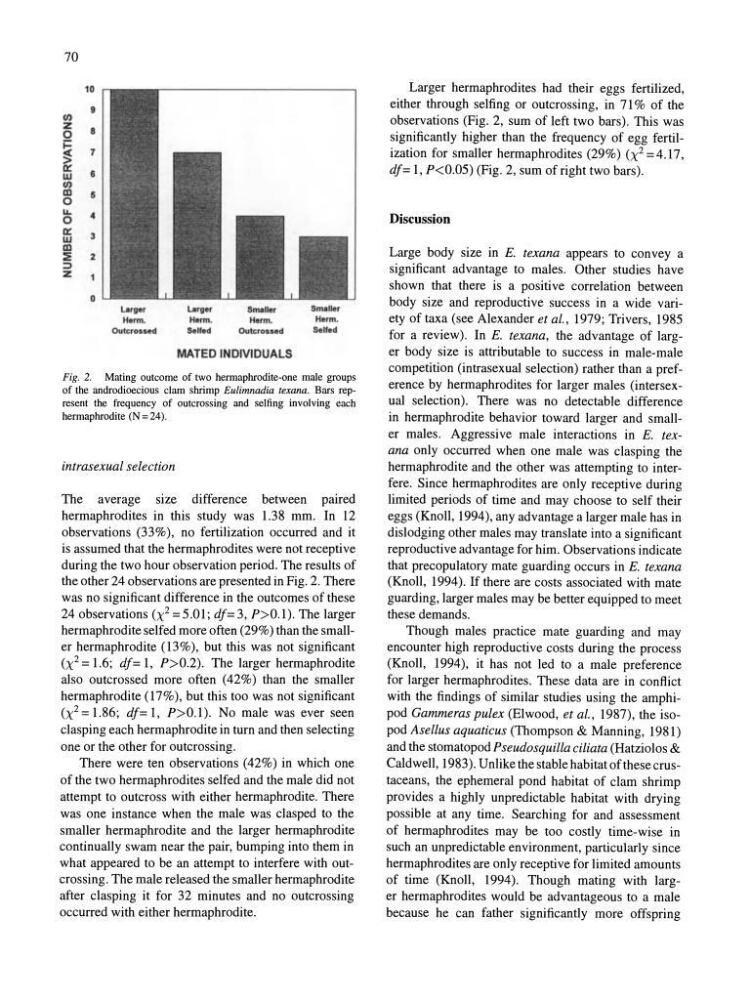
Fig. 2. Mating outcome of two hermaphrodite-one male groups
of the androdioecious clam shrimp Eulimnadia texana. Bars represent the frequency of outcrossing and selfing involving each
hermaphrodite (N = 24).
intrasexual selection
The average size difference between paired
hermaphrodites in this study was 1.38 mm. In 12
observations (33%), no fertilization occurred and it
is assumed that the hermaphrodites were not receptive
during the two hour observation period. The results of
the other 24 observations are presented in Fig. 2. There
was no significant difference in the outcomes of these
24 observations (X 2 =5.01; df=3, P>O.I). The larger
hermaphrodite selfed more often (29%) than the smaller hermaphrodite (13%), but this was not significant
(X 2 = 1.6; df= 1, P>0.2) . The larger hermaphrodite
also outcrossed more often (42%) than the smaller
hermaphrodite (17%), but this too was not significant
(X 2 = 1.86; df= 1, P>O.I). No male was ever seen
clasping each hermaphrodite in turn and then selecting
one or the other for outcrossing.
There were ten observations (42%) in which one
of the two hermaphrodites selfed and the male did not
attempt to outcross with either hermaphrodite. There
was one instance when the male was clasped to the
smaller hermaphrodite and the larger hermaphrodite
continually swam near the pair, bumping into them in
what appeared to be an attempt to interfere with outcrossing. The male released the smaller hermaphrodite
after clasping it for 32 minutes and no outcrossing
occurred with either hermaphrodite.
Larger hermaphrodites had their eggs fertilized,
either through selfing or outcrossing, in 71 % of the
observations (Fig. 2, sum of left two bars). This was
significantly higher than the frequency of egg fertilization for smaller hermaphrodites (29%) (X 2 = 4.17,
df= 1, P<0.05) (Fig. 2, sum of right two bars).
Discussion
Large body size in E. texana appears to convey a
significant advantage to males. Other studies have
shown that there is a positive correlation between
body size and reproductive success in a wide variety of taxa (see Alexander et al., 1979; Trivers, 1985
for a review). In E. texana, the advantage of larger body size is attributable to success in male-male
competition (intrasexual selection) rather than a preference by hermaphrodites for larger males (intersexual selection). There was no detectable difference
in hermaphrodite behavior toward larger and smaller males. Aggressive male interactions in E. texana only occurred when one male was clasping the
hermaphrodite and the other was attempting to interfere. Since hermaphrodites are only receptive during
limited periods of time and may choose to self their
eggs (Knoll, 1994), any advantage a larger male has in
dislodging other males may translate into a significant
reproductive advantage for him. Observations indicate
that precopulatory mate guarding occurs in E. texana
(Knoll, 1994). If there are costs associated with mate
guarding, larger males may be better equipped to meet
these demands.
Though males practice mate guarding and may
encounter high reproductive costs during the process
(Knoll, 1994), it has not led to a male preference
for larger hermaphrodites. These data are in conflict
with the findings of similar studies using the amp hipod Gammeras pulex (Elwood, et at., 1987), the isopod Asellus aquatic us (Thompson & Manning, 1981)
and the stomatopod Pseudosquilla ciliata (Hatziolos &
Caldwell, 1983). Unlike the stable habitat of these crustaceans, the ephemeral pond habitat of clam shrimp
provides a highly unpredictable habitat with drying
possible at any time. Searching for and assessment
of hermaphrodites may be too costly time-wise in
such an unpredictable environment, particularly since
hermaphrodites are only receptive for limited amounts
of time (Knoll, 1994). Though mating with larger hermaphrodites would be advantageous to a male
because he can father significantly more offspring
10
9
(/)
Z
8
0
~
7
~
n:: 6
W
(/)
III
5
0
u.
. .
0
n:: 3
W
III
:!:
2
::J
Z
0
urller
Herm.
Outero.sed
Urger
Herm.
Selled
Smaller
Herm.
Outerolsed
MATED INDIVIDUALS
Smaller
Herm.
Selled
Fig. 2. Mating outcome of two hermaphrodite-one male groups
of the androdioecious clam shrimp Eulimnadia texana. Bars represent the frequency of outcrossing and selfing involving each
hermaphrodite (N = 24).
intrasexual selection
The average size difference between paired
hermaphrodites in this study was 1.38 mm. In 12
observations (33%), no fertilization occurred and it
is assumed that the hermaphrodites were not receptive
during the two hour observation period. The results of
the other 24 observations are presented in Fig. 2. There
was no significant difference in the outcomes of these
24 observations (X 2 =5.01; df=3, P>O.I). The larger
hermaphrodite selfed more often (29%) than the smaller hermaphrodite (13%), but this was not significant
(X 2 = 1.6; df= 1, P>0.2) . The larger hermaphrodite
also outcrossed more often (42%) than the smaller
hermaphrodite (17%), but this too was not significant
(X 2 = 1.86; df= 1, P>O.I). No male was ever seen
clasping each hermaphrodite in turn and then selecting
one or the other for outcrossing.
There were ten observations (42%) in which one
of the two hermaphrodites selfed and the male did not
attempt to outcross with either hermaphrodite. There
was one instance when the male was clasped to the
smaller hermaphrodite and the larger hermaphrodite
continually swam near the pair, bumping into them in
what appeared to be an attempt to interfere with outcrossing. The male released the smaller hermaphrodite
after clasping it for 32 minutes and no outcrossing
occurred with either hermaphrodite.
Larger hermaphrodites had their eggs fertilized,
either through selfing or outcrossing, in 71 % of the
observations (Fig. 2, sum of left two bars). This was
significantly higher than the frequency of egg fertilization for smaller hermaphrodites (29%) (X 2 = 4.17,
df= 1, P<0.05) (Fig. 2, sum of right two bars).
Discussion
Large body size in E. texana appears to convey a
significant advantage to males. Other studies have
shown that there is a positive correlation between
body size and reproductive success in a wide variety of taxa (see Alexander et al., 1979; Trivers, 1985
for a review). In E. texana, the advantage of larger body size is attributable to success in male-male
competition (intrasexual selection) rather than a preference by hermaphrodites for larger males (intersexual selection). There was no detectable difference
in hermaphrodite behavior toward larger and smaller males. Aggressive male interactions in E. texana only occurred when one male was clasping the
hermaphrodite and the other was attempting to interfere. Since hermaphrodites are only receptive during
limited periods of time and may choose to self their
eggs (Knoll, 1994), any advantage a larger male has in
dislodging other males may translate into a significant
reproductive advantage for him. Observations indicate
that precopulatory mate guarding occurs in E. texana
(Knoll, 1994). If there are costs associated with mate
guarding, larger males may be better equipped to meet
these demands.
Though males practice mate guarding and may
encounter high reproductive costs during the process
(Knoll, 1994), it has not led to a male preference
for larger hermaphrodites. These data are in conflict
with the findings of similar studies using the amp hipod Gammeras pulex (Elwood, et at., 1987), the isopod Asellus aquatic us (Thompson & Manning, 1981)
and the stomatopod Pseudosquilla ciliata (Hatziolos &
Caldwell, 1983). Unlike the stable habitat of these crustaceans, the ephemeral pond habitat of clam shrimp
provides a highly unpredictable habitat with drying
possible at any time. Searching for and assessment
of hermaphrodites may be too costly time-wise in
such an unpredictable environment, particularly since
hermaphrodites are only receptive for limited amounts
of time (Knoll, 1994). Though mating with larger hermaphrodites would be advantageous to a male
because he can father significantly more offspring