

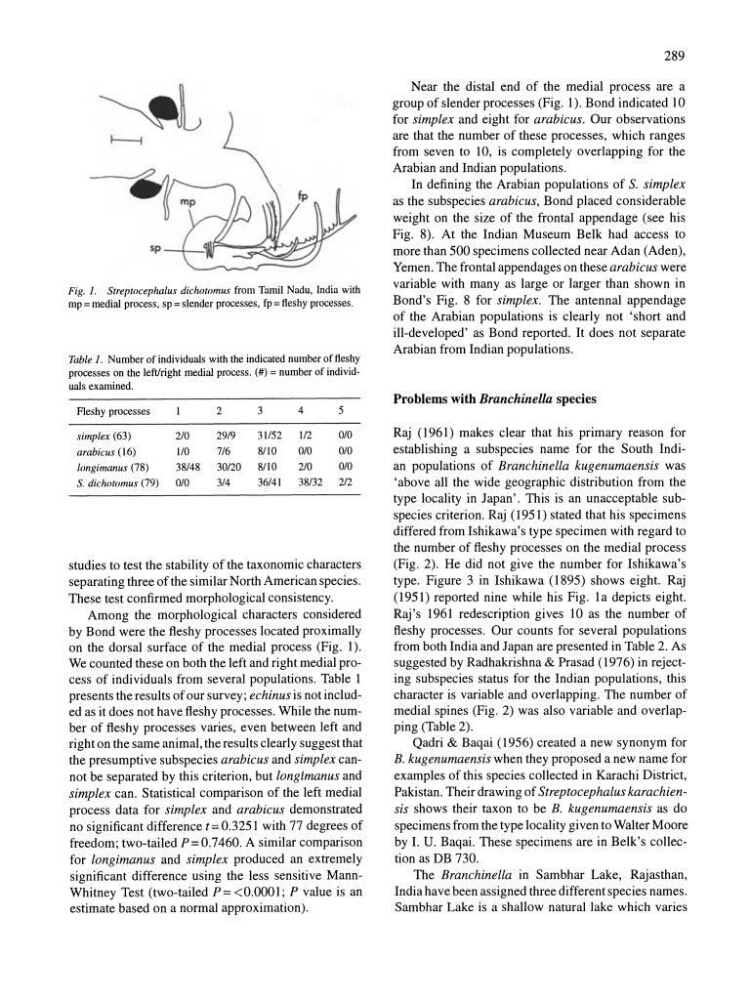
Fig. 1. Streptocephalus dichotomus from Tamil Nadu, India with
mp = medial process, sp = slender processes, fp = fleshy processes.
Table 1. Number of individuals with the indicated number of fleshy
processes on the left/right medial process. (#) = number of individuals examined.
Fleshy processes
2
3
4
5
simplex (63)
2/0
29/9
31152
1/2
0/0
arabicus (16)
1/0
7/6
8/10
0/0
0/0
longimanus (78)
38/48
30/20
8/10
2/0
0/0
S. dichotomus (79)
0/0
3/4
36/41
38/32
212
studies to test the stability of the taxonomic characters
separating three of the similar North American species.
These test confirmed morphological consistency.
Among the morphological characters considered
by Bond were the fleshy processes located proximally
on the dorsal surface of the medial process (Fig. 1).
We counted these on both the left and right medial process of individuals from several populations. Table 1
presents the results of our survey; echinus is not included as it does not have fleshy processes. While the number of fleshy processes varies, even between left and
right on the same animal, the results clearly suggest that
the presumptive subspecies arabicus and simplex cannot be separated by this criterion, but longtmanus and
simplex can. Statistical comparison of the left medial
process data for simplex and arabicus demonstrated
no significant difference t = 0.3251 with 77 degrees of
freedom; two-tailed p= 0.7460. A similar comparison
for longimanus and simplex produced an extremely
significant difference using the less sensitive MannWhitney Test (two-tailed P= <0.0001; P value is an
estimate based on a normal approximation).
289
Near the distal end of the medial process are a
group of slender processes (Fig. 1). Bond indicated 10
for simplex and eight for arabicus. Our observations
are that the number of these processes, which ranges
from seven to 10, is completely overlapping for the
Arabian and Indian popUlations.
In defining the Arabian populations of S. simplex
as the subspecies arabicus, Bond placed considerable
weight on the size of the frontal appendage (see his
Fig. 8). At the Indian Museum Belk had access to
more than 500 specimens collected near Adan (Aden),
Yemen. The frontal appendages on these arabicus were
variable with many as large or larger than shown in
Bond's Fig. 8 for simplex. The antennal appendage
of the Arabian popUlations is clearly not 'short and
ill-developed' as Bond reported. It does not separate
Arabian from Indian populations.
Problems with Branchinella species
Raj (1961) makes clear that his primary reason for
establishing a subspecies name for the South Indian populations of Branchinella kugenumaensis was
'above all the wide geographic distribution from the
type locality in Japan'. This is an unacceptable subspecies criterion. Raj (1951) stated that his specimens
differed from Ishikawa's type specimen with regard to
the number of fleshy processes on the medial process
(Fig. 2). He did not give the number for Ishikawa's
type. Figure 3 in Ishikawa (1895) shows eight. Raj
(1951) reported nine while his Fig. 1 a depicts eight.
Raj's 1961 redescription gives 10 as the number of
fleshy processes. Our counts for several populations
from both India and Japan are presented in Table 2. As
suggested by Radhakrishna & Prasad (1976) in rejecting subspecies status for the Indian populations, this
character is variable and overlapping. The number of
medial spines (Fig. 2) was also variable and overlapping (Table 2).
Qadri & Baqai (1956) created a new synonym for
B. kugenumaensis when they proposed a new name for
examples of this species collected in Karachi District,
Pakistan. Their drawing of Streptocephalus karachiensis shows their taxon to be B. kugenumaensis as do
specimens from the type locality given to Walter Moore
by I. U. Baqai. These specimens are in BeIk's collection as DB 730.
The Branchinella in Sambhar Lake, Rajasthan,
India have been assigned three different species names.
Sambhar Lake is a shallow natural lake which varies
mp = medial process, sp = slender processes, fp = fleshy processes.
Table 1. Number of individuals with the indicated number of fleshy
processes on the left/right medial process. (#) = number of individuals examined.
Fleshy processes
2
3
4
5
simplex (63)
2/0
29/9
31152
1/2
0/0
arabicus (16)
1/0
7/6
8/10
0/0
0/0
longimanus (78)
38/48
30/20
8/10
2/0
0/0
S. dichotomus (79)
0/0
3/4
36/41
38/32
212
studies to test the stability of the taxonomic characters
separating three of the similar North American species.
These test confirmed morphological consistency.
Among the morphological characters considered
by Bond were the fleshy processes located proximally
on the dorsal surface of the medial process (Fig. 1).
We counted these on both the left and right medial process of individuals from several populations. Table 1
presents the results of our survey; echinus is not included as it does not have fleshy processes. While the number of fleshy processes varies, even between left and
right on the same animal, the results clearly suggest that
the presumptive subspecies arabicus and simplex cannot be separated by this criterion, but longtmanus and
simplex can. Statistical comparison of the left medial
process data for simplex and arabicus demonstrated
no significant difference t = 0.3251 with 77 degrees of
freedom; two-tailed p= 0.7460. A similar comparison
for longimanus and simplex produced an extremely
significant difference using the less sensitive MannWhitney Test (two-tailed P= <0.0001; P value is an
estimate based on a normal approximation).
289
Near the distal end of the medial process are a
group of slender processes (Fig. 1). Bond indicated 10
for simplex and eight for arabicus. Our observations
are that the number of these processes, which ranges
from seven to 10, is completely overlapping for the
Arabian and Indian popUlations.
In defining the Arabian populations of S. simplex
as the subspecies arabicus, Bond placed considerable
weight on the size of the frontal appendage (see his
Fig. 8). At the Indian Museum Belk had access to
more than 500 specimens collected near Adan (Aden),
Yemen. The frontal appendages on these arabicus were
variable with many as large or larger than shown in
Bond's Fig. 8 for simplex. The antennal appendage
of the Arabian popUlations is clearly not 'short and
ill-developed' as Bond reported. It does not separate
Arabian from Indian populations.
Problems with Branchinella species
Raj (1961) makes clear that his primary reason for
establishing a subspecies name for the South Indian populations of Branchinella kugenumaensis was
'above all the wide geographic distribution from the
type locality in Japan'. This is an unacceptable subspecies criterion. Raj (1951) stated that his specimens
differed from Ishikawa's type specimen with regard to
the number of fleshy processes on the medial process
(Fig. 2). He did not give the number for Ishikawa's
type. Figure 3 in Ishikawa (1895) shows eight. Raj
(1951) reported nine while his Fig. 1 a depicts eight.
Raj's 1961 redescription gives 10 as the number of
fleshy processes. Our counts for several populations
from both India and Japan are presented in Table 2. As
suggested by Radhakrishna & Prasad (1976) in rejecting subspecies status for the Indian populations, this
character is variable and overlapping. The number of
medial spines (Fig. 2) was also variable and overlapping (Table 2).
Qadri & Baqai (1956) created a new synonym for
B. kugenumaensis when they proposed a new name for
examples of this species collected in Karachi District,
Pakistan. Their drawing of Streptocephalus karachiensis shows their taxon to be B. kugenumaensis as do
specimens from the type locality given to Walter Moore
by I. U. Baqai. These specimens are in BeIk's collection as DB 730.
The Branchinella in Sambhar Lake, Rajasthan,
India have been assigned three different species names.
Sambhar Lake is a shallow natural lake which varies