

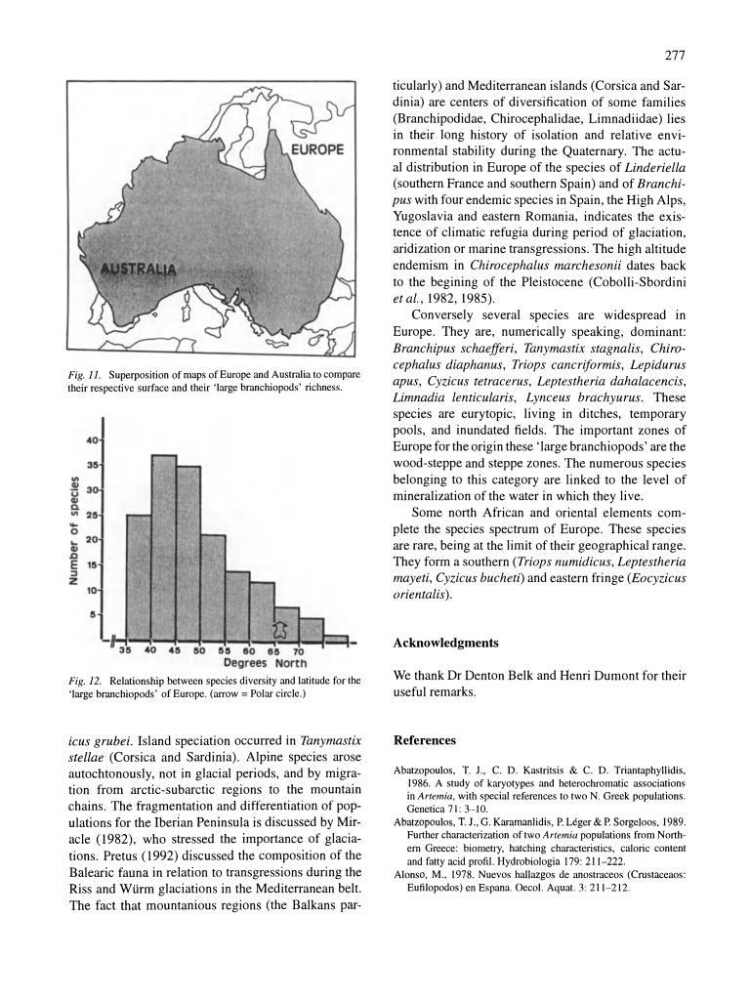
Fig. 11. Superposition of maps of Europe and Australia to compare
their respective surface and their 'large branchiopods' richness.
~j
311
III
QI 3
U
QI
C.
III
211
~
0
~
20
QI
.c
E 111
::::I
Z 10
II
1111 80 811
70
Degrees North
Fig. 12. Relationship between species diversity and latitude for the
'large branchiopods' of Europe. (arrow = Polar circle.)
icus grubei. Island speciation occurred in Tanymastix
stellae (Corsica and Sardinia). Alpine species arose
autochtonously, not in glacial periods, and by migration from arctic-subarctic regions to the mountain
chains. The fragmentation and differentiation of populations for the Iberian Peninsula is discussed by Miracle (1982), who stressed the importance of glaciations. Pretus (1992) discussed the composition of the
Balearic fauna in relation to transgressions during the
Riss and WOrm glaciations in the Mediterranean belt.
The fact that mountanious regions (the Balkans par277
ticulariy) and Mediterranean islands (Corsica and Sardinia) are centers of diversification of some families
(Branchipodidae, Chirocephalidae, Limnadiidae) lies
in their long history of isolation and relative environmental stability during the Quaternary. The actual distribution in Europe of the species of Linderiella
(southern France and southern Spain) and of Branchipus with four endemic species in Spain, the High Alps,
Yugoslavia and eastern Romania, indicates the existence of climatic refugia during period of glaciation,
aridization or marine transgressions. The high altitude
endemism in Chirocephalus marchesonii dates back
to the begining of the Pleistocene (Cobolli-Sbordini
et al. , 1982, 1985).
Conversely several species are widespread in
Europe. They are, numerically speaking, dominant:
Branchipus schaefferi, Tanymastix stagnalis, Chirocephalus diaphanus, Triops cancriformis, Lepidurus
apus, Cyzicus tetracerus, Leptestheria dahalacencis,
Limnadia lenticularis, Lynceus brachyurus. These
species are eurytopic, living in ditches, temporary
pools, and inundated fields . The important zones of
Europe for the origin these 'large branchiopods' are the
wood-steppe and steppe zones. The numerous species
belonging to this category are linked to the level of
mineralization of the water in which they live.
Some north African and oriental elements complete the species spectrum of Europe. These species
are rare, being at the limit of their geographical range.
They form a southern (Triops numidicus, Leptestheria
mayeti, Cyzicus bucheti) and eastern fringe (Eocyzicus
orientalis).
Acknowledgments
We thank Dr Denton Belk and Henri Dumont for their
useful remarks.
References
Abatzopoulos, T. J. , C. D. Kastritsis & c. D. Triantaphyllidis,
1986. A study of karyotypes and heterochromatic associations
in Artemia, with special re ferences to two N. Greek populations.
Genetica 71: 3- 10.
Abatzopoulos, T. J., G. Karamanlidis, P. Leger & P. Sorgeloos, 1989.
Further characterization of two Artemia populations from Northern Greece: biometry, hatching characteristics, caloric content
and fatty acid profi!. Hydrobiologia 179: 211-222.
Alonso, M., 1978. Nuevos hallazgos de anostraceos (Crustaceaos:
Eufilopodos) en Espana. Oeco!. Aquat. 3: 211 - 212.
their respective surface and their 'large branchiopods' richness.
~j
311
III
QI 3
U
QI
C.
III
211
~
0
~
20
QI
.c
E 111
::::I
Z 10
II
1111 80 811
70
Degrees North
Fig. 12. Relationship between species diversity and latitude for the
'large branchiopods' of Europe. (arrow = Polar circle.)
icus grubei. Island speciation occurred in Tanymastix
stellae (Corsica and Sardinia). Alpine species arose
autochtonously, not in glacial periods, and by migration from arctic-subarctic regions to the mountain
chains. The fragmentation and differentiation of populations for the Iberian Peninsula is discussed by Miracle (1982), who stressed the importance of glaciations. Pretus (1992) discussed the composition of the
Balearic fauna in relation to transgressions during the
Riss and WOrm glaciations in the Mediterranean belt.
The fact that mountanious regions (the Balkans par277
ticulariy) and Mediterranean islands (Corsica and Sardinia) are centers of diversification of some families
(Branchipodidae, Chirocephalidae, Limnadiidae) lies
in their long history of isolation and relative environmental stability during the Quaternary. The actual distribution in Europe of the species of Linderiella
(southern France and southern Spain) and of Branchipus with four endemic species in Spain, the High Alps,
Yugoslavia and eastern Romania, indicates the existence of climatic refugia during period of glaciation,
aridization or marine transgressions. The high altitude
endemism in Chirocephalus marchesonii dates back
to the begining of the Pleistocene (Cobolli-Sbordini
et al. , 1982, 1985).
Conversely several species are widespread in
Europe. They are, numerically speaking, dominant:
Branchipus schaefferi, Tanymastix stagnalis, Chirocephalus diaphanus, Triops cancriformis, Lepidurus
apus, Cyzicus tetracerus, Leptestheria dahalacencis,
Limnadia lenticularis, Lynceus brachyurus. These
species are eurytopic, living in ditches, temporary
pools, and inundated fields . The important zones of
Europe for the origin these 'large branchiopods' are the
wood-steppe and steppe zones. The numerous species
belonging to this category are linked to the level of
mineralization of the water in which they live.
Some north African and oriental elements complete the species spectrum of Europe. These species
are rare, being at the limit of their geographical range.
They form a southern (Triops numidicus, Leptestheria
mayeti, Cyzicus bucheti) and eastern fringe (Eocyzicus
orientalis).
Acknowledgments
We thank Dr Denton Belk and Henri Dumont for their
useful remarks.
References
Abatzopoulos, T. J. , C. D. Kastritsis & c. D. Triantaphyllidis,
1986. A study of karyotypes and heterochromatic associations
in Artemia, with special re ferences to two N. Greek populations.
Genetica 71: 3- 10.
Abatzopoulos, T. J., G. Karamanlidis, P. Leger & P. Sorgeloos, 1989.
Further characterization of two Artemia populations from Northern Greece: biometry, hatching characteristics, caloric content
and fatty acid profi!. Hydrobiologia 179: 211-222.
Alonso, M., 1978. Nuevos hallazgos de anostraceos (Crustaceaos:
Eufilopodos) en Espana. Oeco!. Aquat. 3: 211 - 212.