

274
~ _ _ _ -:.:.. _ _ _ ..................................... _ _ ---. _ _ - , J. ; '
1.' * . :'
.. '"
/" ~ .'
S PINICAUDATA
C YZICIDAE
CYZICUS : C!) aUCHETI O GRU BE I . T E TRACE RU S
E O C YZ ICUS : + ORtEN T ALIS ,* PROPINQUS
() S KORD
.. 1.
T
(
,-. ....
,
I"
, .. I '/OJ
. ,- .
. \
..
;
"-- - ,.
\
. .... .:
'"' I
~'l.: ':.~,1. -
, ... '
• -..::we'
~\ •• E
~ .'
,,,' .. -', . ~
,'). ~
.. ~/, ..
_ ~_f?.~
J
i
.r
J--""_' _
.--~-o~~
\
, . '
,' .. "
..... ::
:~'t-,
\~
\ -
.$
':"
- -...... (::=0.) _ ... :
... , .
.' , J
•
\
\
,',
(~.
" ,
\
.•. , ".-~ "
.
"
. . . . . tl'
V~ ~~---- ~
-
\
."
\
"
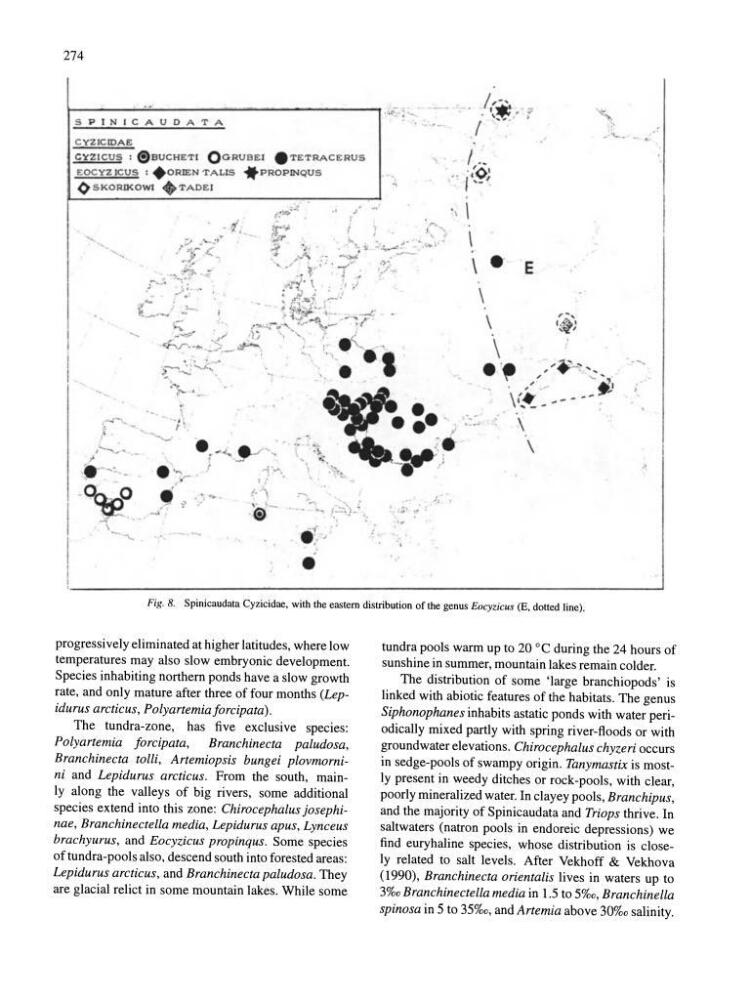
Fig. 8. Spinicaudata Cyzicidae. with the ea~tern distribution of the genus Eocyzicus (E. dotted line).
progressively eliminated at higher latitudes, where low
temperatures may also slow embryonic development.
Species inhabiting northern ponds have a slow growth
rate, and only mature after three of four months (Lepidurus arcticus, Polyartemiajorcipata).
The tundra-zone, has five exclusive species:
Polyartemia jorcipata,
Branchinecta paludosa,
Branchinecta tolli, Artemiopsis bungei plovmornini and Lepidurus arcticus. From the south, mainly along the valleys of big rivers, some additional
species extend into this zone: Chirocephalus josephinae, Branchinectella media, Lepidurus apus, Lynceus
brachyurus, and Eocyzicus propinqus. Some species
of tundra-pools also, descend south into forested areas:
Lepidurus arcticus, and Branchinecta paludosa. They
are glacial relict in some mountain lakes. While some
tundra pools warm up to 20°C during the 24 hours of
sunshine in summer, mountain lakes remain colder.
The distribution of some 'large branchiopods' is
linked with abiotic features of the habitats. The genus
Siphonophanes inhabits astatic ponds with water periodically mixed partly with spring river-floods or with
groundwater elevations. Chirocephalus chyzeri occurs
in sedge-pools of swampy origin. Tanymastix is mostly present in weedy ditches or rock-pools, with clear,
poorly mineralized water. In clayey pools, Branchipus,
and the majority of Spinicaudata and Triops thrive. In
saltwaters (natron pools in endoreic depressions) we
find euryhaline species, whose distribution is closely related to salt levels. After Vekhoff & Vekhova
(1990), Branchinecta orientalis lives in waters up to
3%0 Branchinectella media in 1.5 to 5%0, Branchinella
spinosa in 5 to 35%0, and Artemia above 30%0 salinity.
~ _ _ _ -:.:.. _ _ _ ..................................... _ _ ---. _ _ - , J. ; '
1.' * . :'
.. '"
/" ~ .'
S PINICAUDATA
C YZICIDAE
CYZICUS : C!) aUCHETI O GRU BE I . T E TRACE RU S
E O C YZ ICUS : + ORtEN T ALIS ,* PROPINQUS
() S KORD
.. 1.
T
(
,-. ....
,
I"
, .. I '/OJ
. ,- .
. \
..
;
"-- - ,.
\
. .... .:
'"' I
~'l.: ':.~,1. -
, ... '
• -..::we'
~\ •• E
~ .'
,,,' .. -', . ~
,'). ~
.. ~/, ..
_ ~_f?.~
J
i
.r
J--""_' _
.--~-o~~
\
, . '
,' .. "
..... ::
:~'t-,
\~
\ -
.$
':"
- -...... (::=0.) _ ... :
... , .
.' , J
•
\
\
,',
(~.
" ,
\
.•. , ".-~ "
.
"
. . . . . tl'
V~ ~~---- ~
-
\
."
\
"
Fig. 8. Spinicaudata Cyzicidae. with the ea~tern distribution of the genus Eocyzicus (E. dotted line).
progressively eliminated at higher latitudes, where low
temperatures may also slow embryonic development.
Species inhabiting northern ponds have a slow growth
rate, and only mature after three of four months (Lepidurus arcticus, Polyartemiajorcipata).
The tundra-zone, has five exclusive species:
Polyartemia jorcipata,
Branchinecta paludosa,
Branchinecta tolli, Artemiopsis bungei plovmornini and Lepidurus arcticus. From the south, mainly along the valleys of big rivers, some additional
species extend into this zone: Chirocephalus josephinae, Branchinectella media, Lepidurus apus, Lynceus
brachyurus, and Eocyzicus propinqus. Some species
of tundra-pools also, descend south into forested areas:
Lepidurus arcticus, and Branchinecta paludosa. They
are glacial relict in some mountain lakes. While some
tundra pools warm up to 20°C during the 24 hours of
sunshine in summer, mountain lakes remain colder.
The distribution of some 'large branchiopods' is
linked with abiotic features of the habitats. The genus
Siphonophanes inhabits astatic ponds with water periodically mixed partly with spring river-floods or with
groundwater elevations. Chirocephalus chyzeri occurs
in sedge-pools of swampy origin. Tanymastix is mostly present in weedy ditches or rock-pools, with clear,
poorly mineralized water. In clayey pools, Branchipus,
and the majority of Spinicaudata and Triops thrive. In
saltwaters (natron pools in endoreic depressions) we
find euryhaline species, whose distribution is closely related to salt levels. After Vekhoff & Vekhova
(1990), Branchinecta orientalis lives in waters up to
3%0 Branchinectella media in 1.5 to 5%0, Branchinella
spinosa in 5 to 35%0, and Artemia above 30%0 salinity.