

149
( % ) 6 0 . - - - - - - - - - - - - - - - - - - - ,
40
30
20
10
oL-----~~~~~~~~~~=i~-L~~~
20 10 9 6 7 6 6 4 3 2 1 .9 .6 .7 .6 .6 .4 .3 .2
particle size (JJm)
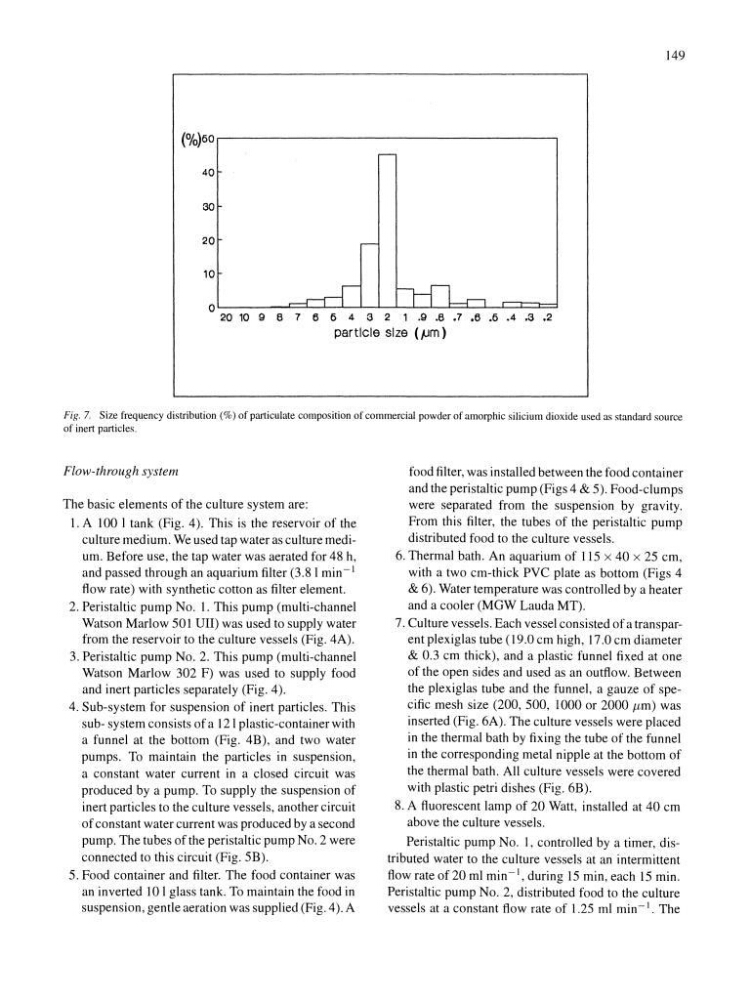
Fig. 7. Size frequency distribution (%) of particulate composition of commercial powder of amorphic silicium dioxide used as standard source
ofinert particles.
Flow-through system
The basic elements of the culture system are:
1. A 100 I tank (Fig. 4). This is the reservoir of the
culture medium. We used tap water as culture medium. Before use, the tap water was aerated for 48 h,
and passed through an aquarium filter (3.81 min- 1
flow rate) with synthetic cotton as filter element.
2. Peristaltic pump No. 1. This pump (multi-channel
Watson Marlow 501 UII) was used to supply water
from the reservoir to the culture vessels (Fig. 4A).
3. Peristaltic pump No.2. This pump (multi-channel
Watson Marlow 302 F) was used to supply food
and inert particles separately (Fig. 4).
4. Sub-system for suspension of inert particles. This
sub- system consists of a 121 plastic-container with
a funnel at the bottom (Fig. 4B), and two water
pumps. To maintain the particles in suspension,
a constant water current in a closed circuit was
produced by a pump. To supply the suspension of
inert particles to the culture vessels, another circuit
of constant water current was produced by a second
pump. The tubes of the peristaltic pump No.2 were
connected to this circuit (Fig. 5B).
5. Food container and filter. The food container was
an inverted 10 I glass tank. To maintain the food in
suspension, gentle aeration was supplied (Fig. 4). A
food filter, was installed between the food container
and the peristaltic pump (Figs 4 & 5). Food-clumps
were separated from the suspension by gravity.
From this filter, the tubes of the peristaltic pump
distributed food to the culture vessels.
6. Thermal bath. An aquarium of 115 x 40 x 25 cm,
with a two cm-thick PVC plate as bottom (Figs 4
& 6). Water temperature was controlled by a heater
and a cooler (MGW Lauda MT).
7. Culture vessels. Each vessel consisted of a transparent plexiglas tube (19.0 cm high, 17.0 cm diameter
& 0.3 cm thick), and a plastic funnel fixed at one
of the open sides and used as an outflow. Between
the plexiglas tube and the funnel, a gauze of specific mesh size (200, 500, 1000 or 2000 {Lm) was
inserted (Fig. 6A). The culture vessels were placed
in the thermal bath by fixing the tube of the funnel
in the corresponding metal nipple at the bottom of
the thermal bath. All culture vessels were covered
with plastic petri dishes (Fig. 6B).
8. A fluorescent lamp of 20 Watt, installed at 40 cm
above the culture vessels.
Peristaltic pump No.1, controlled by a timer, distributed water to the culture vessels at an intermittent
flow rate of 20 ml min -1, during 15 min, each 15 min.
Peristaltic pump No.2, distributed food to the culture
vessels at a constant flow rate of 1.25 ml min-I. The
( % ) 6 0 . - - - - - - - - - - - - - - - - - - - ,
40
30
20
10
oL-----~~~~~~~~~~=i~-L~~~
20 10 9 6 7 6 6 4 3 2 1 .9 .6 .7 .6 .6 .4 .3 .2
particle size (JJm)
Fig. 7. Size frequency distribution (%) of particulate composition of commercial powder of amorphic silicium dioxide used as standard source
ofinert particles.
Flow-through system
The basic elements of the culture system are:
1. A 100 I tank (Fig. 4). This is the reservoir of the
culture medium. We used tap water as culture medium. Before use, the tap water was aerated for 48 h,
and passed through an aquarium filter (3.81 min- 1
flow rate) with synthetic cotton as filter element.
2. Peristaltic pump No. 1. This pump (multi-channel
Watson Marlow 501 UII) was used to supply water
from the reservoir to the culture vessels (Fig. 4A).
3. Peristaltic pump No.2. This pump (multi-channel
Watson Marlow 302 F) was used to supply food
and inert particles separately (Fig. 4).
4. Sub-system for suspension of inert particles. This
sub- system consists of a 121 plastic-container with
a funnel at the bottom (Fig. 4B), and two water
pumps. To maintain the particles in suspension,
a constant water current in a closed circuit was
produced by a pump. To supply the suspension of
inert particles to the culture vessels, another circuit
of constant water current was produced by a second
pump. The tubes of the peristaltic pump No.2 were
connected to this circuit (Fig. 5B).
5. Food container and filter. The food container was
an inverted 10 I glass tank. To maintain the food in
suspension, gentle aeration was supplied (Fig. 4). A
food filter, was installed between the food container
and the peristaltic pump (Figs 4 & 5). Food-clumps
were separated from the suspension by gravity.
From this filter, the tubes of the peristaltic pump
distributed food to the culture vessels.
6. Thermal bath. An aquarium of 115 x 40 x 25 cm,
with a two cm-thick PVC plate as bottom (Figs 4
& 6). Water temperature was controlled by a heater
and a cooler (MGW Lauda MT).
7. Culture vessels. Each vessel consisted of a transparent plexiglas tube (19.0 cm high, 17.0 cm diameter
& 0.3 cm thick), and a plastic funnel fixed at one
of the open sides and used as an outflow. Between
the plexiglas tube and the funnel, a gauze of specific mesh size (200, 500, 1000 or 2000 {Lm) was
inserted (Fig. 6A). The culture vessels were placed
in the thermal bath by fixing the tube of the funnel
in the corresponding metal nipple at the bottom of
the thermal bath. All culture vessels were covered
with plastic petri dishes (Fig. 6B).
8. A fluorescent lamp of 20 Watt, installed at 40 cm
above the culture vessels.
Peristaltic pump No.1, controlled by a timer, distributed water to the culture vessels at an intermittent
flow rate of 20 ml min -1, during 15 min, each 15 min.
Peristaltic pump No.2, distributed food to the culture
vessels at a constant flow rate of 1.25 ml min-I. The