

116
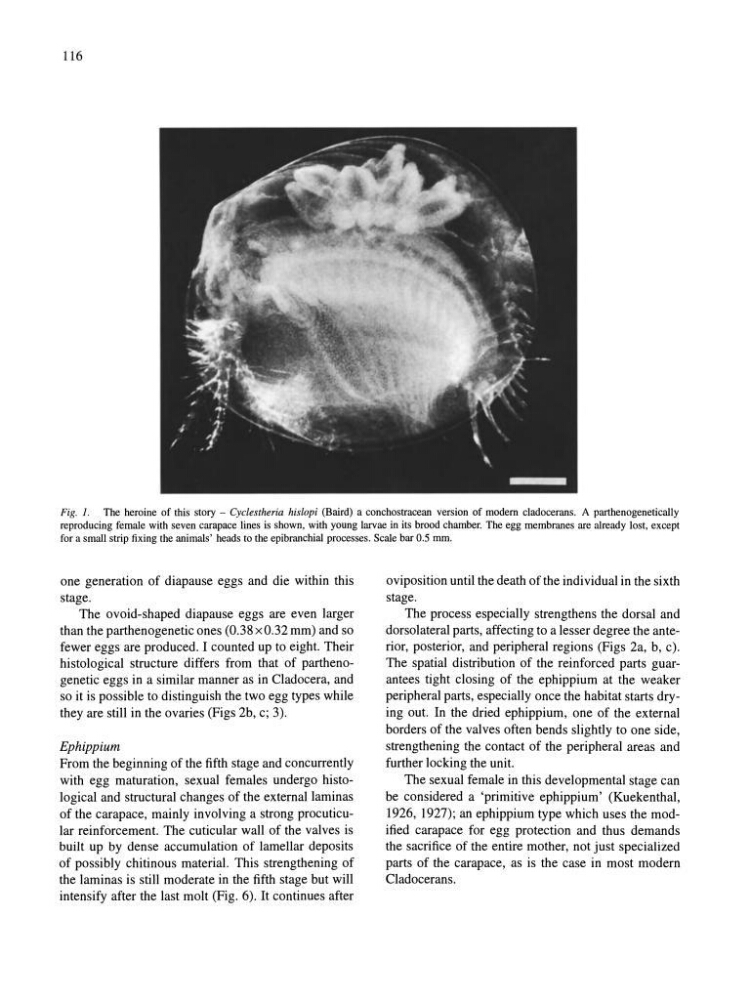
Fig. 1. The heroine of this story - Cyclestheria hislopi (Baird) a conchostracean version of modem cladocerans. A parthenogenetically
reproducing female with seven carapace lines is shown, with young larvae in its brood chamber. The egg membranes are already lost, except
for a small strip fixing the animals' heads to the epibranchial processes. Scale bar 0.5 mm.
one generation of diapause eggs and die within this
stage.
The ovoid-shaped diapause eggs are even larger
than the parthenogenetic ones (0.38xO.32 mm) and so
fewer eggs are produced. I counted up to eight. Their
histological structure differs from that of parthenogenetic eggs in a similar manner as in Cladocera, and
so it is possible to distinguish the two egg types while
they are still in the ovaries (Figs 2b, c; 3).
Ephippium
From the beginning of the fifth stage and concurrently
with egg maturation, sexual females undergo histological and structural changes of the external laminas
of the carapace, mainly involving a strong procuticular reinforcement. The cuticular wall of the valves is
built up by dense accumulation of lamellar deposits
of possibly chitinous material. This strengthening of
the laminas is still moderate in the fifth stage but will
intensify after the last molt (Fig. 6). It continues after
oviposition until the death of the individual in the sixth
stage.
The process especially strengthens the dorsal and
dorsolateral parts, affecting to a lesser degree the anterior, posterior, and peripheral regions (Figs 2a, b, c).
The spatial distribution of the reinforced parts guarantees tight closing of the ephippium at the weaker
peripheral parts, especially once the habitat starts drying out. In the dried ephippium, one of the external
borders of the valves often bends slightly to one side,
strengthening the contact of the peripheral areas and
further locking the unit.
The sexual female in this developmental stage can
be considered a 'primitive ephippium' (Kuekenthal,
1926, 1927); an ephippium type which uses the modified carapace for egg protection and thus demands
the sacrifice of the entire mother, not just specialized
parts of the carapace, as is the case in most modern
Cladocerans.
Fig. 1. The heroine of this story - Cyclestheria hislopi (Baird) a conchostracean version of modem cladocerans. A parthenogenetically
reproducing female with seven carapace lines is shown, with young larvae in its brood chamber. The egg membranes are already lost, except
for a small strip fixing the animals' heads to the epibranchial processes. Scale bar 0.5 mm.
one generation of diapause eggs and die within this
stage.
The ovoid-shaped diapause eggs are even larger
than the parthenogenetic ones (0.38xO.32 mm) and so
fewer eggs are produced. I counted up to eight. Their
histological structure differs from that of parthenogenetic eggs in a similar manner as in Cladocera, and
so it is possible to distinguish the two egg types while
they are still in the ovaries (Figs 2b, c; 3).
Ephippium
From the beginning of the fifth stage and concurrently
with egg maturation, sexual females undergo histological and structural changes of the external laminas
of the carapace, mainly involving a strong procuticular reinforcement. The cuticular wall of the valves is
built up by dense accumulation of lamellar deposits
of possibly chitinous material. This strengthening of
the laminas is still moderate in the fifth stage but will
intensify after the last molt (Fig. 6). It continues after
oviposition until the death of the individual in the sixth
stage.
The process especially strengthens the dorsal and
dorsolateral parts, affecting to a lesser degree the anterior, posterior, and peripheral regions (Figs 2a, b, c).
The spatial distribution of the reinforced parts guarantees tight closing of the ephippium at the weaker
peripheral parts, especially once the habitat starts drying out. In the dried ephippium, one of the external
borders of the valves often bends slightly to one side,
strengthening the contact of the peripheral areas and
further locking the unit.
The sexual female in this developmental stage can
be considered a 'primitive ephippium' (Kuekenthal,
1926, 1927); an ephippium type which uses the modified carapace for egg protection and thus demands
the sacrifice of the entire mother, not just specialized
parts of the carapace, as is the case in most modern
Cladocerans.