

Numerical Responses to Environmental Disasters
89
140
~EI
u 120
0
t"i 100
! 80
.~
] 60
~
40
o
100
200
300
400
soo
Tune (weeks)
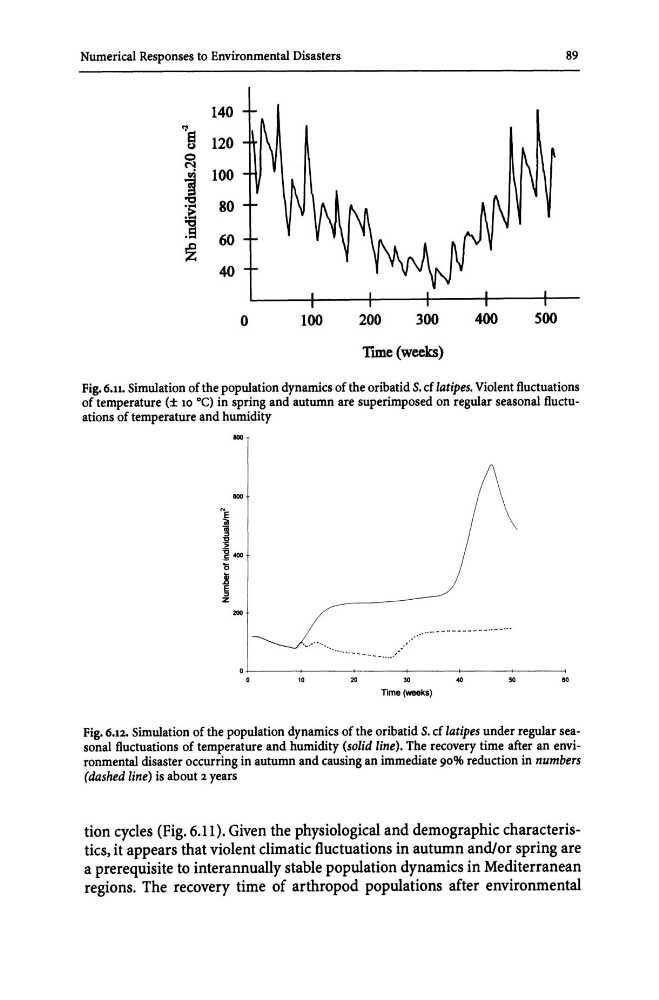
Fig. 6.IL Simulation of the population dynamics of the oribatid S. cf latipes. Violent fluctuations
of temperature (± 10°C) in spring and autumn are superimposed on regular seasonal fluctuations of temperature and humidity
100
100
1
~ ...
'5
I
zoo
.. ---------..... ~........
.# ••••••••
--_ ...•. , ..
,.
2D
3D
Timec-t
Fig. 6.12.. Simulation of the population dynamics of the oribatid S. cf latipes under regular seasonal fluctuations of temperature and humidity (solid line). The recovery time after an environmental disaster occurring in autumn and causing an immediate 90% reduction in numbers
(dashed line) is about 2. years
tion cycles (Fig. 6.11). Given the physiological and demographic characteristics, it appears that violent climatic fluctuations in autumn and/or spring are
a prerequisite to interannually stable population dynamics in Mediterranean
regions. The recovery time of arthropod populations after environmental
89
140
~EI
u 120
0
t"i 100
! 80
.~
] 60
~
40
o
100
200
300
400
soo
Tune (weeks)
Fig. 6.IL Simulation of the population dynamics of the oribatid S. cf latipes. Violent fluctuations
of temperature (± 10°C) in spring and autumn are superimposed on regular seasonal fluctuations of temperature and humidity
100
100
1
~ ...
'5
I
zoo
.. ---------..... ~........
.# ••••••••
--_ ...•. , ..
,.
2D
3D
Timec-t
Fig. 6.12.. Simulation of the population dynamics of the oribatid S. cf latipes under regular seasonal fluctuations of temperature and humidity (solid line). The recovery time after an environmental disaster occurring in autumn and causing an immediate 90% reduction in numbers
(dashed line) is about 2. years
tion cycles (Fig. 6.11). Given the physiological and demographic characteristics, it appears that violent climatic fluctuations in autumn and/or spring are
a prerequisite to interannually stable population dynamics in Mediterranean
regions. The recovery time of arthropod populations after environmental