

54
Activity Patterns
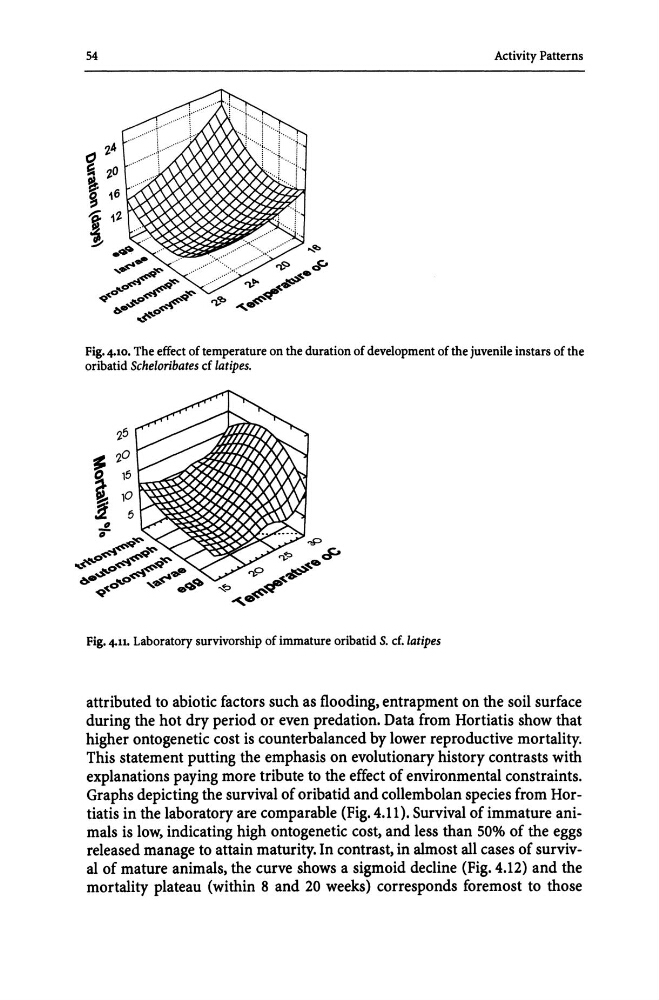
Fig. 4.10. The effect of temperature on the duration of development of the juvenile ins tars of the
oribatid Scheloribates cf latipes.
Fig. 4.11. Laboratory survivorship of immature oribatid S. cf. latipes
attributed to abiotic factors such as flooding, entrapment on the soil surface
during the hot dry period or even predation. Data from Hortiatis show that
higher ontogenetic cost is counterbalanced by lower reproductive mortality.
This statement putting the emphasis on evolutionary history contrasts with
explanations paying more tribute to the effect of environmental constraints.
Graphs depicting the survival of oribatid and collembolan species from Hortiatis in the laboratory are comparable (Fig. 4.11). Survival of immature animals is low, indicating high ontogenetic cost, and less than 50% of the eggs
released manage to attain maturity. In contrast, in almost all cases of survival of mature animals, the curve shows a sigmoid decline (Fig. 4.12) and the
mortality plateau (within 8 and 20 weeks) corresponds foremost to those
Activity Patterns
Fig. 4.10. The effect of temperature on the duration of development of the juvenile ins tars of the
oribatid Scheloribates cf latipes.
Fig. 4.11. Laboratory survivorship of immature oribatid S. cf. latipes
attributed to abiotic factors such as flooding, entrapment on the soil surface
during the hot dry period or even predation. Data from Hortiatis show that
higher ontogenetic cost is counterbalanced by lower reproductive mortality.
This statement putting the emphasis on evolutionary history contrasts with
explanations paying more tribute to the effect of environmental constraints.
Graphs depicting the survival of oribatid and collembolan species from Hortiatis in the laboratory are comparable (Fig. 4.11). Survival of immature animals is low, indicating high ontogenetic cost, and less than 50% of the eggs
released manage to attain maturity. In contrast, in almost all cases of survival of mature animals, the curve shows a sigmoid decline (Fig. 4.12) and the
mortality plateau (within 8 and 20 weeks) corresponds foremost to those