

The Biotic Correlates of Habitat Selection
SCH
M
.~
GYM
«
SCU
Opp
Axis I
III
ENI
XEN
CAM
LIA
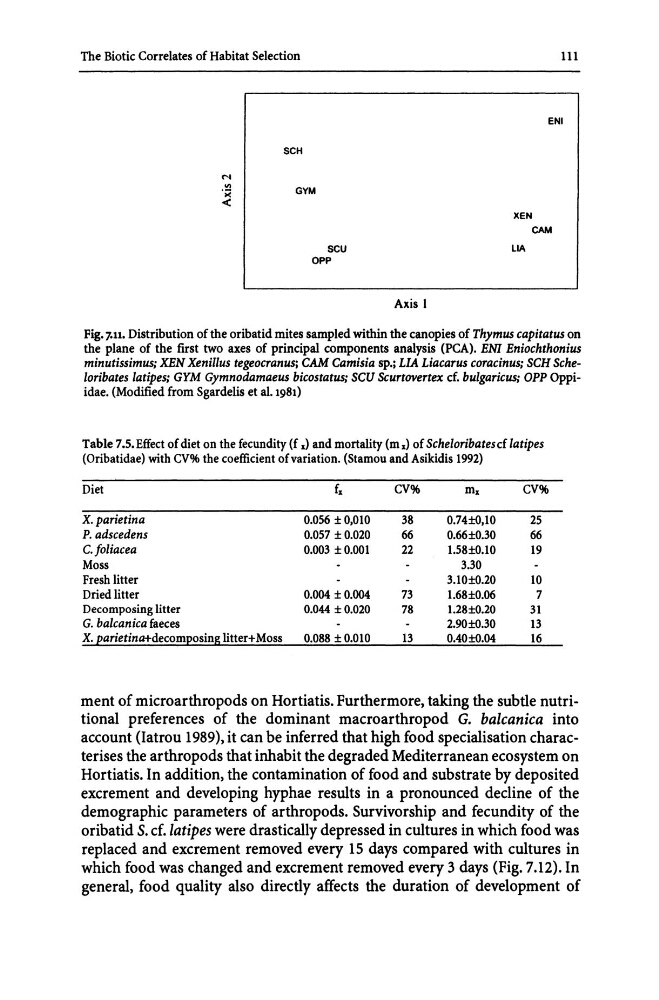
Fig. 7-11. Distribution of the oribatid mites sampled within the canopies of Thymus capitatus on
the plane of the first two axes of principal components analysis (PCA). EN! Eniochthonius
minutissimus; XEN Xenillus tegeocranus; CAM Camisia sp.; LIA Liacarus coracinus; SCH Scheloribates latipes; GYM Gymnodamaeus bicostatus; SCU Scurtovertex cf. bulgaricus; opp Oppiidae. (Modified from Sgardelis et aJ. 1981)
Table 7.5. Effect of diet on the fecundity (f x) and mortality (m x) of Scheloribatescf latipes
(Oribatidae) with CV% the coefficient of variation. (Stamou and Asikidis 1992)
Diet
fx
CV%
mx
CV%
X. parietina
0.056 ± 0,010
38
0.74±O,10
25
P.adscedens
0.057 ± 0.020
66
0.66±0.30
66
C·foliacea
0.003 ± 0.001
22
1.58±0.10
19
Moss
3.30
Fresh litter
3.10±0.20
10
Dried litter
0.004 ± 0.004
73
1.68±O.06
7
Decomposing litter
0.044 ± 0.020
78
1.28±0.20
31
G. balcanica faeces
2.90±O.30
13
X. parietina+decomposing litter+Moss
0.088 ± 0.010
13
0.40±O.04
16
ment of microarthropods on Hortiatis. Furthermore, taking the subtle nutritional preferences of the dominant macroarthropod G. balcanica into
account (Iatrou 1989), it can be inferred that high food specialisation characterises the arthropods that inhabit the degraded Mediterranean ecosystem on
Hortiatis. In addition, the contamination of food and substrate by deposited
excrement and developing hyphae results in a pronounced decline of the
demographic parameters of arthropods. Survivorship and fecundity of the
oribatid S. cf.latipes were drastically depressed in cultures in which food was
replaced and excrement removed every 15 days compared with cultures in
which food was changed and excrement removed every 3 days (Fig. 7.12). In
general, food quality also directly affects the duration of development of
SCH
M
.~
GYM
«
SCU
Opp
Axis I
III
ENI
XEN
CAM
LIA
Fig. 7-11. Distribution of the oribatid mites sampled within the canopies of Thymus capitatus on
the plane of the first two axes of principal components analysis (PCA). EN! Eniochthonius
minutissimus; XEN Xenillus tegeocranus; CAM Camisia sp.; LIA Liacarus coracinus; SCH Scheloribates latipes; GYM Gymnodamaeus bicostatus; SCU Scurtovertex cf. bulgaricus; opp Oppiidae. (Modified from Sgardelis et aJ. 1981)
Table 7.5. Effect of diet on the fecundity (f x) and mortality (m x) of Scheloribatescf latipes
(Oribatidae) with CV% the coefficient of variation. (Stamou and Asikidis 1992)
Diet
fx
CV%
mx
CV%
X. parietina
0.056 ± 0,010
38
0.74±O,10
25
P.adscedens
0.057 ± 0.020
66
0.66±0.30
66
C·foliacea
0.003 ± 0.001
22
1.58±0.10
19
Moss
3.30
Fresh litter
3.10±0.20
10
Dried litter
0.004 ± 0.004
73
1.68±O.06
7
Decomposing litter
0.044 ± 0.020
78
1.28±0.20
31
G. balcanica faeces
2.90±O.30
13
X. parietina+decomposing litter+Moss
0.088 ± 0.010
13
0.40±O.04
16
ment of microarthropods on Hortiatis. Furthermore, taking the subtle nutritional preferences of the dominant macroarthropod G. balcanica into
account (Iatrou 1989), it can be inferred that high food specialisation characterises the arthropods that inhabit the degraded Mediterranean ecosystem on
Hortiatis. In addition, the contamination of food and substrate by deposited
excrement and developing hyphae results in a pronounced decline of the
demographic parameters of arthropods. Survivorship and fecundity of the
oribatid S. cf.latipes were drastically depressed in cultures in which food was
replaced and excrement removed every 15 days compared with cultures in
which food was changed and excrement removed every 3 days (Fig. 7.12). In
general, food quality also directly affects the duration of development of