

Community Structures Induced by Human Practices
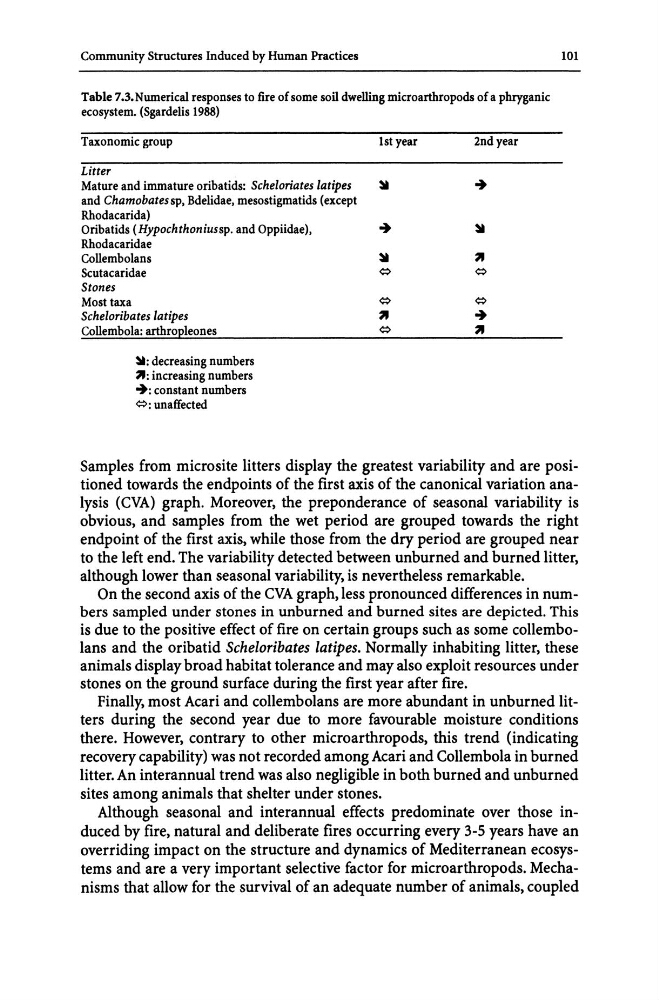
Table 7.3. Numerical responses to fire of some soil dwelling micro arthropods of a phryganic
ecosystem. (Sgardelis 1988)
Taxonomic group
1st year
Litter
Mature and immature oribatids: Scheloriates latipes
~
and Chamobatessp. Bdelidae. mesostigmatids (except
Rhodacarida)
Oribatids (Hypochthoniussp. and Oppiidae).
-+
Rhodacaridae
Collembolans
~
Scutacaridae
¢>
Stones
Most taxa
¢>
Scheloribates latipes
"
Collembola: arthropleones
¢>
~: decreasing numbers
,,: increasing numbers
-+: constant numbers
¢>: unaffected
2nd year
101
Samples from micro site litters display the greatest variability and are positioned towards the endpoints of the first axis of the canonical variation analysis (CVA) graph. Moreover, the preponderance of seasonal variability is
obvious, and samples from the wet period are grouped towards the right
endpoint of the first axis, while those from the dry period are grouped near
to the left end. The variability detected between unburned and burned litter,
although lower than seasonal variability, is nevertheless remarkable.
On the second axis of the CVA graph, less pronounced differences in numbers sampled under stones in unburned and burned sites are depicted. This
is due to the positive effect of fire on certain groups such as some collembolans and the oribatid Scheloribates latipes. Normally inhabiting litter, these
animals display broad habitat tolerance and may also exploit resources under
stones on the ground surface during the first year after fire.
Finally, most Acari and collembolans are more abundant in unburned litters during the second year due to more favourable moisture conditions
there. However, contrary to other microarthropods, this trend (indicating
recovery capability) was not recorded among Acari and Collembola in burned
litter. An interannual trend was also negligible in both burned and unburned
sites among animals that shelter under stones.
Although seasonal and interannual effects predominate over those induced by fire, natural and deliberate fires occurring every 3-5 years have an
overriding impact on the structure and dynamics of Mediterranean ecosystems and are a very important selective factor for microarthropods. Mechanisms that allow for the survival of an adequate number of animals, coupled
Table 7.3. Numerical responses to fire of some soil dwelling micro arthropods of a phryganic
ecosystem. (Sgardelis 1988)
Taxonomic group
1st year
Litter
Mature and immature oribatids: Scheloriates latipes
~
and Chamobatessp. Bdelidae. mesostigmatids (except
Rhodacarida)
Oribatids (Hypochthoniussp. and Oppiidae).
-+
Rhodacaridae
Collembolans
~
Scutacaridae
¢>
Stones
Most taxa
¢>
Scheloribates latipes
"
Collembola: arthropleones
¢>
~: decreasing numbers
,,: increasing numbers
-+: constant numbers
¢>: unaffected
2nd year
101
Samples from micro site litters display the greatest variability and are positioned towards the endpoints of the first axis of the canonical variation analysis (CVA) graph. Moreover, the preponderance of seasonal variability is
obvious, and samples from the wet period are grouped towards the right
endpoint of the first axis, while those from the dry period are grouped near
to the left end. The variability detected between unburned and burned litter,
although lower than seasonal variability, is nevertheless remarkable.
On the second axis of the CVA graph, less pronounced differences in numbers sampled under stones in unburned and burned sites are depicted. This
is due to the positive effect of fire on certain groups such as some collembolans and the oribatid Scheloribates latipes. Normally inhabiting litter, these
animals display broad habitat tolerance and may also exploit resources under
stones on the ground surface during the first year after fire.
Finally, most Acari and collembolans are more abundant in unburned litters during the second year due to more favourable moisture conditions
there. However, contrary to other microarthropods, this trend (indicating
recovery capability) was not recorded among Acari and Collembola in burned
litter. An interannual trend was also negligible in both burned and unburned
sites among animals that shelter under stones.
Although seasonal and interannual effects predominate over those induced by fire, natural and deliberate fires occurring every 3-5 years have an
overriding impact on the structure and dynamics of Mediterranean ecosystems and are a very important selective factor for microarthropods. Mechanisms that allow for the survival of an adequate number of animals, coupled