

58
U.M. Montojo et al.
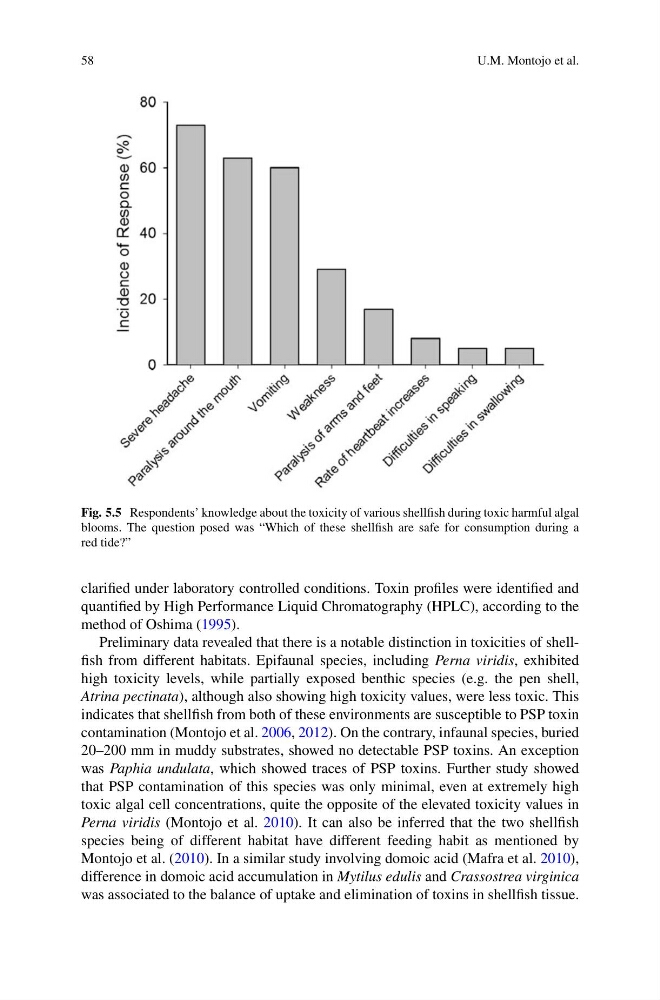
Fig. 5.5 Respondents’ knowledge about the toxicity of various shellfish during toxic harmful algal
blooms. The question posed was “Which of these shellfish are safe for consumption during a
red tide?”
clarified under laboratory controlled conditions. Toxin profiles were identified and
quantified by High Performance Liquid Chromatography (HPLC), according to the
method of Oshima (1995).
Preliminary data revealed that there is a notable distinction in toxicities of shellfish from different habitats. Epifaunal species, including Perna viridis, exhibited
high toxicity levels, while partially exposed benthic species (e.g. the pen shell,
Atrina pectinata), although also showing high toxicity values, were less toxic. This
indicates that shellfish from both of these environments are susceptible to PSP toxin
contamination (Montojo et al. 2006, 2012). On the contrary, infaunal species, buried
20–200 mm in muddy substrates, showed no detectable PSP toxins. An exception
was Paphia undulata, which showed traces of PSP toxins. Further study showed
that PSP contamination of this species was only minimal, even at extremely high
toxic algal cell concentrations, quite the opposite of the elevated toxicity values in
Perna viridis (Montojo et al. 2010). It can also be inferred that the two shellfish
species being of different habitat have different feeding habit as mentioned by
Montojo et al. (2010). In a similar study involving domoic acid (Mafra et al. 2010),
difference in domoic acid accumulation in Mytilus edulis and Crassostrea virginica
was associated to the balance of uptake and elimination of toxins in shellfish tissue.
U.M. Montojo et al.
Fig. 5.5 Respondents’ knowledge about the toxicity of various shellfish during toxic harmful algal
blooms. The question posed was “Which of these shellfish are safe for consumption during a
red tide?”
clarified under laboratory controlled conditions. Toxin profiles were identified and
quantified by High Performance Liquid Chromatography (HPLC), according to the
method of Oshima (1995).
Preliminary data revealed that there is a notable distinction in toxicities of shellfish from different habitats. Epifaunal species, including Perna viridis, exhibited
high toxicity levels, while partially exposed benthic species (e.g. the pen shell,
Atrina pectinata), although also showing high toxicity values, were less toxic. This
indicates that shellfish from both of these environments are susceptible to PSP toxin
contamination (Montojo et al. 2006, 2012). On the contrary, infaunal species, buried
20–200 mm in muddy substrates, showed no detectable PSP toxins. An exception
was Paphia undulata, which showed traces of PSP toxins. Further study showed
that PSP contamination of this species was only minimal, even at extremely high
toxic algal cell concentrations, quite the opposite of the elevated toxicity values in
Perna viridis (Montojo et al. 2010). It can also be inferred that the two shellfish
species being of different habitat have different feeding habit as mentioned by
Montojo et al. (2010). In a similar study involving domoic acid (Mafra et al. 2010),
difference in domoic acid accumulation in Mytilus edulis and Crassostrea virginica
was associated to the balance of uptake and elimination of toxins in shellfish tissue.