

5 Mitigating the Impacts of Paralytic Shellfish Poisoning During Harmful. . .
57
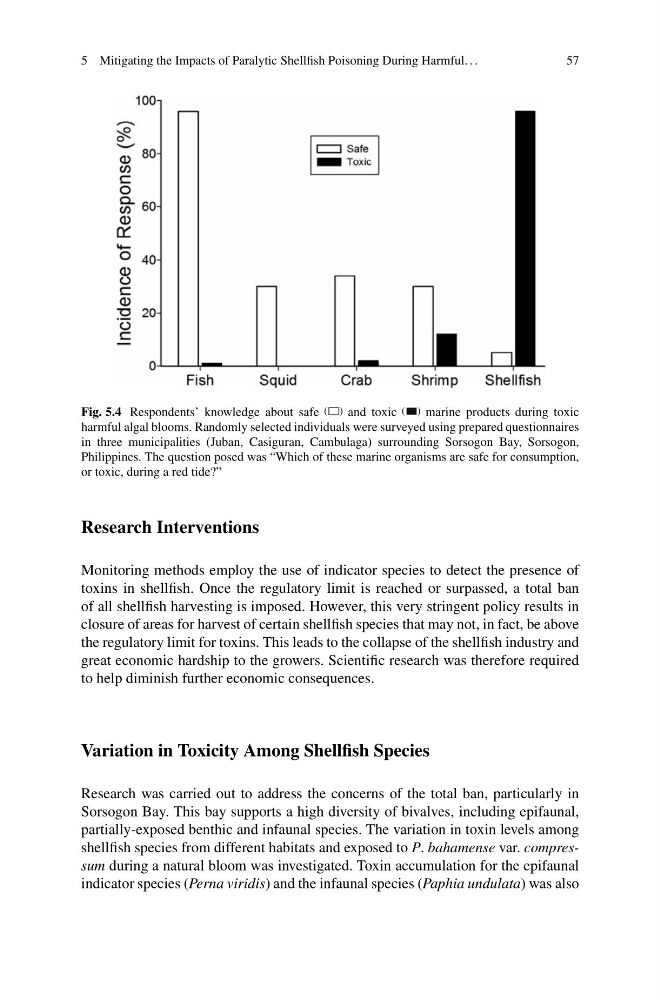
Fig. 5.4 Respondents’ knowledge about safe
and toxic
marine products during toxic
harmful algal blooms. Randomly selected individuals were surveyed using prepared questionnaires
in three municipalities (Juban, Casiguran, Cambulaga) surrounding Sorsogon Bay, Sorsogon,
Philippines. The question posed was “Which of these marine organisms are safe for consumption,
or toxic, during a red tide?”
Research Interventions
Monitoring methods employ the use of indicator species to detect the presence of
toxins in shellfish. Once the regulatory limit is reached or surpassed, a total ban
of all shellfish harvesting is imposed. However, this very stringent policy results in
closure of areas for harvest of certain shellfish species that may not, in fact, be above
the regulatory limit for toxins. This leads to the collapse of the shellfish industry and
great economic hardship to the growers. Scientific research was therefore required
to help diminish further economic consequences.
Variation in Toxicity Among Shellfish Species
Research was carried out to address the concerns of the total ban, particularly in
Sorsogon Bay. This bay supports a high diversity of bivalves, including epifaunal,
partially-exposed benthic and infaunal species. The variation in toxin levels among
shellfish species from different habitats and exposed to P. bahamense var. compressum during a natural bloom was investigated. Toxin accumulation for the epifaunal
indicator species (Perna viridis) and the infaunal species (Paphia undulata) was also
57
Fig. 5.4 Respondents’ knowledge about safe
and toxic
marine products during toxic
harmful algal blooms. Randomly selected individuals were surveyed using prepared questionnaires
in three municipalities (Juban, Casiguran, Cambulaga) surrounding Sorsogon Bay, Sorsogon,
Philippines. The question posed was “Which of these marine organisms are safe for consumption,
or toxic, during a red tide?”
Research Interventions
Monitoring methods employ the use of indicator species to detect the presence of
toxins in shellfish. Once the regulatory limit is reached or surpassed, a total ban
of all shellfish harvesting is imposed. However, this very stringent policy results in
closure of areas for harvest of certain shellfish species that may not, in fact, be above
the regulatory limit for toxins. This leads to the collapse of the shellfish industry and
great economic hardship to the growers. Scientific research was therefore required
to help diminish further economic consequences.
Variation in Toxicity Among Shellfish Species
Research was carried out to address the concerns of the total ban, particularly in
Sorsogon Bay. This bay supports a high diversity of bivalves, including epifaunal,
partially-exposed benthic and infaunal species. The variation in toxin levels among
shellfish species from different habitats and exposed to P. bahamense var. compressum during a natural bloom was investigated. Toxin accumulation for the epifaunal
indicator species (Perna viridis) and the infaunal species (Paphia undulata) was also