

2 Evolution of PSP Toxicity in Shellfish from the Beagle Channel. . .
19
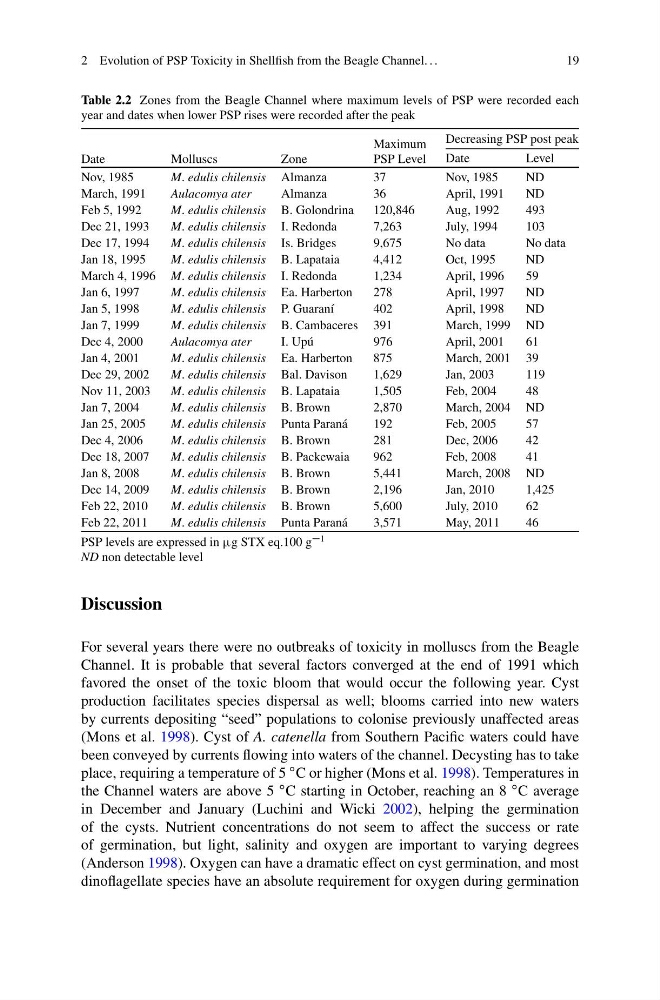
Table 2.2 Zones from the Beagle Channel where maximum levels of PSP were recorded each
year and dates when lower PSP rises were recorded after the peak
Date
Molluscs
Zone
Maximum
PSP Level
Decreasing PSP post peak
Date
Level
Nov, 1985
M. edulis chilensis Almanza
37
Nov, 1985
ND
March, 1991
Aulacomya ater
Almanza
36
April, 1991
ND
Feb 5, 1992
M. edulis chilensis B. Golondrina
120,846
Aug, 1992
493
Dec 21, 1993
M. edulis chilensis I. Redonda
7,263
July, 1994
103
Dec 17, 1994
M. edulis chilensis Is. Bridges
9,675
No data
No data
Jan 18, 1995
M. edulis chilensis B. Lapataia
4,412
Oct, 1995
ND
March 4, 1996 M. edulis chilensis I. Redonda
1,234
April, 1996
59
Jan 6, 1997
M. edulis chilensis Ea. Harberton
278
April, 1997
ND
Jan 5, 1998
M. edulis chilensis P. Guaran´ ı
402
April, 1998
ND
Jan 7, 1999
M. edulis chilensis B. Cambaceres 391
March, 1999 ND
Dec 4, 2000
Aulacomya ater
I. Up´ u
976
April, 2001
61
Jan 4, 2001
M. edulis chilensis Ea. Harberton
875
March, 2001 39
Dec 29, 2002
M. edulis chilensis Bal. Davison
1,629
Jan, 2003
119
Nov 11, 2003
M. edulis chilensis B. Lapataia
1,505
Feb, 2004
48
Jan 7, 2004
M. edulis chilensis B. Brown
2,870
March, 2004 ND
Jan 25, 2005
M. edulis chilensis Punta Paran´ a
192
Feb, 2005
57
Dec 4, 2006
M. edulis chilensis B. Brown
281
Dec, 2006
42
Dec 18, 2007
M. edulis chilensis B. Packewaia
962
Feb, 2008
41
Jan 8, 2008
M. edulis chilensis B. Brown
5,441
March, 2008 ND
Dec 14, 2009
M. edulis chilensis B. Brown
2,196
Jan, 2010
1,425
Feb 22, 2010
M. edulis chilensis B. Brown
5,600
July, 2010
62
Feb 22, 2011
M. edulis chilensis Punta Paran´ a
3,571
May, 2011
46
PSP levels are expressed in g STX eq.100 g
1
ND non detectable level
Discussion
For several years there were no outbreaks of toxicity in molluscs from the Beagle
Channel. It is probable that several factors converged at the end of 1991 which
favored the onset of the toxic bloom that would occur the following year. Cyst
production facilitates species dispersal as well; blooms carried into new waters
by currents depositing “seed” populations to colonise previously unaffected areas
(Mons et al. 1998). Cyst of A. catenella from Southern Pacific waters could have
been conveyed by currents flowing into waters of the channel. Decysting has to take
place, requiring a temperature of 5
ı C or higher (Mons et al. 1998). Temperatures in
the Channel waters are above 5
ı C starting in October, reaching an 8
ı C average
in December and January (Luchini and Wicki 2002), helping the germination
of the cysts. Nutrient concentrations do not seem to affect the success or rate
of germination, but light, salinity and oxygen are important to varying degrees
(Anderson 1998). Oxygen can have a dramatic effect on cyst germination, and most
dinoflagellate species have an absolute requirement for oxygen during germination
19
Table 2.2 Zones from the Beagle Channel where maximum levels of PSP were recorded each
year and dates when lower PSP rises were recorded after the peak
Date
Molluscs
Zone
Maximum
PSP Level
Decreasing PSP post peak
Date
Level
Nov, 1985
M. edulis chilensis Almanza
37
Nov, 1985
ND
March, 1991
Aulacomya ater
Almanza
36
April, 1991
ND
Feb 5, 1992
M. edulis chilensis B. Golondrina
120,846
Aug, 1992
493
Dec 21, 1993
M. edulis chilensis I. Redonda
7,263
July, 1994
103
Dec 17, 1994
M. edulis chilensis Is. Bridges
9,675
No data
No data
Jan 18, 1995
M. edulis chilensis B. Lapataia
4,412
Oct, 1995
ND
March 4, 1996 M. edulis chilensis I. Redonda
1,234
April, 1996
59
Jan 6, 1997
M. edulis chilensis Ea. Harberton
278
April, 1997
ND
Jan 5, 1998
M. edulis chilensis P. Guaran´ ı
402
April, 1998
ND
Jan 7, 1999
M. edulis chilensis B. Cambaceres 391
March, 1999 ND
Dec 4, 2000
Aulacomya ater
I. Up´ u
976
April, 2001
61
Jan 4, 2001
M. edulis chilensis Ea. Harberton
875
March, 2001 39
Dec 29, 2002
M. edulis chilensis Bal. Davison
1,629
Jan, 2003
119
Nov 11, 2003
M. edulis chilensis B. Lapataia
1,505
Feb, 2004
48
Jan 7, 2004
M. edulis chilensis B. Brown
2,870
March, 2004 ND
Jan 25, 2005
M. edulis chilensis Punta Paran´ a
192
Feb, 2005
57
Dec 4, 2006
M. edulis chilensis B. Brown
281
Dec, 2006
42
Dec 18, 2007
M. edulis chilensis B. Packewaia
962
Feb, 2008
41
Jan 8, 2008
M. edulis chilensis B. Brown
5,441
March, 2008 ND
Dec 14, 2009
M. edulis chilensis B. Brown
2,196
Jan, 2010
1,425
Feb 22, 2010
M. edulis chilensis B. Brown
5,600
July, 2010
62
Feb 22, 2011
M. edulis chilensis Punta Paran´ a
3,571
May, 2011
46
PSP levels are expressed in g STX eq.100 g
1
ND non detectable level
Discussion
For several years there were no outbreaks of toxicity in molluscs from the Beagle
Channel. It is probable that several factors converged at the end of 1991 which
favored the onset of the toxic bloom that would occur the following year. Cyst
production facilitates species dispersal as well; blooms carried into new waters
by currents depositing “seed” populations to colonise previously unaffected areas
(Mons et al. 1998). Cyst of A. catenella from Southern Pacific waters could have
been conveyed by currents flowing into waters of the channel. Decysting has to take
place, requiring a temperature of 5
ı C or higher (Mons et al. 1998). Temperatures in
the Channel waters are above 5
ı C starting in October, reaching an 8
ı C average
in December and January (Luchini and Wicki 2002), helping the germination
of the cysts. Nutrient concentrations do not seem to affect the success or rate
of germination, but light, salinity and oxygen are important to varying degrees
(Anderson 1998). Oxygen can have a dramatic effect on cyst germination, and most
dinoflagellate species have an absolute requirement for oxygen during germination