

4
I. Karunasagar
0
5
10
15
20
25
30
35
40
Hygiene
Pathogenic
bacteria
Viruses
Biotoxin
Others
Number of
alerts
Causes of Alerts
2009
2010
2011
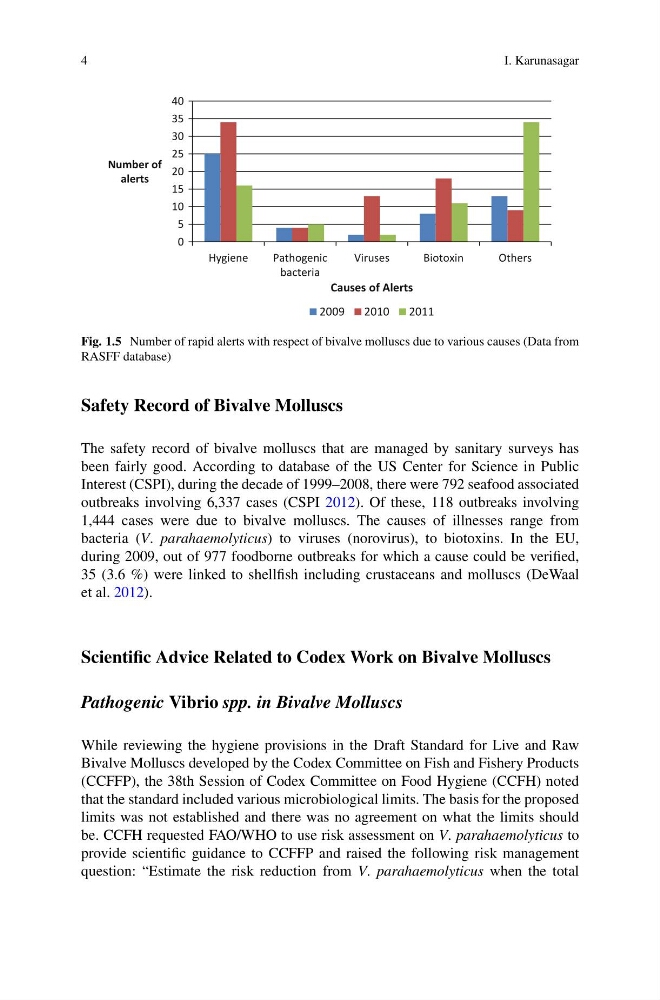
Fig. 1.5 Number of rapid alerts with respect of bivalve molluscs due to various causes (Data from
RASFF database)
Safety Record of Bivalve Molluscs
The safety record of bivalve molluscs that are managed by sanitary surveys has
been fairly good. According to database of the US Center for Science in Public
Interest (CSPI), during the decade of 1999–2008, there were 792 seafood associated
outbreaks involving 6,337 cases (CSPI 2012). Of these, 118 outbreaks involving
1,444 cases were due to bivalve molluscs. The causes of illnesses range from
bacteria (V. parahaemolyticus) to viruses (norovirus), to biotoxins. In the EU,
during 2009, out of 977 foodborne outbreaks for which a cause could be verified,
35 (3.6 %) were linked to shellfish including crustaceans and molluscs (DeWaal
et al. 2012).
Scientific Advice Related to Codex Work on Bivalve Molluscs
Pathogenic Vibrio spp. in Bivalve Molluscs
While reviewing the hygiene provisions in the Draft Standard for Live and Raw
Bivalve Molluscs developed by the Codex Committee on Fish and Fishery Products
(CCFFP), the 38th Session of Codex Committee on Food Hygiene (CCFH) noted
that the standard included various microbiological limits. The basis for the proposed
limits was not established and there was no agreement on what the limits should
be. CCFH requested FAO/WHO to use risk assessment on V. parahaemolyticus to
provide scientific guidance to CCFFP and raised the following risk management
question: “Estimate the risk reduction from V. parahaemolyticus when the total
I. Karunasagar
0
5
10
15
20
25
30
35
40
Hygiene
Pathogenic
bacteria
Viruses
Biotoxin
Others
Number of
alerts
Causes of Alerts
2009
2010
2011
Fig. 1.5 Number of rapid alerts with respect of bivalve molluscs due to various causes (Data from
RASFF database)
Safety Record of Bivalve Molluscs
The safety record of bivalve molluscs that are managed by sanitary surveys has
been fairly good. According to database of the US Center for Science in Public
Interest (CSPI), during the decade of 1999–2008, there were 792 seafood associated
outbreaks involving 6,337 cases (CSPI 2012). Of these, 118 outbreaks involving
1,444 cases were due to bivalve molluscs. The causes of illnesses range from
bacteria (V. parahaemolyticus) to viruses (norovirus), to biotoxins. In the EU,
during 2009, out of 977 foodborne outbreaks for which a cause could be verified,
35 (3.6 %) were linked to shellfish including crustaceans and molluscs (DeWaal
et al. 2012).
Scientific Advice Related to Codex Work on Bivalve Molluscs
Pathogenic Vibrio spp. in Bivalve Molluscs
While reviewing the hygiene provisions in the Draft Standard for Live and Raw
Bivalve Molluscs developed by the Codex Committee on Fish and Fishery Products
(CCFFP), the 38th Session of Codex Committee on Food Hygiene (CCFH) noted
that the standard included various microbiological limits. The basis for the proposed
limits was not established and there was no agreement on what the limits should
be. CCFH requested FAO/WHO to use risk assessment on V. parahaemolyticus to
provide scientific guidance to CCFFP and raised the following risk management
question: “Estimate the risk reduction from V. parahaemolyticus when the total