

208
R. Raine et al.
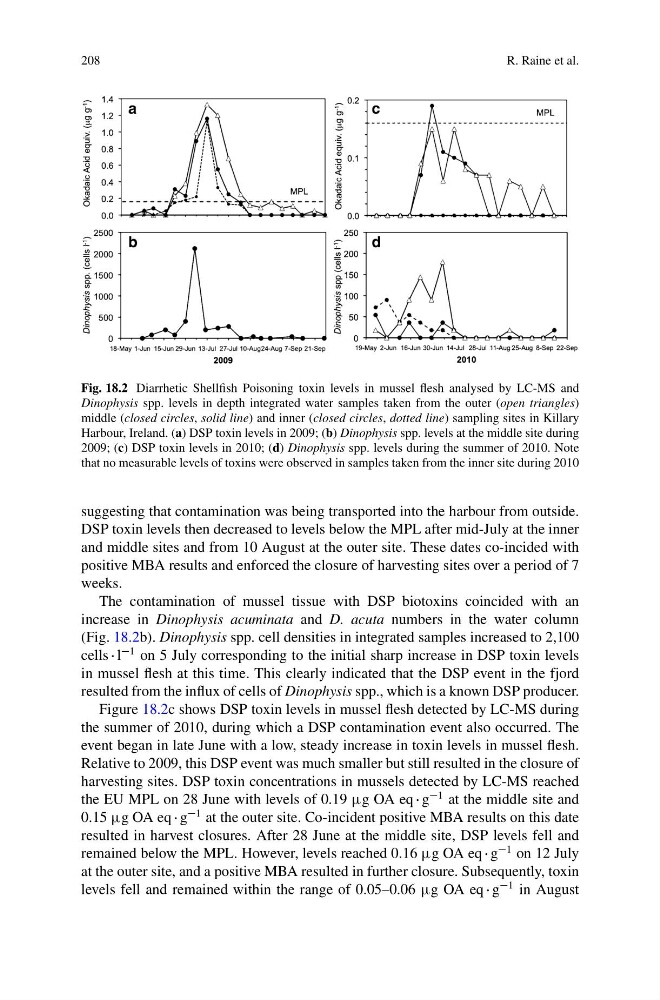
Fig. 18.2 Diarrhetic Shellfish Poisoning toxin levels in mussel flesh analysed by LC-MS and
Dinophysis spp. levels in depth integrated water samples taken from the outer (open triangles)
middle (closed circles, solid line) and inner (closed circles, dotted line) sampling sites in Killary
Harbour, Ireland. (a) DSP toxin levels in 2009; (b) Dinophysis spp. levels at the middle site during
2009; (c) DSP toxin levels in 2010; (d) Dinophysis spp. levels during the summer of 2010. Note
that no measurable levels of toxins were observed in samples taken from the inner site during 2010
suggesting that contamination was being transported into the harbour from outside.
DSP toxin levels then decreased to levels below the MPL after mid-July at the inner
and middle sites and from 10 August at the outer site. These dates co-incided with
positive MBA results and enforced the closure of harvesting sites over a period of 7
weeks.
The contamination of mussel tissue with DSP biotoxins coincided with an
increase in Dinophysis acuminata and D. acuta numbers in the water column
(Fig. 18.2b). Dinophysis spp. cell densities in integrated samples increased to 2,100
cells l
1 on 5 July corresponding to the initial sharp increase in DSP toxin levels
in mussel flesh at this time. This clearly indicated that the DSP event in the fjord
resulted from the influx of cells of Dinophysis spp., which is a known DSP producer.
Figure 18.2c shows DSP toxin levels in mussel flesh detected by LC-MS during
the summer of 2010, during which a DSP contamination event also occurred. The
event began in late June with a low, steady increase in toxin levels in mussel flesh.
Relative to 2009, this DSP event was much smaller but still resulted in the closure of
harvesting sites. DSP toxin concentrations in mussels detected by LC-MS reached
the EU MPL on 28 June with levels of 0.19 g OA eq g
1 at the middle site and
0.15 g OA eq g
1 at the outer site. Co-incident positive MBA results on this date
resulted in harvest closures. After 28 June at the middle site, DSP levels fell and
remained below the MPL. However, levels reached 0.16 g OA eq g
1 on 12 July
at the outer site, and a positive MBA resulted in further closure. Subsequently, toxin
levels fell and remained within the range of 0.05–0.06 g OA eq g
1 in August
R. Raine et al.
Fig. 18.2 Diarrhetic Shellfish Poisoning toxin levels in mussel flesh analysed by LC-MS and
Dinophysis spp. levels in depth integrated water samples taken from the outer (open triangles)
middle (closed circles, solid line) and inner (closed circles, dotted line) sampling sites in Killary
Harbour, Ireland. (a) DSP toxin levels in 2009; (b) Dinophysis spp. levels at the middle site during
2009; (c) DSP toxin levels in 2010; (d) Dinophysis spp. levels during the summer of 2010. Note
that no measurable levels of toxins were observed in samples taken from the inner site during 2010
suggesting that contamination was being transported into the harbour from outside.
DSP toxin levels then decreased to levels below the MPL after mid-July at the inner
and middle sites and from 10 August at the outer site. These dates co-incided with
positive MBA results and enforced the closure of harvesting sites over a period of 7
weeks.
The contamination of mussel tissue with DSP biotoxins coincided with an
increase in Dinophysis acuminata and D. acuta numbers in the water column
(Fig. 18.2b). Dinophysis spp. cell densities in integrated samples increased to 2,100
cells l
1 on 5 July corresponding to the initial sharp increase in DSP toxin levels
in mussel flesh at this time. This clearly indicated that the DSP event in the fjord
resulted from the influx of cells of Dinophysis spp., which is a known DSP producer.
Figure 18.2c shows DSP toxin levels in mussel flesh detected by LC-MS during
the summer of 2010, during which a DSP contamination event also occurred. The
event began in late June with a low, steady increase in toxin levels in mussel flesh.
Relative to 2009, this DSP event was much smaller but still resulted in the closure of
harvesting sites. DSP toxin concentrations in mussels detected by LC-MS reached
the EU MPL on 28 June with levels of 0.19 g OA eq g
1 at the middle site and
0.15 g OA eq g
1 at the outer site. Co-incident positive MBA results on this date
resulted in harvest closures. After 28 June at the middle site, DSP levels fell and
remained below the MPL. However, levels reached 0.16 g OA eq g
1 on 12 July
at the outer site, and a positive MBA resulted in further closure. Subsequently, toxin
levels fell and remained within the range of 0.05–0.06 g OA eq g
1 in August