

180
G.P. Richards et al.
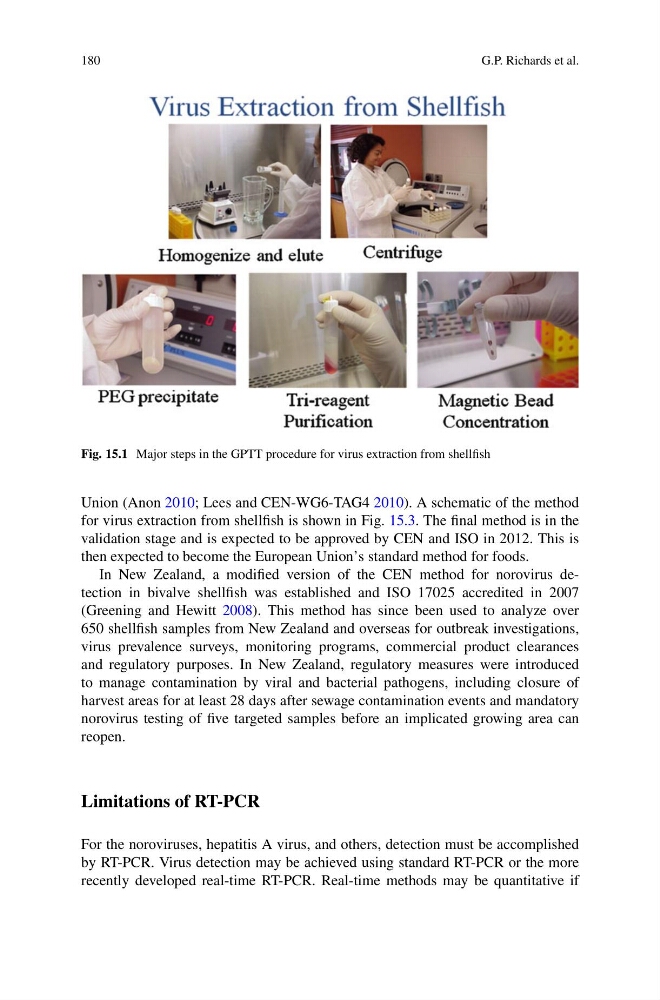
Fig. 15.1 Major steps in the GPTT procedure for virus extraction from shellfish
Union (Anon 2010; Lees and CEN-WG6-TAG4 2010). A schematic of the method
for virus extraction from shellfish is shown in Fig. 15.3. The final method is in the
validation stage and is expected to be approved by CEN and ISO in 2012. This is
then expected to become the European Union’s standard method for foods.
In New Zealand, a modified version of the CEN method for norovirus detection in bivalve shellfish was established and ISO 17025 accredited in 2007
(Greening and Hewitt 2008). This method has since been used to analyze over
650 shellfish samples from New Zealand and overseas for outbreak investigations,
virus prevalence surveys, monitoring programs, commercial product clearances
and regulatory purposes. In New Zealand, regulatory measures were introduced
to manage contamination by viral and bacterial pathogens, including closure of
harvest areas for at least 28 days after sewage contamination events and mandatory
norovirus testing of five targeted samples before an implicated growing area can
reopen.
Limitations of RT-PCR
For the noroviruses, hepatitis A virus, and others, detection must be accomplished
by RT-PCR. Virus detection may be achieved using standard RT-PCR or the more
recently developed real-time RT-PCR. Real-time methods may be quantitative if
G.P. Richards et al.
Fig. 15.1 Major steps in the GPTT procedure for virus extraction from shellfish
Union (Anon 2010; Lees and CEN-WG6-TAG4 2010). A schematic of the method
for virus extraction from shellfish is shown in Fig. 15.3. The final method is in the
validation stage and is expected to be approved by CEN and ISO in 2012. This is
then expected to become the European Union’s standard method for foods.
In New Zealand, a modified version of the CEN method for norovirus detection in bivalve shellfish was established and ISO 17025 accredited in 2007
(Greening and Hewitt 2008). This method has since been used to analyze over
650 shellfish samples from New Zealand and overseas for outbreak investigations,
virus prevalence surveys, monitoring programs, commercial product clearances
and regulatory purposes. In New Zealand, regulatory measures were introduced
to manage contamination by viral and bacterial pathogens, including closure of
harvest areas for at least 28 days after sewage contamination events and mandatory
norovirus testing of five targeted samples before an implicated growing area can
reopen.
Limitations of RT-PCR
For the noroviruses, hepatitis A virus, and others, detection must be accomplished
by RT-PCR. Virus detection may be achieved using standard RT-PCR or the more
recently developed real-time RT-PCR. Real-time methods may be quantitative if