

areas of the Pacific and Caribbean, exceeding 31 °C. The thermal range between
summer and winter is greater than 25 °C in most areas and reaches 28.4 °C in the
West Indies. Canary Islands show less variability, with a range of only 7.8 °C
(Fig. 16.3a, b). In general, all the regions are productive. The Brazilian and Canary
Islands provinces appear to be among the most productive in the world (1.92 and
2.01 g C m
-2 day
-1 , respectively) (Taeger and Lazarus 2010). However, in the
case of the Canary Islands, this value is reached in the West African upwelling.
Productivity in the archipelago is less and maximum chlorophyll concentration
does not exceed 40.91 mg m
-3 . Minimum mean chlorophyll concentration is
reached in the Galápagos archipelago, with only 4.29 g m
-3 (Fig. 16.3c).
The Caribbean, West Indian and Galápagos provinces are characterized by
warm waters, with the highest photic depth and with a high mixed layer depth and
low chlorophyll concentration and low productivity. The Panamanian and Mexican
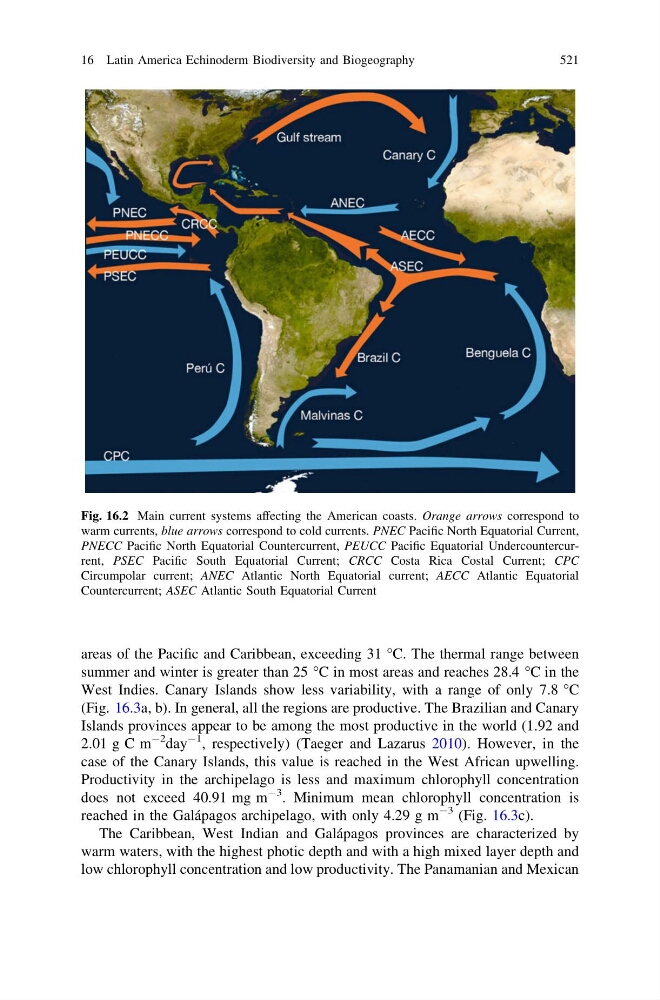
Fig. 16.2 Main current systems affecting the American coasts. Orange arrows correspond to
warm currents, blue arrows correspond to cold currents. PNEC Pacific North Equatorial Current,
PNECC Pacific North Equatorial Countercurrent, PEUCC Pacific Equatorial Undercountercurrent, PSEC Pacific South Equatorial Current; CRCC Costa Rica Costal Current; CPC
Circumpolar current; ANEC Atlantic North Equatorial current; AECC Atlantic Equatorial
Countercurrent; ASEC Atlantic South Equatorial Current
16 Latin America Echinoderm Biodiversity and Biogeography
521
summer and winter is greater than 25 °C in most areas and reaches 28.4 °C in the
West Indies. Canary Islands show less variability, with a range of only 7.8 °C
(Fig. 16.3a, b). In general, all the regions are productive. The Brazilian and Canary
Islands provinces appear to be among the most productive in the world (1.92 and
2.01 g C m
-2 day
-1 , respectively) (Taeger and Lazarus 2010). However, in the
case of the Canary Islands, this value is reached in the West African upwelling.
Productivity in the archipelago is less and maximum chlorophyll concentration
does not exceed 40.91 mg m
-3 . Minimum mean chlorophyll concentration is
reached in the Galápagos archipelago, with only 4.29 g m
-3 (Fig. 16.3c).
The Caribbean, West Indian and Galápagos provinces are characterized by
warm waters, with the highest photic depth and with a high mixed layer depth and
low chlorophyll concentration and low productivity. The Panamanian and Mexican
Fig. 16.2 Main current systems affecting the American coasts. Orange arrows correspond to
warm currents, blue arrows correspond to cold currents. PNEC Pacific North Equatorial Current,
PNECC Pacific North Equatorial Countercurrent, PEUCC Pacific Equatorial Undercountercurrent, PSEC Pacific South Equatorial Current; CRCC Costa Rica Costal Current; CPC
Circumpolar current; ANEC Atlantic North Equatorial current; AECC Atlantic Equatorial
Countercurrent; ASEC Atlantic South Equatorial Current
16 Latin America Echinoderm Biodiversity and Biogeography
521