

platform and continental slope. This author also described Phyllobrissus zulianus
and Heteraster (Washitaster) bravoensis from the Apon Formation (AptienseEarly Albiense) in western Venezuela (Zulia State), characterized by marine
environments of combined facies of littoral with sand bars, open platform and
restricted platform. Vivas (1987) reported Holectypus (Coenholectypus) planatus
aponensis. Samples of Enallaster cf. texanum from El Cantil Formation, in
Monagas state (Aptiense-Albiense) and from Capacho Formation (AlbienseTuroniense) in Zulia state, come from an area with uniform sedimentary conditions in a paleoenvironment of internal to medium platform, where water depths
should have been between 10 and 70 m. Cooke (1961) found Hemiaster sp. and
Epiaster whitei in a location without formational information in Río Caripe,
Monagas state.
7.4.3 Upper Eocene
In the Misoa Formation (a paleoenvironment with deltaic to coastal marine
characteristics) at Trujillo state, Eupatagus sp. was found, whereas Eupatagus
clevei was recorded by Cooke (1961) from rocks without formational information
from Lara state. Oligopygus rotundus, was collected from rocks without formational information from Guárico State (Cooke 1961), and Oligopygus christi and
Pauropygus sp. were found in rocks without formational information from Barinas
State (Mihaljevic ´ et al. 2010). The latter authors describe Oligopygus nancei, from
Caratas Formation (Tinajitas Member) from a reef environment with shallow
water in Monagas state.
7.4.4 Oligocene
Weisbord (1969) found Eucidaris tribuloides in rocks without formational information from Nueva Esparta state. The stratigraphic record of this species extends
until the Recent.
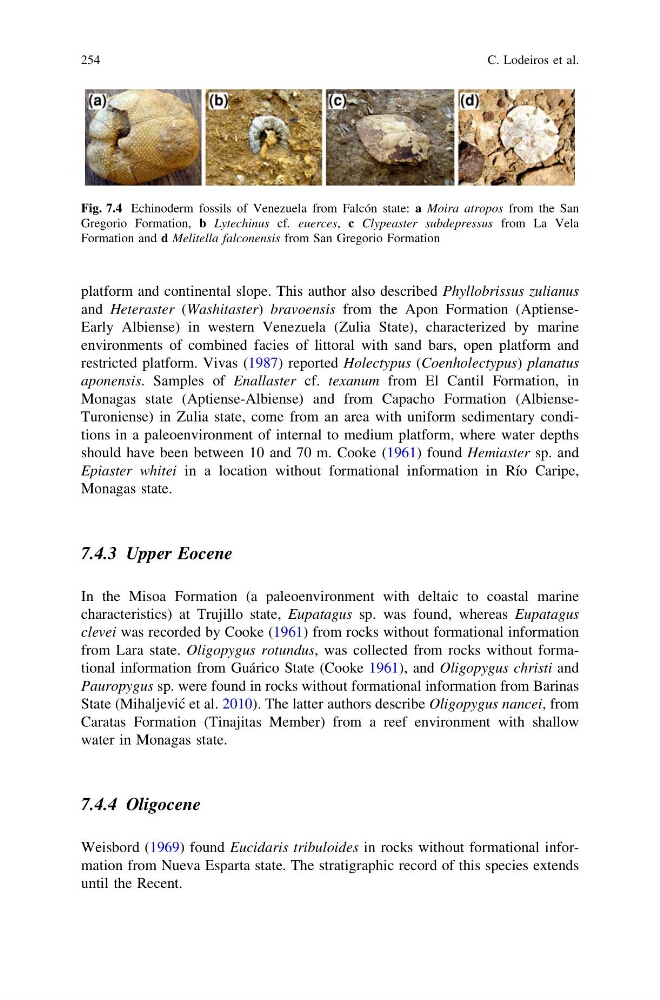
Fig. 7.4 Echinoderm fossils of Venezuela from Falcón state: a Moira atropos from the San
Gregorio Formation, b Lytechinus cf. euerces, c Clypeaster subdepressus from La Vela
Formation and d Melitella falconensis from San Gregorio Formation
254
C. Lodeiros et al.
and Heteraster (Washitaster) bravoensis from the Apon Formation (AptienseEarly Albiense) in western Venezuela (Zulia State), characterized by marine
environments of combined facies of littoral with sand bars, open platform and
restricted platform. Vivas (1987) reported Holectypus (Coenholectypus) planatus
aponensis. Samples of Enallaster cf. texanum from El Cantil Formation, in
Monagas state (Aptiense-Albiense) and from Capacho Formation (AlbienseTuroniense) in Zulia state, come from an area with uniform sedimentary conditions in a paleoenvironment of internal to medium platform, where water depths
should have been between 10 and 70 m. Cooke (1961) found Hemiaster sp. and
Epiaster whitei in a location without formational information in Río Caripe,
Monagas state.
7.4.3 Upper Eocene
In the Misoa Formation (a paleoenvironment with deltaic to coastal marine
characteristics) at Trujillo state, Eupatagus sp. was found, whereas Eupatagus
clevei was recorded by Cooke (1961) from rocks without formational information
from Lara state. Oligopygus rotundus, was collected from rocks without formational information from Guárico State (Cooke 1961), and Oligopygus christi and
Pauropygus sp. were found in rocks without formational information from Barinas
State (Mihaljevic ´ et al. 2010). The latter authors describe Oligopygus nancei, from
Caratas Formation (Tinajitas Member) from a reef environment with shallow
water in Monagas state.
7.4.4 Oligocene
Weisbord (1969) found Eucidaris tribuloides in rocks without formational information from Nueva Esparta state. The stratigraphic record of this species extends
until the Recent.
Fig. 7.4 Echinoderm fossils of Venezuela from Falcón state: a Moira atropos from the San
Gregorio Formation, b Lytechinus cf. euerces, c Clypeaster subdepressus from La Vela
Formation and d Melitella falconensis from San Gregorio Formation
254
C. Lodeiros et al.