

12
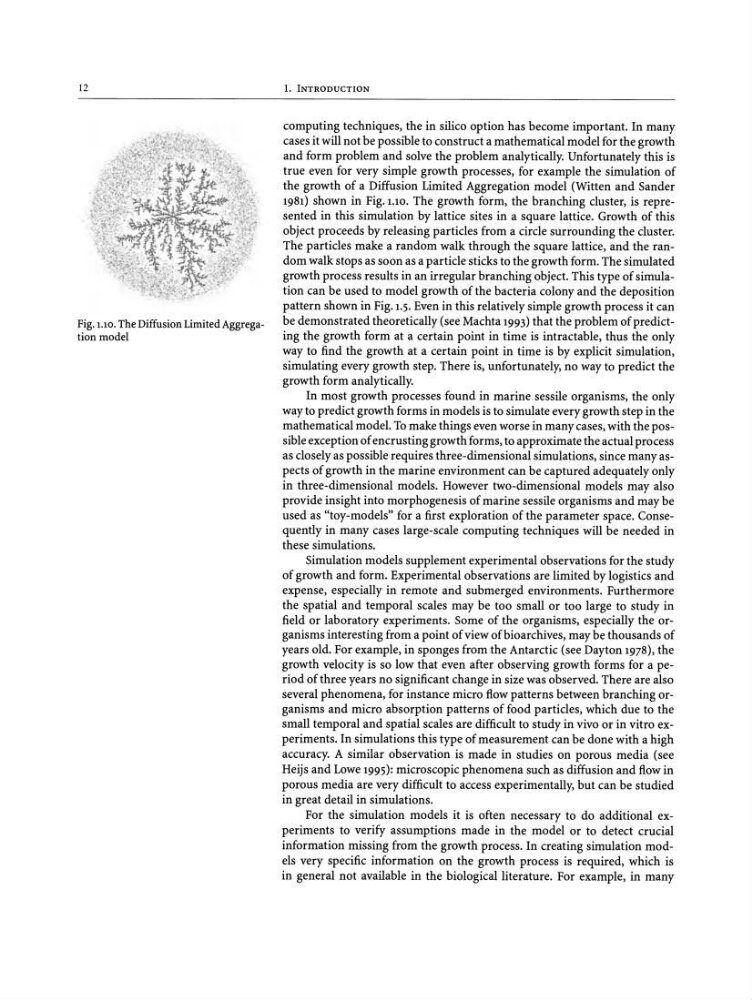
Fig. 1.10. TheDiffusion Limited Aggregation model
1. INTRODUCTION
computing techniques, the in silico option has become important. In many
cases it will not be possible to construct a mathematical model for the growth
and form problem and solve the problem analytically. Unfortunately this is
true even for very simple growth processes, for example the simulation of
the growth of a Diffusion Limited Aggregation model (Witten and Sander
1981) shown in Fig. 1.10. The growth form, the branching cluster, is represented in this simulation by lattice sites in a square lattice. Growth of this
object proceeds by releasing particles from a circle surrounding the cluster.
The particles make a random walk through the square lattice, and the random walk stops as soon as a particle sticks to the growth form. The simulated
growth process results in an irregular branching object. This type of simulation can be used to model growth of the bacteria colony and the deposition
pattern shown in Fig. 1.5. Even in this relatively simple growth process it can
be demonstrated theoretically (see Machta 1993) that the problem of predicting the growth form at a certain point in time is intractable, thus the only
way to find the growth at a certain point in time is by explicit simulation,
simulating every growth step. There is, unfortunately, no way to predict the
growth form analytically.
In most growth processes found in marine sessile organisms, the only
way to predict growth forms in models is to simulate every growth step in the
mathematical model. Tomake things even worse in many cases, with the possible exception of encrusting growth forms, to approximate the actual process
as closely as possible requires three-dimensional simulat ions, since many aspects of growth in the marine environment can be captured adequately only
in three-dimensional models. However two-dimensional models may also
provide insight into morphogenesis of marine sessile organisms and may be
used as "toy-models" for a first exploration of the parameter space. Consequently in many cases large-scale computing techniques will be needed in
these simulations.
Simulation models supplement experimental observations for the study
of growth and form. Experimental observations are limited by logistics and
expense, especially in remote and submerged environments. Furthermore
the spatial and temporal scales may be too small or too large to study in
field or laboratory experiments. Some of the organisms, especially the organisms interesting from a point of view ofbioarchives, may be thousands of
years old. For example, in sponges from the Antarctic (see Dayton 1978), the
growth velocity is so low that even after observing growth forms for a period of three years no significant change in size was observed. There are also
several phenomena, for instance micro flow patterns between branching organisms and micro absorption patterns of food particles, which due to the
small temporal and spatial scales are difficult to study in vivo or in vitro experiments. In simulations this type of measurement can be done with a high
accuracy. A similar observation is made in studies on porous media (see
Heijs and Lowe1995): microscopic phenomena such as diffusion and flow in
porous media are very difficult to access experimentally, but can be studied
in great detail in simulations.
For the simulation models it is often necessary to do additional experiments to verify assumptions made in the model or to detect crucial
information missing from the growth process. In creating simulation models very specific information on the growth process is required, which is
in general not available in the biological literature. For example, in many
Fig. 1.10. TheDiffusion Limited Aggregation model
1. INTRODUCTION
computing techniques, the in silico option has become important. In many
cases it will not be possible to construct a mathematical model for the growth
and form problem and solve the problem analytically. Unfortunately this is
true even for very simple growth processes, for example the simulation of
the growth of a Diffusion Limited Aggregation model (Witten and Sander
1981) shown in Fig. 1.10. The growth form, the branching cluster, is represented in this simulation by lattice sites in a square lattice. Growth of this
object proceeds by releasing particles from a circle surrounding the cluster.
The particles make a random walk through the square lattice, and the random walk stops as soon as a particle sticks to the growth form. The simulated
growth process results in an irregular branching object. This type of simulation can be used to model growth of the bacteria colony and the deposition
pattern shown in Fig. 1.5. Even in this relatively simple growth process it can
be demonstrated theoretically (see Machta 1993) that the problem of predicting the growth form at a certain point in time is intractable, thus the only
way to find the growth at a certain point in time is by explicit simulation,
simulating every growth step. There is, unfortunately, no way to predict the
growth form analytically.
In most growth processes found in marine sessile organisms, the only
way to predict growth forms in models is to simulate every growth step in the
mathematical model. Tomake things even worse in many cases, with the possible exception of encrusting growth forms, to approximate the actual process
as closely as possible requires three-dimensional simulat ions, since many aspects of growth in the marine environment can be captured adequately only
in three-dimensional models. However two-dimensional models may also
provide insight into morphogenesis of marine sessile organisms and may be
used as "toy-models" for a first exploration of the parameter space. Consequently in many cases large-scale computing techniques will be needed in
these simulations.
Simulation models supplement experimental observations for the study
of growth and form. Experimental observations are limited by logistics and
expense, especially in remote and submerged environments. Furthermore
the spatial and temporal scales may be too small or too large to study in
field or laboratory experiments. Some of the organisms, especially the organisms interesting from a point of view ofbioarchives, may be thousands of
years old. For example, in sponges from the Antarctic (see Dayton 1978), the
growth velocity is so low that even after observing growth forms for a period of three years no significant change in size was observed. There are also
several phenomena, for instance micro flow patterns between branching organisms and micro absorption patterns of food particles, which due to the
small temporal and spatial scales are difficult to study in vivo or in vitro experiments. In simulations this type of measurement can be done with a high
accuracy. A similar observation is made in studies on porous media (see
Heijs and Lowe1995): microscopic phenomena such as diffusion and flow in
porous media are very difficult to access experimentally, but can be studied
in great detail in simulations.
For the simulation models it is often necessary to do additional experiments to verify assumptions made in the model or to detect crucial
information missing from the growth process. In creating simulation models very specific information on the growth process is required, which is
in general not available in the biological literature. For example, in many