

1. INTRODUCTION
9
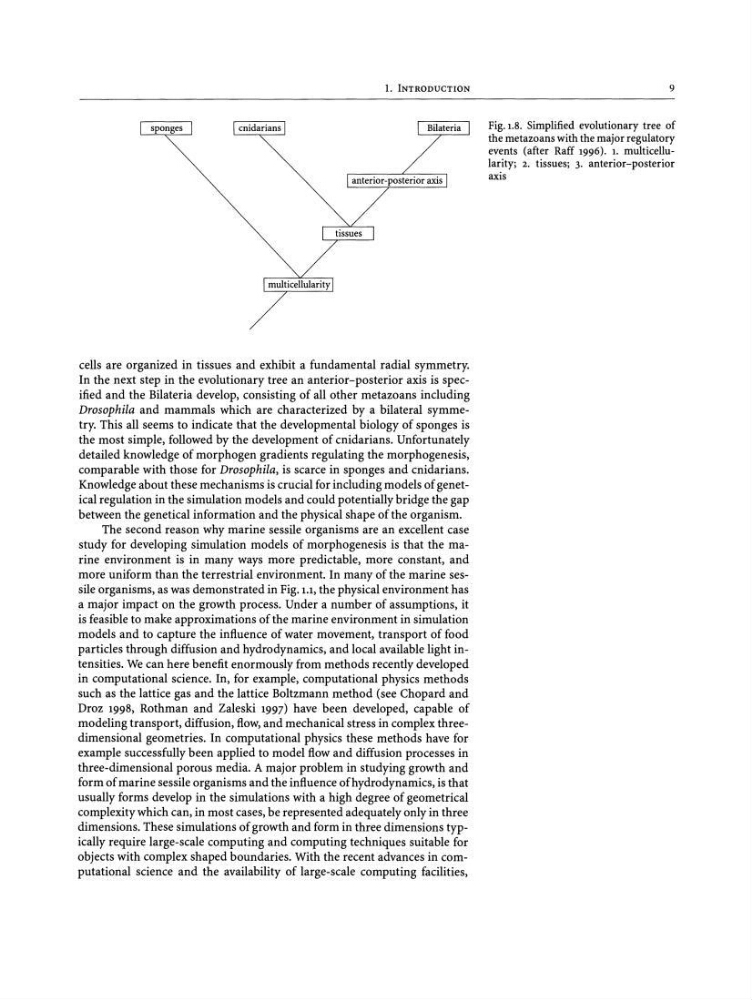
Fig. 1.8. Simplified evolutionary tree of
the metazoans withthe majorregulatory
events (after Raff 1996) . 1. multicellularity; 2 . tissues; 3. anterior-posterior
axis
cells are organized in tissues and exhibit a fundamental radial symmetry.
In the next step in the evolutionary tree an anterior-posterior axis is specified and the Bilateria develop, consisting of all other metazoans including
Drosophila and mammals which are characterized by a bilateral symmetry. This all seems to indicate that the developmental biology of sponges is
the most simple, followed by the development of cnidarians. Unfortunately
detailed knowledge of morphogen gradients regulating the morphogenesis,
comparable with those for Drosophila, is scarce in sponges and cnidarians.
Knowledge about these mechanisms is crucial for including models of genetical regulation in the simulation models and could potentially bridge the gap
between the genetical information and the physical shape of the organism.
The second reason why marine sessile organisms are an excellent case
study for developing simulation models of morphogenesis is that the marine environment is in many ways more predictable, more constant, and
more uniform than the terrestrial environment. In many of the marine sessile organisms, as was demonstrated in Fig.1.1, the physical environment has
a major impact on the growth process . Under a number of assumptions, it
is feasible to make approximations of the marine environment in simulation
models and to capture the influence of water movement, transport of food
particles through diffusion and hydrodynamics, and local available light intensities . We can here benefit enormously from methods recently developed
in computational science. In, for example, computational physics methods
such as the lattice gas and the lattice Boltzmann method (see Chopard and
Droz 1998, Rothman and Zaleski 1997) have been developed, capable of
modeling transport, diffusion , flow, and mechanical stress in complex threedimensional geometries. In computational physics these methods have for
example successfully been applied to model flow and diffusion processes in
three-dimensional porous media. A major problem in studying growth and
form of marine sessile organisms and the influence of hydrodynamics, is that
usually forms develop in the simulations with a high degree of geometrical
complexity which can, in most cases, be represented adequately only in three
dimensions. These simulations of growth and form in three dimensions typically require large-scale computing and computing techniques suitable for
objects with complex shaped boundaries. With the recent advances in computational science and the availability of large-scale computing facilities,
9
Fig. 1.8. Simplified evolutionary tree of
the metazoans withthe majorregulatory
events (after Raff 1996) . 1. multicellularity; 2 . tissues; 3. anterior-posterior
axis
cells are organized in tissues and exhibit a fundamental radial symmetry.
In the next step in the evolutionary tree an anterior-posterior axis is specified and the Bilateria develop, consisting of all other metazoans including
Drosophila and mammals which are characterized by a bilateral symmetry. This all seems to indicate that the developmental biology of sponges is
the most simple, followed by the development of cnidarians. Unfortunately
detailed knowledge of morphogen gradients regulating the morphogenesis,
comparable with those for Drosophila, is scarce in sponges and cnidarians.
Knowledge about these mechanisms is crucial for including models of genetical regulation in the simulation models and could potentially bridge the gap
between the genetical information and the physical shape of the organism.
The second reason why marine sessile organisms are an excellent case
study for developing simulation models of morphogenesis is that the marine environment is in many ways more predictable, more constant, and
more uniform than the terrestrial environment. In many of the marine sessile organisms, as was demonstrated in Fig.1.1, the physical environment has
a major impact on the growth process . Under a number of assumptions, it
is feasible to make approximations of the marine environment in simulation
models and to capture the influence of water movement, transport of food
particles through diffusion and hydrodynamics, and local available light intensities . We can here benefit enormously from methods recently developed
in computational science. In, for example, computational physics methods
such as the lattice gas and the lattice Boltzmann method (see Chopard and
Droz 1998, Rothman and Zaleski 1997) have been developed, capable of
modeling transport, diffusion , flow, and mechanical stress in complex threedimensional geometries. In computational physics these methods have for
example successfully been applied to model flow and diffusion processes in
three-dimensional porous media. A major problem in studying growth and
form of marine sessile organisms and the influence of hydrodynamics, is that
usually forms develop in the simulations with a high degree of geometrical
complexity which can, in most cases, be represented adequately only in three
dimensions. These simulations of growth and form in three dimensions typically require large-scale computing and computing techniques suitable for
objects with complex shaped boundaries. With the recent advances in computational science and the availability of large-scale computing facilities,