

4.2. EXAMPLE OF A SIMPLE MODEL OF PLASTICITY IN ALGAL MORPHOLOGY
97
Iteration 40
Iteration 50
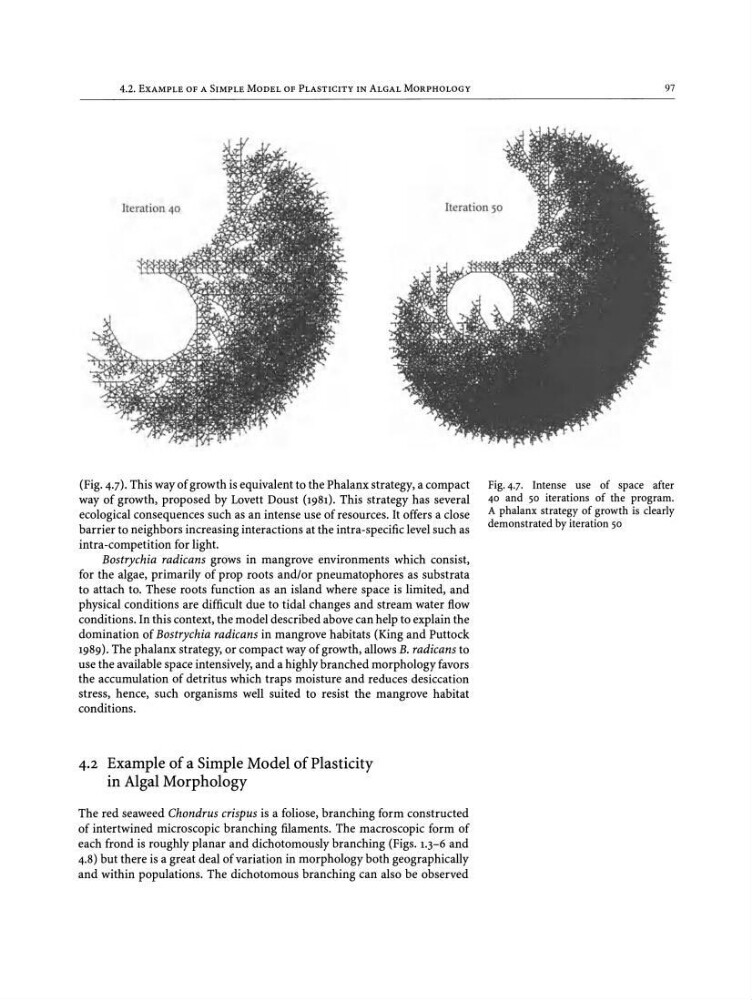
(Fig. 4.7). This way of growth is equivalent to the Phalanx strategy, a compact
way of growth, proposed by Lovett Doust (1981). This strategy has several
ecological consequences such as an intense use of resources. It offers a close
barrier to neighbors increasing interactions at the intra-specific level such as
intra-competition for light.
Bostrychia radicans grows in mangrove environments which consist,
for the algae, primarily of prop roots and/or pneumatophores as substrata
to attach to. These roots function as an island where space is limited, and
physical conditions are difficult due to tidal changes and stream water flow
conditions. In this context, the model described above can help to explain the
domination of Bostrychia radicans in mangrove habitats (King and Puttock
1989). The phalanx strategy, or compact way of growth, allows B. radicansto
use the available space intensively, and a highly branched morphology favors
the accumulation of detritus which traps moisture and reduces desiccation
stress, hence , such organisms well suited to resist the mangrove habitat
conditions.
4.2 Example of a Simple Model of Plasticity
in Algal Morphology
The red seaweed Chondrus crispus is a foliose, branching form constructed
of intertwined microscopic branching filaments . The macroscopic form of
each frond is roughly planar and dichotomously branching (Figs. 1.3-6 and
4.8) but there is a great deal of variation in morphology both geographically
and within populations. The dichotomous branching can also be observed
Fig. 4.7. Intense use of space after
40 and 50 iterations of the program.
A phalanx strategy of growth is clearly
demonstrated by iteration 50
97
Iteration 40
Iteration 50
(Fig. 4.7). This way of growth is equivalent to the Phalanx strategy, a compact
way of growth, proposed by Lovett Doust (1981). This strategy has several
ecological consequences such as an intense use of resources. It offers a close
barrier to neighbors increasing interactions at the intra-specific level such as
intra-competition for light.
Bostrychia radicans grows in mangrove environments which consist,
for the algae, primarily of prop roots and/or pneumatophores as substrata
to attach to. These roots function as an island where space is limited, and
physical conditions are difficult due to tidal changes and stream water flow
conditions. In this context, the model described above can help to explain the
domination of Bostrychia radicans in mangrove habitats (King and Puttock
1989). The phalanx strategy, or compact way of growth, allows B. radicansto
use the available space intensively, and a highly branched morphology favors
the accumulation of detritus which traps moisture and reduces desiccation
stress, hence , such organisms well suited to resist the mangrove habitat
conditions.
4.2 Example of a Simple Model of Plasticity
in Algal Morphology
The red seaweed Chondrus crispus is a foliose, branching form constructed
of intertwined microscopic branching filaments . The macroscopic form of
each frond is roughly planar and dichotomously branching (Figs. 1.3-6 and
4.8) but there is a great deal of variation in morphology both geographically
and within populations. The dichotomous branching can also be observed
Fig. 4.7. Intense use of space after
40 and 50 iterations of the program.
A phalanx strategy of growth is clearly
demonstrated by iteration 50