

• • Results
6 Insecta (Diptera)
75
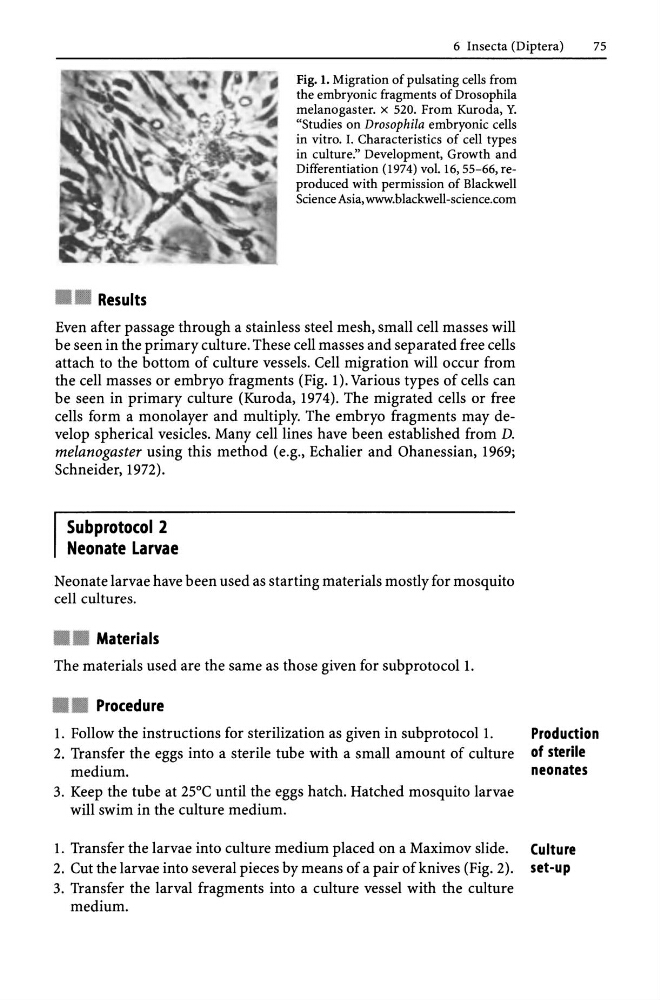
Fig. 1. Migration of pulsating cells from
the embryonic fragments of Drosophila
melanogaster. x 520. From Kuroda, Y.
"Studies on Drosophila embryonic cells
in vitro. I. Characteristics of cell types
in culture:' Development, Growth and
Differentiation (1974) vol. 16,55-66, reproduced with permission of Blackwell
Science Asia, www.blackwell-science.com
Even after passage through a stainless steel mesh, small cell masses will
be seen in the primary culture. These cell masses and separated free cells
attach to the bottom of culture vessels. Cell migration will occur from
the cell masses or embryo fragments (Fig. 1). Various types of cells can
be seen in primary culture (Kuroda, 1974). The migrated cells or free
cells form a monolayer and multiply. The embryo fragments may develop spherical vesicles. Many cell lines have been established from D.
melanogaster using this method (e.g., Echalier and Ohanessian, 1969;
Schneider, 1972).
Subprotocol 2
Neonate Larvae
Neonate larvae have been used as starting materials mostly for mosquito
cell cultures .
• • Materials
The materials used are the same as those given for subprotocol 1.
• • Procedure
1. Follow the instructions for sterilization as given in subprotocol1.
Production
2. Transfer the eggs into a sterile tube with a small amount of culture of sterile
medium.
neonates
3. Keep the tube at 25°C until the eggs hatch. Hatched mosquito larvae
will swim in the culture medium.
1. Transfer the larvae into culture medium placed on a Maximov slide. Culture
2. Cut the larvae into several pieces by means of a pair of knives (Fig. 2). set-up
3. Transfer the larval fragments into a culture vessel with the culture
medium.
6 Insecta (Diptera)
75
Fig. 1. Migration of pulsating cells from
the embryonic fragments of Drosophila
melanogaster. x 520. From Kuroda, Y.
"Studies on Drosophila embryonic cells
in vitro. I. Characteristics of cell types
in culture:' Development, Growth and
Differentiation (1974) vol. 16,55-66, reproduced with permission of Blackwell
Science Asia, www.blackwell-science.com
Even after passage through a stainless steel mesh, small cell masses will
be seen in the primary culture. These cell masses and separated free cells
attach to the bottom of culture vessels. Cell migration will occur from
the cell masses or embryo fragments (Fig. 1). Various types of cells can
be seen in primary culture (Kuroda, 1974). The migrated cells or free
cells form a monolayer and multiply. The embryo fragments may develop spherical vesicles. Many cell lines have been established from D.
melanogaster using this method (e.g., Echalier and Ohanessian, 1969;
Schneider, 1972).
Subprotocol 2
Neonate Larvae
Neonate larvae have been used as starting materials mostly for mosquito
cell cultures .
• • Materials
The materials used are the same as those given for subprotocol 1.
• • Procedure
1. Follow the instructions for sterilization as given in subprotocol1.
Production
2. Transfer the eggs into a sterile tube with a small amount of culture of sterile
medium.
neonates
3. Keep the tube at 25°C until the eggs hatch. Hatched mosquito larvae
will swim in the culture medium.
1. Transfer the larvae into culture medium placed on a Maximov slide. Culture
2. Cut the larvae into several pieces by means of a pair of knives (Fig. 2). set-up
3. Transfer the larval fragments into a culture vessel with the culture
medium.