

96
Methods for Setting Up Primary Cultures Specific to Animal Groups
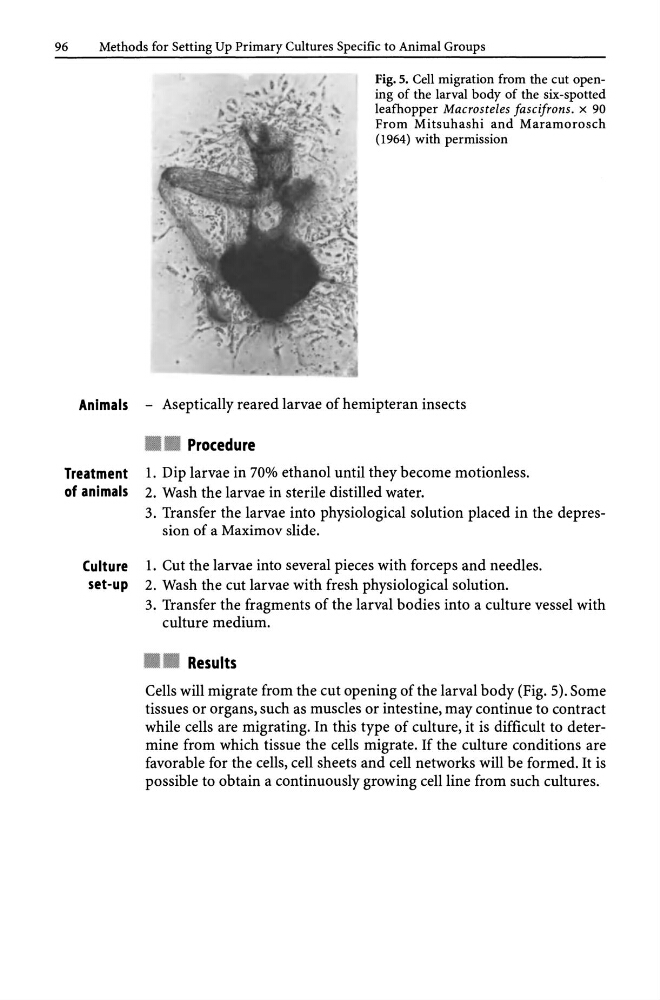
Fig. 5. Cell migration from the cut opening of the larval body of the six-spotted
leafhopper Macrosteles fascifrons. x 90
From Mitsuhashi and Maramorosch
(1964) with permission
Animals - Aseptically reared larvae of hemipteran insects
Treatment
of animals
• • Procedure
1. Dip larvae in 70% ethanol until they become motionless.
2. Wash the larvae in sterile distilled water.
3. Transfer the larvae into physiological solution placed in the depression of a Maximov slide.
Culture 1. Cut the larvae into several pieces with forceps and needles.
set-up 2. Wash the cut larvae with fresh physiological solution.
3. Transfer the fragments of the larval bodies into a culture vessel with
culture medium .
• • Results
Cells will migrate from the cut opening of the larval body (Fig. 5). Some
tissues or organs, such as muscles or intestine, may continue to contract
while cells are migrating. In this type of culture, it is difficult to determine from which tissue the cells migrate. If the culture conditions are
favorable for the cells, cell sheets and cell networks will be formed. It is
possible to obtain a continuously growing cell line from such cultures.
Methods for Setting Up Primary Cultures Specific to Animal Groups
Fig. 5. Cell migration from the cut opening of the larval body of the six-spotted
leafhopper Macrosteles fascifrons. x 90
From Mitsuhashi and Maramorosch
(1964) with permission
Animals - Aseptically reared larvae of hemipteran insects
Treatment
of animals
• • Procedure
1. Dip larvae in 70% ethanol until they become motionless.
2. Wash the larvae in sterile distilled water.
3. Transfer the larvae into physiological solution placed in the depression of a Maximov slide.
Culture 1. Cut the larvae into several pieces with forceps and needles.
set-up 2. Wash the cut larvae with fresh physiological solution.
3. Transfer the fragments of the larval bodies into a culture vessel with
culture medium .
• • Results
Cells will migrate from the cut opening of the larval body (Fig. 5). Some
tissues or organs, such as muscles or intestine, may continue to contract
while cells are migrating. In this type of culture, it is difficult to determine from which tissue the cells migrate. If the culture conditions are
favorable for the cells, cell sheets and cell networks will be formed. It is
possible to obtain a continuously growing cell line from such cultures.