

116
refl ected in the term “ovicell,” introduced by Busk ( 1852 ),
augmenting it with such descriptive terms as “subglobose
and terminal”, “galeriform” (for Scrupocellaria ), “globose,
subpedunculate” ( Bicellariella , as Bicellaria ), “arcuate”
( Caberea ), “conical” ( Beania , as Diachoris ) and “subglobular”
( Cellepora ).
One of the fi rst observers to contradict this view was
Grant ( 1827 , p. 341). Studying Flustra foliacea , he recorded
an egg growing inside the zooid, whereas, when mature, it
was seen to be surrounded by a helmet-shaped capsule
[ooecium] that separates the egg “from the cavity of the cell
[zooid]”. Grant did not discuss this difference in relation to
the accepted terminology, however.
The older view that ovicells are capsules containing
ovaries was fi rst disputed by Huxley ( 1856 , p. 192). In
Bugula avicularia (as B . avicularis ) he observed eggs inside
an autozooid with an empty ovicell that was later seen to
contain an egg. Accordingly, he interpreted the ovicell as a
“marsupial pouch” [brood chamber].
Hincks ( 1861 ), who investigated Bugula fl abellata ,
B . turbinata and Bicellariella ciliata (as Bicellaria ),
challenged this opinion, but was later forced to admit the
correctness of Huxley’s observations (Hincks 1873 , 1880 ).
However, Hincks also stressed that he had “grounds for
believing that in some cases, and under conditions which [he
could not] explain, ova are also produced within [ovicells]”
( 1880 , p. xciii). He further speculated that there are two
kinds of eggs formed in marine Bryozoa; some are produced
in ovicells, others in autozooids, being “the equivalent of
the statoblast[s] of the Phylactolaemata” (Hincks 1861 ,
1873 , p. 19). Smitt ( 1865 ) held a similar view concerning
the existence of two types of eggs that develop with or
without fertilization (see Appendix I for historical review).
As evidence, Hincks ( 1861 ) adduced Smitt’s ( 1863 , 1865 )
fi ndings. Smitt had fi rst recorded embryo development inside
the gonozooid (at that time also called an ovicell) of the
cyclostome Crisia eburnea and inside the autozooid (in fact,
in an internal brood sac that he referred to as a “membrane”)
of the cheilostome Cryptosula pallasiana (as Lepralia ).
In his monograph, Hincks ( 1880 , p. xcii) also expressed
the opinion that the ovicell “interior is in direct communication with the perigastric cavity” of the maternal autozooid
but he was unsure of the method of oviposition. In Chartella
papyracea (as Flustra ) he described an egg “jerking itself
spasmodically” and wrote further that “it might pass by
means of the contraction and extension of its substance from
the cell [cystid] to the ovicell” (Hincks 1880 , p. xciv). Earlier,
he had observed how the ovulated egg in Bugula was
moved within the zooid, being affected by excursions of the
polypide, and suggested that “the action of the polypide might
be mainly instrumental in effecting the transference to
the marsupium” [ovicell] (Hincks 1873 , p. 31). In the same
paper Hincks ( 1873 ) introduced the term “ooecium” (by
analogy with “zooecium”) which he used synonymously
with the “ovicell” of Busk ( 1852 ), and later indicated that
“ooecia” can be “prominent”, “subimmersed” or “immersed”,
depending on the extent to which they protrude at the surface
of the colony (Hincks 1880 ). Busk ( 1884 ) accepted the term
ooecium, describing the variety of shapes as “cucullate”,
“mitriform”, “acuminate” and “subcarinate”, and introduced
the terms “erect” and “recumbent”.
The fi rst investigation of the structure and development of
so-called hyperstomial ovicells was made by Nitsche ( 1869 )
on Bicellariella ciliata (as Bicellaria ), and one of his fi gures
was schematically redrawn by a later colleague as a nonnumbered text-fi gure (Vigelius 1884a , p. 50). Nitsche found
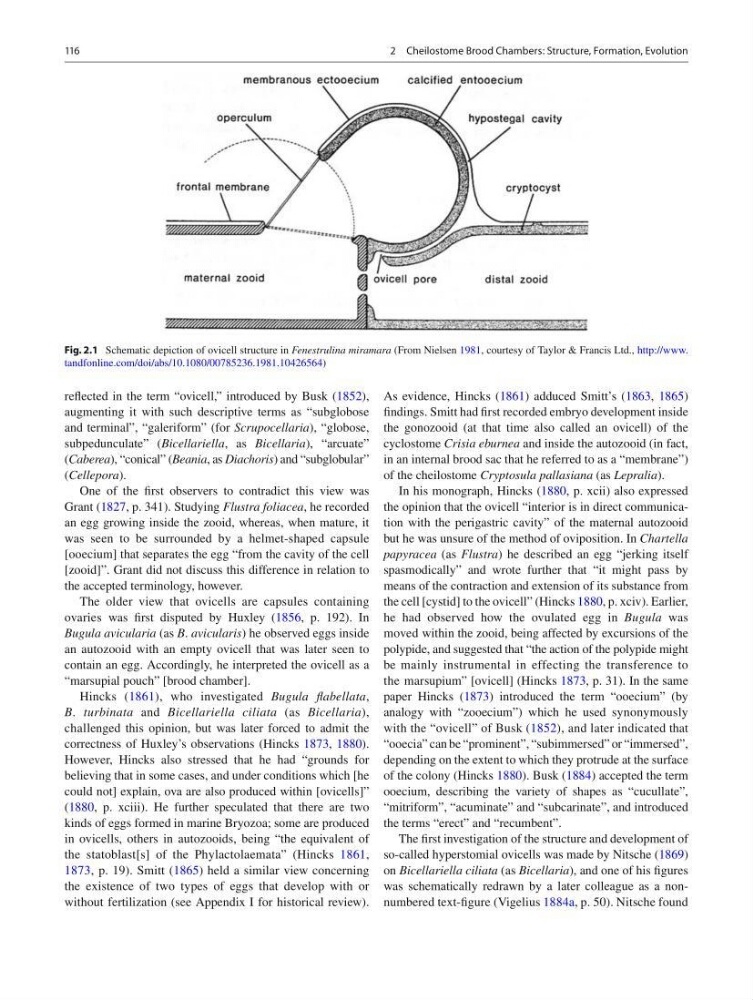
Fig. 2.1 Schematic depiction of ovicell structure in Fenestrulina miramara (From Nielsen 1981 , courtesy of Taylor & Francis Ltd., http://www.
tandfonline.com/doi/abs/10.1080/00785236.1981.10426564 )
2 Cheilostome Brood Chambers: Structure, Formation, Evolution
refl ected in the term “ovicell,” introduced by Busk ( 1852 ),
augmenting it with such descriptive terms as “subglobose
and terminal”, “galeriform” (for Scrupocellaria ), “globose,
subpedunculate” ( Bicellariella , as Bicellaria ), “arcuate”
( Caberea ), “conical” ( Beania , as Diachoris ) and “subglobular”
( Cellepora ).
One of the fi rst observers to contradict this view was
Grant ( 1827 , p. 341). Studying Flustra foliacea , he recorded
an egg growing inside the zooid, whereas, when mature, it
was seen to be surrounded by a helmet-shaped capsule
[ooecium] that separates the egg “from the cavity of the cell
[zooid]”. Grant did not discuss this difference in relation to
the accepted terminology, however.
The older view that ovicells are capsules containing
ovaries was fi rst disputed by Huxley ( 1856 , p. 192). In
Bugula avicularia (as B . avicularis ) he observed eggs inside
an autozooid with an empty ovicell that was later seen to
contain an egg. Accordingly, he interpreted the ovicell as a
“marsupial pouch” [brood chamber].
Hincks ( 1861 ), who investigated Bugula fl abellata ,
B . turbinata and Bicellariella ciliata (as Bicellaria ),
challenged this opinion, but was later forced to admit the
correctness of Huxley’s observations (Hincks 1873 , 1880 ).
However, Hincks also stressed that he had “grounds for
believing that in some cases, and under conditions which [he
could not] explain, ova are also produced within [ovicells]”
( 1880 , p. xciii). He further speculated that there are two
kinds of eggs formed in marine Bryozoa; some are produced
in ovicells, others in autozooids, being “the equivalent of
the statoblast[s] of the Phylactolaemata” (Hincks 1861 ,
1873 , p. 19). Smitt ( 1865 ) held a similar view concerning
the existence of two types of eggs that develop with or
without fertilization (see Appendix I for historical review).
As evidence, Hincks ( 1861 ) adduced Smitt’s ( 1863 , 1865 )
fi ndings. Smitt had fi rst recorded embryo development inside
the gonozooid (at that time also called an ovicell) of the
cyclostome Crisia eburnea and inside the autozooid (in fact,
in an internal brood sac that he referred to as a “membrane”)
of the cheilostome Cryptosula pallasiana (as Lepralia ).
In his monograph, Hincks ( 1880 , p. xcii) also expressed
the opinion that the ovicell “interior is in direct communication with the perigastric cavity” of the maternal autozooid
but he was unsure of the method of oviposition. In Chartella
papyracea (as Flustra ) he described an egg “jerking itself
spasmodically” and wrote further that “it might pass by
means of the contraction and extension of its substance from
the cell [cystid] to the ovicell” (Hincks 1880 , p. xciv). Earlier,
he had observed how the ovulated egg in Bugula was
moved within the zooid, being affected by excursions of the
polypide, and suggested that “the action of the polypide might
be mainly instrumental in effecting the transference to
the marsupium” [ovicell] (Hincks 1873 , p. 31). In the same
paper Hincks ( 1873 ) introduced the term “ooecium” (by
analogy with “zooecium”) which he used synonymously
with the “ovicell” of Busk ( 1852 ), and later indicated that
“ooecia” can be “prominent”, “subimmersed” or “immersed”,
depending on the extent to which they protrude at the surface
of the colony (Hincks 1880 ). Busk ( 1884 ) accepted the term
ooecium, describing the variety of shapes as “cucullate”,
“mitriform”, “acuminate” and “subcarinate”, and introduced
the terms “erect” and “recumbent”.
The fi rst investigation of the structure and development of
so-called hyperstomial ovicells was made by Nitsche ( 1869 )
on Bicellariella ciliata (as Bicellaria ), and one of his fi gures
was schematically redrawn by a later colleague as a nonnumbered text-fi gure (Vigelius 1884a , p. 50). Nitsche found
Fig. 2.1 Schematic depiction of ovicell structure in Fenestrulina miramara (From Nielsen 1981 , courtesy of Taylor & Francis Ltd., http://www.
tandfonline.com/doi/abs/10.1080/00785236.1981.10426564 )
2 Cheilostome Brood Chambers: Structure, Formation, Evolution