

84
3 The Structural Variety and Metabolism of Proteins
CY T OSOL
L
I
5'
,. ...... ~ ~ .... ~
ER-lU M EN
o
p
p
Asn~
c::'
NH 2
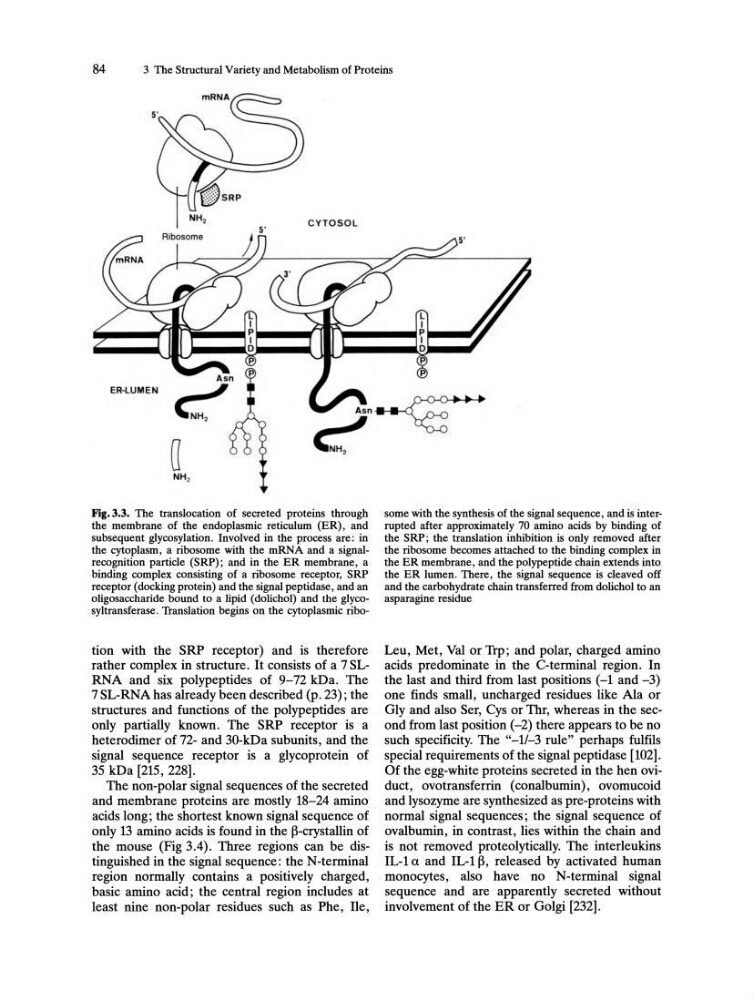
Fig. 3.3. The translocation of secreted proteins through
the membrane of the endoplasmic reticulum (ER), and
subsequent glycosylation. Involved in the process are: in
the cytoplasm, a ribosome with the mRNA and a signalrecognition particle (SRP); and in the ER membrane, a
binding complex consisting of a ribosome receptor, SRP
receptor (docking protein) and the signal peptidase, and an
oligosaccharide bound to a lipid (dolichol) and the glycosyltransferase. Translation begins on the cytoplasmic ribotion with the SRP receptor) and is therefore
rather complex in structure. It consists of a 7 SLRNA and six polypeptides of 9-72 kDa. The
7 SL-RNA has already been described (p. 23); the
structures and functions of the polypeptides are
only partially known. The SRP receptor is a
heterodimer of 72- and 30-kDa subunits, and the
signal sequence receptor is a glycoprotein of
35 kDa [215, 228].
The non-polar signal sequences of the secreted
and membrane proteins are mostly 18-24 amino
acids long; the shortest known signal sequence of
only 13 amino acids is found in the ~-crystallin of
the mouse (Fig 3.4). Three regions can be distinguished in the signal sequence: the N-terminal
region normally contains a positively charged,
basic amino acid; the central region includes at
least nine non-polar residues such as Phe, Ile,
some with the synthesis of the signal sequence, and is interrupted after approximately 70 amino acids by binding of
the SRP; the translation inhibition is only removed after
the ribosome becomes attached to the binding complex in
the ER membrane, and the polypeptide chain extends into
the ER lumen. There, the signal sequence is cleaved off
and the carbohydrate chain transferred from dolichol to an
asparagine residue
Leu, Met, Valor Trp; and polar, charged amino
acids predominate in the C-terminal region. In
the last and third from last positions (-1 and -3)
one finds small, uncharged residues like Ala or
Gly and also Ser, Cys or Thr, whereas in the second from last position (-2) there appears to be no
such specificity. The "-1/-3 rule" perhaps fulfils
special requirements of the signal peptidase [102].
Of the egg-white proteins secreted in the hen oviduct, ovotransferrin (conalbumin), ovomucoid
and lysozyme are synthesized as pre-proteins with
normal signal sequences; the signal sequence of
ovalbumin, in contrast, lies within the chain and
is not removed proteolytically. The interleukins
IL-1 a and IL-1~, released by activated human
monocytes, also have no N-terminal signal
sequence and are apparently secreted without
involvement of the ER or Golgi [232].
3 The Structural Variety and Metabolism of Proteins
CY T OSOL
L
I
5'
,. ...... ~ ~ .... ~
ER-lU M EN
o
p
p
Asn~
c::'
NH 2
Fig. 3.3. The translocation of secreted proteins through
the membrane of the endoplasmic reticulum (ER), and
subsequent glycosylation. Involved in the process are: in
the cytoplasm, a ribosome with the mRNA and a signalrecognition particle (SRP); and in the ER membrane, a
binding complex consisting of a ribosome receptor, SRP
receptor (docking protein) and the signal peptidase, and an
oligosaccharide bound to a lipid (dolichol) and the glycosyltransferase. Translation begins on the cytoplasmic ribotion with the SRP receptor) and is therefore
rather complex in structure. It consists of a 7 SLRNA and six polypeptides of 9-72 kDa. The
7 SL-RNA has already been described (p. 23); the
structures and functions of the polypeptides are
only partially known. The SRP receptor is a
heterodimer of 72- and 30-kDa subunits, and the
signal sequence receptor is a glycoprotein of
35 kDa [215, 228].
The non-polar signal sequences of the secreted
and membrane proteins are mostly 18-24 amino
acids long; the shortest known signal sequence of
only 13 amino acids is found in the ~-crystallin of
the mouse (Fig 3.4). Three regions can be distinguished in the signal sequence: the N-terminal
region normally contains a positively charged,
basic amino acid; the central region includes at
least nine non-polar residues such as Phe, Ile,
some with the synthesis of the signal sequence, and is interrupted after approximately 70 amino acids by binding of
the SRP; the translation inhibition is only removed after
the ribosome becomes attached to the binding complex in
the ER membrane, and the polypeptide chain extends into
the ER lumen. There, the signal sequence is cleaved off
and the carbohydrate chain transferred from dolichol to an
asparagine residue
Leu, Met, Valor Trp; and polar, charged amino
acids predominate in the C-terminal region. In
the last and third from last positions (-1 and -3)
one finds small, uncharged residues like Ala or
Gly and also Ser, Cys or Thr, whereas in the second from last position (-2) there appears to be no
such specificity. The "-1/-3 rule" perhaps fulfils
special requirements of the signal peptidase [102].
Of the egg-white proteins secreted in the hen oviduct, ovotransferrin (conalbumin), ovomucoid
and lysozyme are synthesized as pre-proteins with
normal signal sequences; the signal sequence of
ovalbumin, in contrast, lies within the chain and
is not removed proteolytically. The interleukins
IL-1 a and IL-1~, released by activated human
monocytes, also have no N-terminal signal
sequence and are apparently secreted without
involvement of the ER or Golgi [232].