

72
3 The Structural Variety and Metabolism of Proteins
a)
b)
c)
... HN,/CO .. ·
... HN,/CO'"
CH
0<:;
CH
I
I
CH2
(CH2 )3
I
I
~~
CO .. ·
NH
I
~N-CH3
C=NH
I
e)
g)
HN- CH3
d)
"'HN,/CO ...
N H
~O'"
"'HN,vCO '"
CH
CH
I
I
CH 2
I
CH 2
I
CH 2
f)
HOOC-C-H
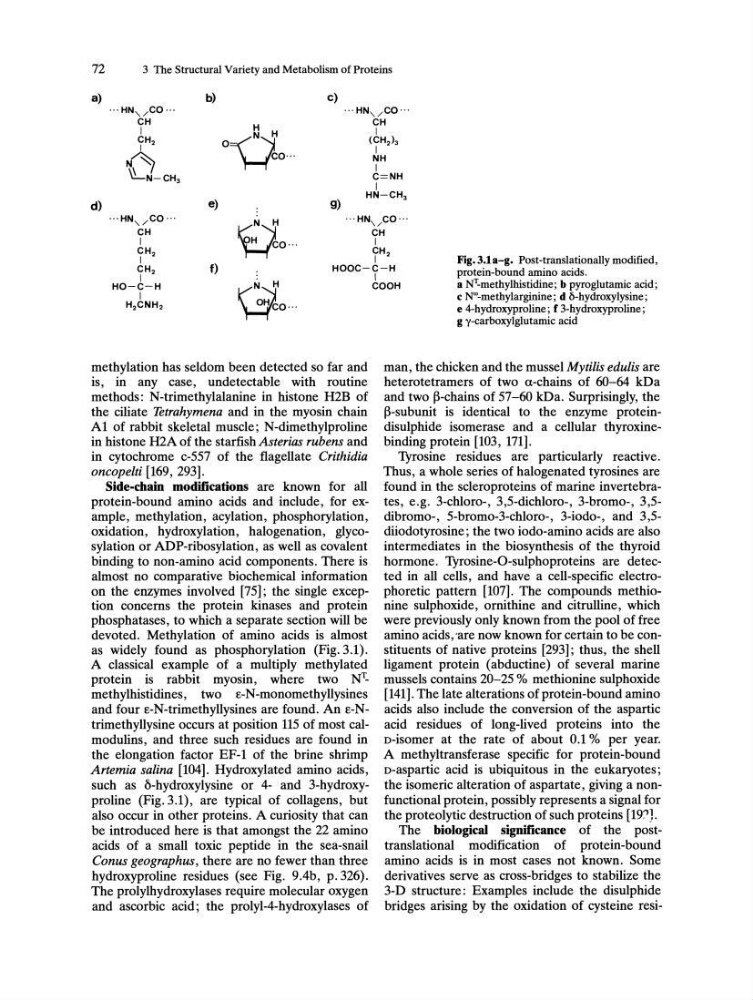
Fig.3.la-g. Post-translationally modified,
protein-bound amino acids.
I
N H
HO-C-H
I
~O'"
H2 CNH 2
methylation has seldom been detected so far and
is, in any case, undetectable with routine
methods: N-trimethylalanine in histone H2B of
the ciliate Tetrahymena and in the myosin chain
Ai of rabbit skeletal muscle; N-dimethylproline
in histone H2A of the starfish Asterias rubens and
in cytochrome c-557 of the flagellate Crithidia
oncopelti [169, 293].
Side-chain modifications are known for all
protein-bound amino acids and include, for example, methylation, acylation, phosphorylation,
oxidation, hydroxylation, halogenation, glycosylation or ADP-ribosylation, as well as covalent
binding to non-amino acid components. There is
almost no comparative biochemical information
on the enzymes involved [75]; the single exception concerns the protein kinases and protein
phosphatases, to which a separate section will be
devoted. Methylation of amino acids is almost
as widely found as phosphorylation (Fig. 3.1).
A classical example of a multiply methylated
protein is rabbit myosin, where two N T _
methylhistidines, two E-N-monomethyllysines
and four E-N-trimethyllysines are found. An E-Ntrimethyllysine occurs at position 115 of most calmodulins, and three such residues are found in
the elongation factor EF-l of the brine shrimp
Artemia salina [104]. Hydroxylated amino acids,
such as o-hydroxylysine or 4- and 3-hydroxyproline (Fig. 3.1), are typical of collagens, but
also occur in other proteins. A curiosity that can
be introduced here is that amongst the 22 amino
acids of a small toxic peptide in the sea-snail
Conus geographus, there are no fewer than three
hydroxyproline residues (see Fig. 9.4b, p.326).
The prolylhydroxylases require molecular oxygen
and ascorbic acid; the prolyl-4-hydroxylases of
I
COOH
a NT-methylhistidine; b pyroglutamic acid;
c NOl-methylarginine; d <>-hydroxylysine;
e 4-hydroxyproline; f 3-hydroxyproline;
g y-carboxylglutamic acid
man, the chicken and the mussel Mytilis edulis are
heterotetramers of two a-chains of 60-64 kDa
and two ~-chains of 57-60 kDa. Surprisingly, the
~-subunit is identical to the enzyme proteindisulphide isomerase and a cellular thyroxinebinding protein [103, 171].
Tyrosine residues are particularly reactive.
Thus, a whole series of halogenated tyrosines are
found in the scleroproteins of marine invertebrates, e.g. 3-chloro-, 3,5-dichloro-, 3-bromo-, 3,5dibromo-, 5-bromo-3-chloro-, 3-iodo-, and 3,5diiodotyrosine; the two iodo-amino acids are also
intermediates in the biosynthesis of the thyroid
hormone. Tyrosine-O-sulphoproteins are detected in all cells, and have a cell-specific electrophoretic pattern [107]. The compounds methionine sulphoxide, ornithine and citrulline, which
were previously only known from the pool of free
amino acids, 'are now known for certain to be constituents of native proteins [293]; thus, the shell
ligament protein (abductine) of several marine
mussels contains 20-25 % methionine sulphoxide
[141]. The late alterations of protein-bound amino
acids also include the conversion of the aspartic
acid residues of long-lived proteins into the
D-isomer at the rate of about 0.1 % per year.
A methyltransferase specific for protein-bound
D-aspartic acid is ubiquitous in the eukaryotes;
the isomeric alteration of aspartate, giving a nonfunctional protein, possibly represents a signal for
the proteolytic destruction of such proteins [19:").
The biological significance of the posttranslational modification of protein-bound
amino acids is in most cases not known. Some
derivatives serve as cross-bridges to stabilize the
3-D structure: Examples include the disulphide
bridges arising by the oxidation of cysteine resi-
3 The Structural Variety and Metabolism of Proteins
a)
b)
c)
... HN,/CO .. ·
... HN,/CO'"
CH
0<:;
CH
I
I
CH2
(CH2 )3
I
I
~~
CO .. ·
NH
I
~N-CH3
C=NH
I
e)
g)
HN- CH3
d)
"'HN,/CO ...
N H
~O'"
"'HN,vCO '"
CH
CH
I
I
CH 2
I
CH 2
I
CH 2
f)
HOOC-C-H
Fig.3.la-g. Post-translationally modified,
protein-bound amino acids.
I
N H
HO-C-H
I
~O'"
H2 CNH 2
methylation has seldom been detected so far and
is, in any case, undetectable with routine
methods: N-trimethylalanine in histone H2B of
the ciliate Tetrahymena and in the myosin chain
Ai of rabbit skeletal muscle; N-dimethylproline
in histone H2A of the starfish Asterias rubens and
in cytochrome c-557 of the flagellate Crithidia
oncopelti [169, 293].
Side-chain modifications are known for all
protein-bound amino acids and include, for example, methylation, acylation, phosphorylation,
oxidation, hydroxylation, halogenation, glycosylation or ADP-ribosylation, as well as covalent
binding to non-amino acid components. There is
almost no comparative biochemical information
on the enzymes involved [75]; the single exception concerns the protein kinases and protein
phosphatases, to which a separate section will be
devoted. Methylation of amino acids is almost
as widely found as phosphorylation (Fig. 3.1).
A classical example of a multiply methylated
protein is rabbit myosin, where two N T _
methylhistidines, two E-N-monomethyllysines
and four E-N-trimethyllysines are found. An E-Ntrimethyllysine occurs at position 115 of most calmodulins, and three such residues are found in
the elongation factor EF-l of the brine shrimp
Artemia salina [104]. Hydroxylated amino acids,
such as o-hydroxylysine or 4- and 3-hydroxyproline (Fig. 3.1), are typical of collagens, but
also occur in other proteins. A curiosity that can
be introduced here is that amongst the 22 amino
acids of a small toxic peptide in the sea-snail
Conus geographus, there are no fewer than three
hydroxyproline residues (see Fig. 9.4b, p.326).
The prolylhydroxylases require molecular oxygen
and ascorbic acid; the prolyl-4-hydroxylases of
I
COOH
a NT-methylhistidine; b pyroglutamic acid;
c NOl-methylarginine; d <>-hydroxylysine;
e 4-hydroxyproline; f 3-hydroxyproline;
g y-carboxylglutamic acid
man, the chicken and the mussel Mytilis edulis are
heterotetramers of two a-chains of 60-64 kDa
and two ~-chains of 57-60 kDa. Surprisingly, the
~-subunit is identical to the enzyme proteindisulphide isomerase and a cellular thyroxinebinding protein [103, 171].
Tyrosine residues are particularly reactive.
Thus, a whole series of halogenated tyrosines are
found in the scleroproteins of marine invertebrates, e.g. 3-chloro-, 3,5-dichloro-, 3-bromo-, 3,5dibromo-, 5-bromo-3-chloro-, 3-iodo-, and 3,5diiodotyrosine; the two iodo-amino acids are also
intermediates in the biosynthesis of the thyroid
hormone. Tyrosine-O-sulphoproteins are detected in all cells, and have a cell-specific electrophoretic pattern [107]. The compounds methionine sulphoxide, ornithine and citrulline, which
were previously only known from the pool of free
amino acids, 'are now known for certain to be constituents of native proteins [293]; thus, the shell
ligament protein (abductine) of several marine
mussels contains 20-25 % methionine sulphoxide
[141]. The late alterations of protein-bound amino
acids also include the conversion of the aspartic
acid residues of long-lived proteins into the
D-isomer at the rate of about 0.1 % per year.
A methyltransferase specific for protein-bound
D-aspartic acid is ubiquitous in the eukaryotes;
the isomeric alteration of aspartate, giving a nonfunctional protein, possibly represents a signal for
the proteolytic destruction of such proteins [19:").
The biological significance of the posttranslational modification of protein-bound
amino acids is in most cases not known. Some
derivatives serve as cross-bridges to stabilize the
3-D structure: Examples include the disulphide
bridges arising by the oxidation of cysteine resi-