

3.1.1 Protein Constituents
71
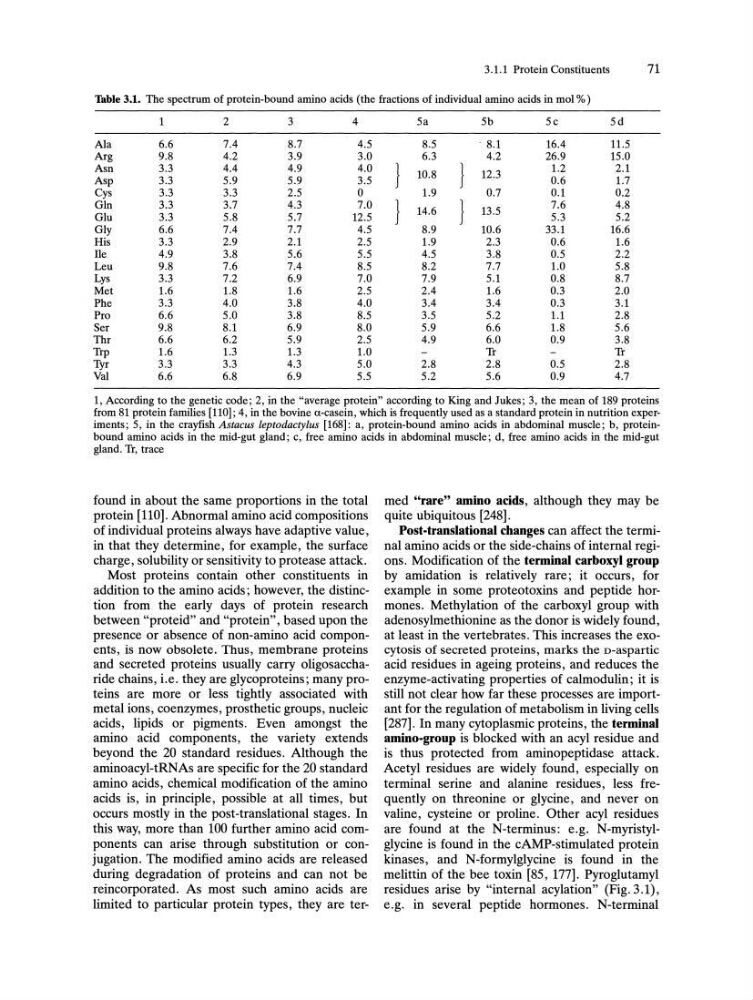
Table 3.1. The spectrum of protein-bound amino acids (the fractions of individual amino acids in mol %)
1
2
3
4
5a
5b
5c
5d
Ala
6.6
7.4
8.7
4.5
8.5
. 8.1
16.4
11.5
Arg
9.8
4.2
3.9
3.0
6.3
4.2
26.9
15.0
Asn
3.3
4.4
4.9
4.0
} 10.8 } 12.3
1.2
2.1
Asp
3.3
5.9
5.9
3.5
0.6
1.7
Cys
3.3
3.3
2.5
0
1.9
0.7
0.1
0.2
Gln
3.3
3.7
4.3
7.0
} 14.6 } 13.5
7.6
4.8
Glu
3.3
5.8
5.7
12.5
5.3
5.2
Gly
6.6
7.4
7.7
4.5
8.9
10.6
33.1
16.6
His
3.3
2.9
2.1
2.5
1.9
2.3
0.6
1.6
He
4.9
3.8
5.6
5.5
4.5
3.8
0.5
2.2
Leu
9.8
7.6
7.4
8.5
8.2
7.7
1.0
5.8
Lys
3.3
7.2
6.9
7.0
7.9
5.1
0.8
8.7
Met
1.6
1.8
1.6
2.5
2.4
1.6
0.3
2.0
Phe
3.3
4.0
3.8
4.0
3.4
3.4
0.3
3.1
Pro
6.6
5.0
3.8
8.5
3.5
5.2
1.1
2.8
Ser
9.8
8.1
6.9
8.0
5.9
6.6
1.8
5.6
Thr
6.6
6.2
5.9
2.5
4.9
6.0
0.9
3.8
Trp
1.6
1.3
1.3
1.0
Tr
Tr
Tyr
3.3
3.3
4.3
5.0
2.8
2.8
0.5
2.8
Val
6.6
6.8
6.9
5.5
5.2
5.6
0.9
4.7
1, According to the genetic code; 2, in the "average protein" according to King and Jukes; 3, the mean of 189 proteins
from 81 protein families [110]; 4, in the bovine a-casein, which is frequently used as a standard protein in nutrition experiments; 5, in the crayfish Astacus leptodactylus [168]: a, protein-bound amino acids in abdominal muscle; b, proteinbound amino acids in the mid-gut gland; c, free amino acids in abdominal muscle; d, free amino acids in the mid-gut
gland. Tr, trace
found in about the same proportions in the total
protein [110]. Abnormal amino acid compositions
of individual proteins always have adaptive value,
in that they determine, for example, the surface
charge, solubility or sensitivity to protease attack.
Most proteins contain other constituents in
addition to the amino acids; however, the distinction from the early days of protein research
between "proteid" and "protein", based upon the
presence or absence of non-amino acid components, is now obsolete. Thus, membrane proteins
and secreted proteins usually carry oligosaccharide chains, i.e. they are glycoproteins; many proteins are more or less tightly associated with
metal ions, coenzymes, prosthetic groups, nucleic
acids, lipids or pigments. Even amongst the
amino acid components, the variety extends
beyond the 20 standard residues. Although the
aminoacyl-tRNAs are specific for the 20 standard
amino acids, chemical modification of the amino
acids is, in principle, possible at all times, but
occurs mostly in the post-translational stages. In
this way, more than 100 further amino acid components can arise through substitution or conjugation. The modified amino acids are released
during degradation of proteins and can not be
reincorporated. As most such amino acids are
limited to particular protein types, they are termed "rare" amino acids, although they may be
quite ubiquitous [248].
Post-translational changes can affect the terminal amino acids or the side-chains of internal regions. Modification of the terminal carboxyl group
by amidation is relatively rare; it occurs, for
example in some proteotoxins and peptide hormones. Methylation of the carboxyl group with
adenosylmethionine as the donor is widely found,
at least in the vertebrates. This increases the exocytosis of secreted proteins, marks the D-aspartic
acid residues in ageing proteins, and reduces the
enzyme-activating properties of calmodulin; it is
still not clear how far these processes are important for the regulation of metabolism in living cells
[287]. In many cytoplasmic proteins, the terminal
amino-group is blocked with an acyl residue and
is thus protected from aminopeptidase attack.
Acetyl residues are widely found, especially on
terminal serine and alanine residues, less frequently on threonine or glycine, and never on
valine, cysteine or proline. Other acyl residues
are found at the N-terminus: e.g. N-myristylglycine is found in the cAMP-stimulated protein
kinases, and N-formylglycine is found in the
melittin of the bee toxin [85, 177]. Pyroglutamyl
residues arise by "internal acylation" (Fig. 3.1),
e.g. in several peptide hormones. N-terminal
71
Table 3.1. The spectrum of protein-bound amino acids (the fractions of individual amino acids in mol %)
1
2
3
4
5a
5b
5c
5d
Ala
6.6
7.4
8.7
4.5
8.5
. 8.1
16.4
11.5
Arg
9.8
4.2
3.9
3.0
6.3
4.2
26.9
15.0
Asn
3.3
4.4
4.9
4.0
} 10.8 } 12.3
1.2
2.1
Asp
3.3
5.9
5.9
3.5
0.6
1.7
Cys
3.3
3.3
2.5
0
1.9
0.7
0.1
0.2
Gln
3.3
3.7
4.3
7.0
} 14.6 } 13.5
7.6
4.8
Glu
3.3
5.8
5.7
12.5
5.3
5.2
Gly
6.6
7.4
7.7
4.5
8.9
10.6
33.1
16.6
His
3.3
2.9
2.1
2.5
1.9
2.3
0.6
1.6
He
4.9
3.8
5.6
5.5
4.5
3.8
0.5
2.2
Leu
9.8
7.6
7.4
8.5
8.2
7.7
1.0
5.8
Lys
3.3
7.2
6.9
7.0
7.9
5.1
0.8
8.7
Met
1.6
1.8
1.6
2.5
2.4
1.6
0.3
2.0
Phe
3.3
4.0
3.8
4.0
3.4
3.4
0.3
3.1
Pro
6.6
5.0
3.8
8.5
3.5
5.2
1.1
2.8
Ser
9.8
8.1
6.9
8.0
5.9
6.6
1.8
5.6
Thr
6.6
6.2
5.9
2.5
4.9
6.0
0.9
3.8
Trp
1.6
1.3
1.3
1.0
Tr
Tr
Tyr
3.3
3.3
4.3
5.0
2.8
2.8
0.5
2.8
Val
6.6
6.8
6.9
5.5
5.2
5.6
0.9
4.7
1, According to the genetic code; 2, in the "average protein" according to King and Jukes; 3, the mean of 189 proteins
from 81 protein families [110]; 4, in the bovine a-casein, which is frequently used as a standard protein in nutrition experiments; 5, in the crayfish Astacus leptodactylus [168]: a, protein-bound amino acids in abdominal muscle; b, proteinbound amino acids in the mid-gut gland; c, free amino acids in abdominal muscle; d, free amino acids in the mid-gut
gland. Tr, trace
found in about the same proportions in the total
protein [110]. Abnormal amino acid compositions
of individual proteins always have adaptive value,
in that they determine, for example, the surface
charge, solubility or sensitivity to protease attack.
Most proteins contain other constituents in
addition to the amino acids; however, the distinction from the early days of protein research
between "proteid" and "protein", based upon the
presence or absence of non-amino acid components, is now obsolete. Thus, membrane proteins
and secreted proteins usually carry oligosaccharide chains, i.e. they are glycoproteins; many proteins are more or less tightly associated with
metal ions, coenzymes, prosthetic groups, nucleic
acids, lipids or pigments. Even amongst the
amino acid components, the variety extends
beyond the 20 standard residues. Although the
aminoacyl-tRNAs are specific for the 20 standard
amino acids, chemical modification of the amino
acids is, in principle, possible at all times, but
occurs mostly in the post-translational stages. In
this way, more than 100 further amino acid components can arise through substitution or conjugation. The modified amino acids are released
during degradation of proteins and can not be
reincorporated. As most such amino acids are
limited to particular protein types, they are termed "rare" amino acids, although they may be
quite ubiquitous [248].
Post-translational changes can affect the terminal amino acids or the side-chains of internal regions. Modification of the terminal carboxyl group
by amidation is relatively rare; it occurs, for
example in some proteotoxins and peptide hormones. Methylation of the carboxyl group with
adenosylmethionine as the donor is widely found,
at least in the vertebrates. This increases the exocytosis of secreted proteins, marks the D-aspartic
acid residues in ageing proteins, and reduces the
enzyme-activating properties of calmodulin; it is
still not clear how far these processes are important for the regulation of metabolism in living cells
[287]. In many cytoplasmic proteins, the terminal
amino-group is blocked with an acyl residue and
is thus protected from aminopeptidase attack.
Acetyl residues are widely found, especially on
terminal serine and alanine residues, less frequently on threonine or glycine, and never on
valine, cysteine or proline. Other acyl residues
are found at the N-terminus: e.g. N-myristylglycine is found in the cAMP-stimulated protein
kinases, and N-formylglycine is found in the
melittin of the bee toxin [85, 177]. Pyroglutamyl
residues arise by "internal acylation" (Fig. 3.1),
e.g. in several peptide hormones. N-terminal