

16.2.2 Sterols ofthe Insects
631
HO
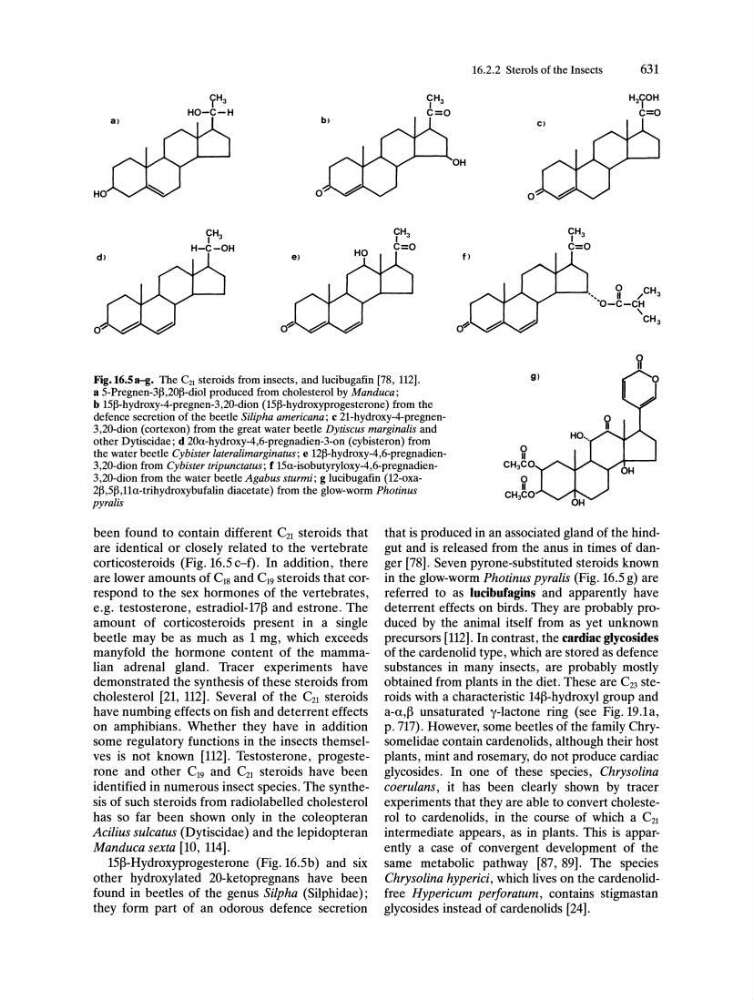
Fig.16.5a-g. The e21 steroids from insects, and lucibugafin [78, 112].
a 5-Pregnen-3~,20~-diol produced from cholesterol by Manduca;
b 15~-hydroxy-4-pregnen-3,20-dion (15~-hydroxyprogesterone) from the
defence secretion of the beetle Silipha americana; c 21-hydroxy-4-pregnen3,20-dion (cortexon) from the great water beetle Dytiscus marginalis and
other Dytiscidae; d 20a-hydroxy-4,6-pregnadien-3-on (cybisteron) from
the water beetle Cybister lateralimarginatus; e 12~-hydroxy-4,6-pregnadien3,20-dion from Cybister tripunctatus; f 15a-isobutyryloxy-4,6-pregnadien3,20-dion from the water beetle Agabus sturmi; g lucibugafin (12-oxa2~,5~,11a-trihydroxybufalin diacetate) from the glow-worm Photinus
pyralis
been found to contain different ~I steroids that
are identical or closely related to the vertebrate
corticosteroids (Fig. 16.5 c-f). In addition, there
are lower amounts of CIS and C I9 steroids that correspond to the sex hormones of the vertebrates,
e.g. testosterone, estradiol-17~ and estrone. The
amount of corticosteroids present in a single
beetle may be as much as 1 mg, which exceeds
manyfold the hormone content of the mammalian adrenal gland. Tracer experiments have
demonstrated the synthesis of these steroids from
cholesterol [21, 112]. Several of the CZI steroids
have numbing effects on fish and deterrent effects
on amphibians. Whether they have in addition
some regulatory functions in the insects themselves is not known [112]. Testosterone, progesterone and other CI9 and C21 steroids have been
identified in numerous insect species. The synthesis of such steroids from radiolabelled cholesterol
has so far been shown only in the coleopteran
Acilius sulcatus (Dytiscidae) and the lepidopteran
Manduca sexta [10, 114].
15~-Hydroxyprogesterone (Fig. 16.5b) and six
other hydroxylated 20-ketopregnans have been
found in beetles of the genus Silpha (Silphidae);
they form part of an odorous defence secretion
that is produced in an associated gland of the hindgut and is released from the anus in times of danger [78]. Seven pyrone-substituted steroids known
in the glow-worm Photinus pyralis (Fig. 16.5 g) are
referred to as lucibufagins and apparently have
deterrent effects on birds. They are probably produced by the animal itself from as yet unknown
precursors [112]. In contrast, the cardiac glycosides
of the cardenolid type, which are stored as defence
substances in many insects, are probably mostly
obtained from plants in the diet. These are CZ3 steroids with a characteristic 14~-hydroxyl group and
a-a,~ unsaturated y-Iactone ring (see Fig. 19.1a,
p. 717). However, some beetles of the family Chrysomelidae contain cardenolids, although their host
plants, mint and rosemary, do not produce cardiac
glycosides. In one of these species, Chrysolina
coerulans, it has been clearly shown by tracer
experiments that they are able to convert cholesterol to cardenolids, in the course of which a CZI
intermediate appears, as in plants. This is apparently a case of convergent development of the
same metabolic pathway [87, 89]. The species
Chrysolina hyperici, which lives on the cardenolidfree Hypericum per!oratum, contains stigmastan
glycosides instead of cardenolids [24].