

614
15 Lipids
level of either precursor concentrations or the
enzymes for formation and degradation, have not
yet been described in detail. In the emperor
moths, there is a marked difference between the
sexes in the JH titre: freshly hatched males contain 16.9 ng JH II/g and 0.4 ng JH I/g compared
with 0.06 and 0.01 ng/g, respectively, in the females. The biological significance of this sexual
dimorphism awaits explanation. Juvenile hormone is passed from male to female during mating; however, allatectomied males and females
produce viable progeny [8]. Whereas mosquito
larvae have only JH III, Drosophila melanogaster
also produces the unusual JHB3 (JH bisepoxide)
[222]. Traces of JH III have been detected in the
crustacean Libinia emarginata but this is probably
an oxidation artefact of the 1000-fold higher concentration of methylfarnesinic acid [147]. JH III
has even been isolated from plants [263].
The process of juvenile hormone synthesis has
been studied with tracer experiments and in vitro
investigations of many insect species [234]. The
biosynthesis of JH III occurs via the classical
isoprenoid pathway (see Fig. 16.2, p. 625) via farnesyl pyrophosphate, which by the cleavage of
the pyrophosphate residue, oxidation to the acid,
epoxidation and methyl transfer is converted to
JH III. In the lepidopterans, the epoxidation
EMAPP
HIPP
IPP
~OPP + ~OPP + Nopp
I
8)
\JvwOH BHF
,
b)
AJvvvOOH
BHFS
I
I
C)
t
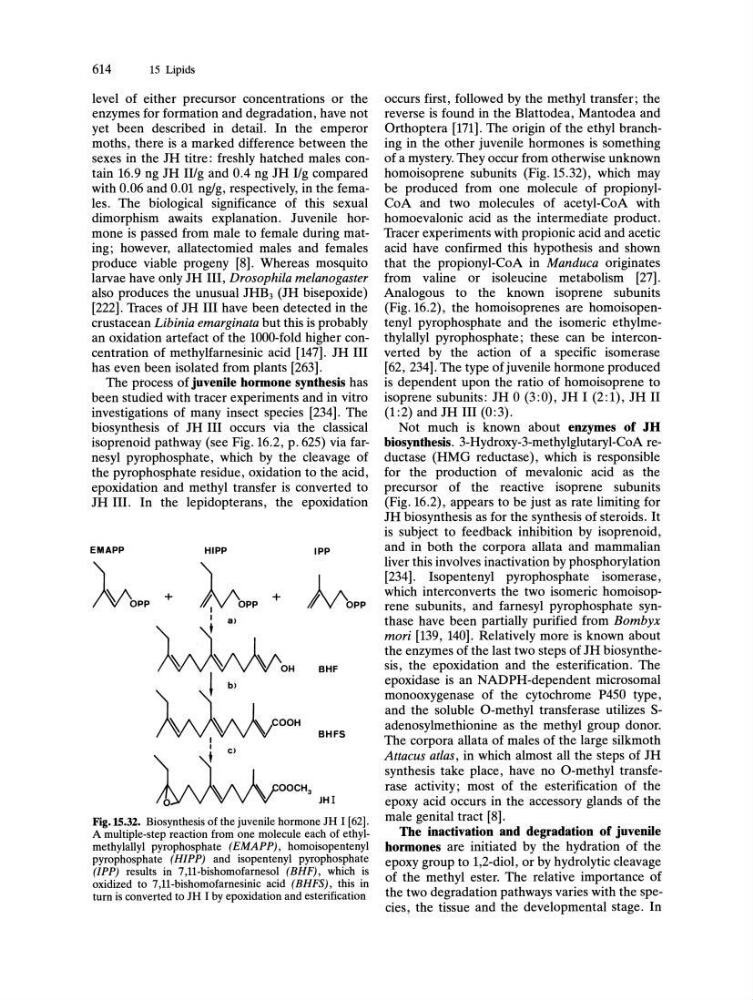
Fig.15.32. Biosynthesis of the juvenile hormone JH 1[62].
A multiple-step reaction from one molecule each of ethylmethylallyl pyrophosphate (EMAPP) , homoisopentenyl
pyrophosphate (HIPP) and isopentenyl pyrophosphate
(IPP) results in 7,1l-bishomofamesol (BHF) , which is
oxidized to 7,1l-bishomofamesinic acid (BHFS) , this in
tum is converted to JH I by epoxidation and esterification
occurs first, followed by the methyl transfer; the
reverse is found in the Blattodea, Mantodea and
Orthoptera [171]. The origin of the ethyl branching in the other juvenile hormones is something
of a mystery. They occur from otherwise unknown
homo isoprene subunits (Fig. 15.32), which may
be produced from one molecule of propionylCoA and two molecules of acetyl-CoA with
homoevalonic acid as the intermediate product.
Tracer experiments with propionic acid and acetic
acid have confirmed this hypothesis and shown
that the propionyl-CoA in Manduca originates
from valine or isoleucine metabolism [27].
Analogous to the known isoprene subunits
(Fig. 16.2), the homoisoprenes are homoisopentenyl pyrophosphate and the isomeric ethylmethylallyl pyrophosphate; these can be interconverted by the action of a specific isomerase
[62, 234]. The type of juvenile hormone produced
is dependent upon the ratio of homoisoprene to
isoprene subunits: JH 0 (3:0), JH 1(2:1), JH II
(1:2) and JH III (0:3).
Not much is known about enzymes of JH
biosynthesis. 3-Hydroxy-3-methylglutaryl-CoA reductase (HMG reductase), which is responsible
for the production of mevalonic acid as the
precursor of the reactive isoprene subunits
(Fig. 16.2), appears to be just as rate limiting for
JH biosynthesis as for the synthesis of steroids. It
is subject to feedback inhibition by isoprenoid,
and in both the corpora allata and mammalian
liver this involves inactivation by phosphorylation
[234]. Isopentenyl pyrophosphate isomerase,
which interconverts the two isomeric homoisoprene subunits, and farnesyl pyrophosphate synthase have been partially purified from Bombyx
mori [139, 140]. Relatively more is known about
the enzymes of the last two steps of JH biosynthesis, the epoxidation and the esterification. The
epoxidase is an NADPH-dependent microsomal
monooxygenase of the cytochrome P450 type,
and the soluble O-methyl transferase utilizes Sadenosylmethionine as the methyl group donor.
The corpora allata of males of the large silkmoth
Attacus atlas, in which almost all the steps of JH
synthesis take place, have no O-methyl transferase activity; most of the esterification of the
epoxy acid occurs in the accessory glands of the
male genital tract [8].
The inactivation and degradation of juvenile
hormones are initiated by the hydration of the
epoxy group to 1,2-diol, or by hydrolytic cleavage
of the methyl ester. The relative importance of
the two degradation pathways varies with the species, the tissue and the developmental stage. In