

15.4.2 Biosynthesis of the Phospholipids
603
ATP
ADP
NAD+ NADH+H+
Glycerol _ _ ' --.:::..._L.:..... __ Glycerophosphate '-.../ DihydroxyacetoneH20
CoA
CoA
~ ~
phosphate
Fatty acid
0CYI-COA
®~ACYI_COA
ATP ADP
NADP+ NADPH+W
Monoacylglycerol
'-=-='"
Monoacylglycero-' '-- /
AcyldihydroxyH20
~OA
Fatty acid
Phosphatidylinositol
CMP@
~I
Fatty aCi:hlOSPhr''', Ao,,-CoA
""""' fPhO:::::,
PI',
CTP
COP-diacylglycerol -'>---'-':::'®~9-/~--:~~~~~
-~;~~~:H'~
Phosphatidylglycerophosphate
~H20
f'-Pi
Phosphatidylglycerol
~ COP-diacylglycerol
f
Diacylglycerol ~
Alkylglycerophosphate
~~:~olamine 17\6
{,\
ChDP I ,Acyl-CoA
FACYI_COA
\V
0/ come®
CM!'
CMP
CoA
CoA
l-Alkyl-2-acylserine
,ethanolamine
glycerol
glycerophosphate
rCMp
Diphosphatidylglycerol
CO
2
~
Phosphatidylcholine
Alkyl-and
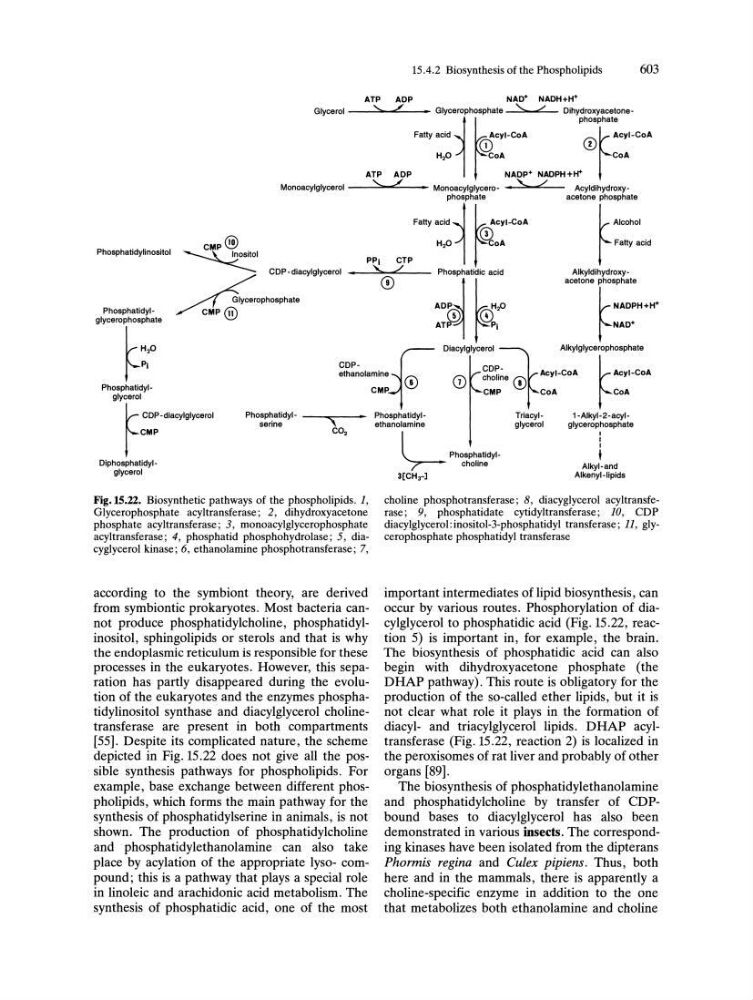
Fig.15.22. Biosynthetic pathways of the phospholipids, 1,
Glycerophosphate acyltransferase; 2, dihydroxyacetone
phosphate acyltransferase; 3, monoacylglycerophosphate
acyltransferase; 4, phosphatid phosphohydrolase; 5, diacyglycerol kinase; 6, ethanolamine phosphotransferase; 7,
according to the symbiont theory, are derived
from symbiontic prokaryotes. Most bacteria cannot produce phosphatidylcholine, phosphatidylinositol, sphingolipids or sterols and that is why
the endoplasmic reticulum is responsible for these
processes in the eukaryotes. However, this separation has partly disappeared during the evolution of the eukaryotes and the enzymes phosphatidylinositol synthase and diacylglycerol cholinetransferase are present in both compartments
[55]. Despite its complicated nature, the scheme
depicted in Fig. 15.22 does not give all the possible synthesis pathways for phospholipids. For
example, base exchange between different phospholipids, which forms the main pathway for the
synthesis of phosphatidylserine in animals, is not
shown. The production of phosphatidylcholine
and phosphatidylethanolamine can also take
place by acylation of the appropriate lyso- compound; this is a pathway that plays a special role
in linoleic and arachidonic acid metabolism. The
synthesis of phosphatidic acid, one of the most
3[CH3-1
Alkenyl-lipids
choline phosphotransferase; 8, diacyglycerol acyltransferase; 9, phosphatidate cytidyltransferase; 10, CDP
diacylglycerol: inositol-3-phosphatidyl transferase; 11, glycerophosphate phosphatidyl transferase
important intermediates of lipid biosynthesis, can
occur by various routes. Phosphorylation of diacylglycerol to phosphatidic acid (Fig. 15.22, reaction 5) is important in, for example, the brain.
The biosynthesis of phosphatidic acid can also
begin with dihydroxyacetone phosphate (the
DHAP pathway). This route is obligatory for the
production of the so-called ether lipids, but it is
not clear what role it plays in the formation of
diacyl- and triacylglycerol lipids. DHAP acyltransferase (Fig. 15.22, reaction 2) is localized in
the peroxisomes of rat liver and probably of other
organs [89].
The biosynthesis of phosphatidylethanolamine
and phosphatidylcholine by transfer of CDPbound bases to diacylglycerol has also been
demonstrated in various insects. The corresponding kinases have been isolated from the dipterans
Phormis regina and Culex pipiens. Thus, both
here and in the mammals, there is apparently a
choline-specific enzyme in addition to the one
that metabolizes both ethanolamine and choline