

580
15 Lipids
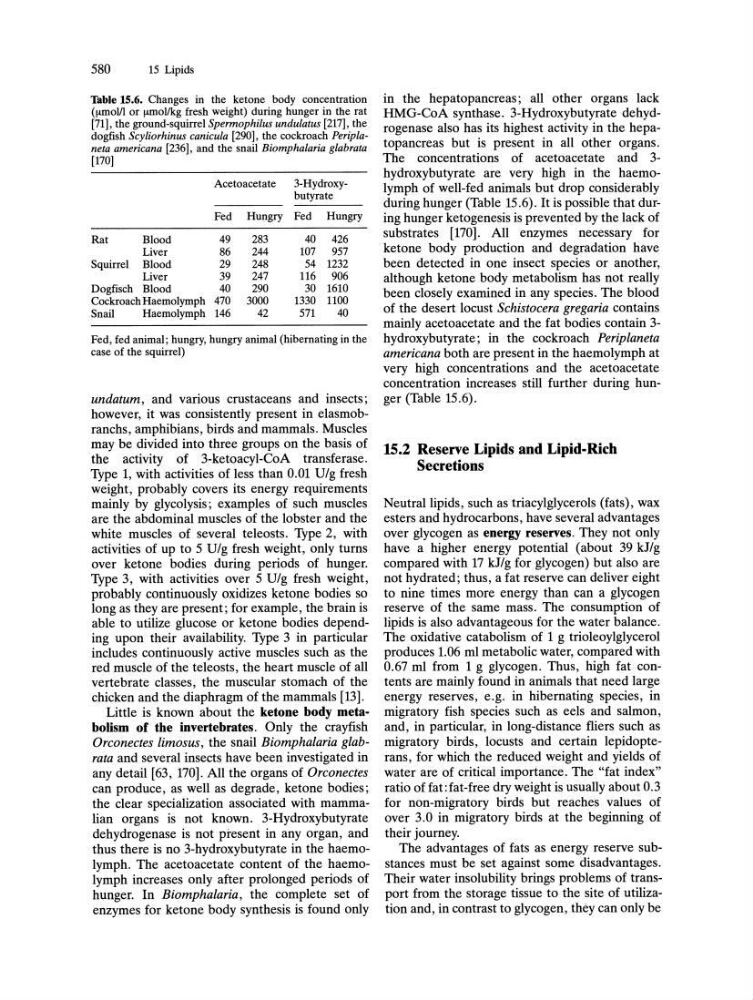
Table 15.6. Changes in the ketone body concentration
(llIIlol/l or llIIlol/kg fresh weight) during hunger in the rat
[71], the ground-squirrel Spermophilus undulatus [217], the
dogfish Scyliorhinus canicula [290], the cockroach Periplaneta americana [236], and the snail Biomphalaria glabrata
[170]
Acetoacetate
3-Hydroxybutyrate
Fed Hungry Fed Hungry
Rat
Blood
49
283
40 426
Liver
86
244
107 957
Squirrel Blood
29
248
54 1232
Liver
39
247
116 906
Dogfisch Blood
40
290
30 1610
Cockroach Haemolymph 470 3000
1330 1100
Snail
Haemolymph 146
42
571
40
Fed, fed animal; hungry, hungry animal (hibernating in the
case of the squirrel)
undatum, and various crustaceans and insects;
however, it was consistently present in elasmobranchs, amphibians, birds and mammals. Muscles
may be divided into three groups on the basis of
the activity of 3-ketoacyl-CoA transferase.
lYPe 1, with activities of less than 0.01 DIg fresh
weight, probably covers its energy requirements
mainly by glycolysis; examples of such muscles
are the abdominal muscles of the lobster and the
white muscles of several teleosts. Type 2, with
activities of up to 5 DIg fresh weight, only turns
over ketone bodies during periods of hunger.
Type 3, with activities over 5 DIg fresh weight,
probably continuously oxidizes ketone bodies so
long as they are present; for example, the brain is
able to utilize glucose or ketone bodies depending upon their availability. Type 3 in particular
includes continuously active muscles such as the
red muscle of the teleosts, the heart muscle of all
vertebrate classes, the muscular stomach of the
chicken and the diaphragm of the mammals [13].
Little is known about the ketone body metabolism of the invertebrates. Only the crayfish
Orconectes limosus, the snail Biomphalaria glabrata and several insects have been investigated in
any detail [63, 170]. All the organs of Orconectes
can produce, as well as degrade, ketone bodies;
the clear specialization associated with mammalian organs is not known. 3-Hydroxybutyrate
dehydrogenase is not present in any organ, and
thus there is no 3-hydroxybutyrate in the haemolymph. The acetoacetate content of the haemolymph increases only after prolonged periods of
hunger. In Biomphalaria, the complete set of
enzymes for ketone body synthesis is found only
in the hepatopancreas; all other organs lack
HMG-CoA synthase. 3-Hydroxybutyrate dehydrogenase also has its highest activity in the hepatopancreas but is present in all other organs.
The concentrations of acetoacetate and 3hydroxybutyrate are very high in the haemolymph of well-fed animals but drop considerably
during hunger (Table 15.6). It is possible that during hunger ketogenesis is prevented by the lack of
substrates [170]. All enzymes necessary for
ketone body production and degradation have
been detected in one insect species or another,
although ketone body metabolism has not really
been closely examined in any species. The blood
of the desert locust Schistocera gregaria contains
mainly acetoacetate and the fat bodies contain 3hydroxybutyrate; in the cockroach Periplaneta
americana both are present in the haemolymph at
very high concentrations and the acetoacetate
concentration increases still further during hunger (Table 15.6).
15.2 Reserve Lipids and Lipid-Rich
Secretions
Neutral lipids, such as triacylglycerols (fats), wax
esters and hydrocarbons, have several advantages
over glycogen as energy reserves. They not only
have a higher energy potential (about 39 kJ/g
compared with 17 kJ/g for glycogen) but also are
not hydrated; thus, a fat reserve can deliver eight
to nine times more energy than can a glycogen
reserve of the same mass. The consumption of
lipids is also advantageous for the water balance.
The oxidative catabolism of 1 g trioleoylglycerol
produces 1.06 ml metabolic water, compared with
0.67 rnl from 1 g glycogen. Thus, high fat contents are mainly found in animals that need large
energy reserves, e.g. in hibernating species, in
migratory fish species such as eels and salmon,
and, in particular, in long-distance fliers such as
migratory birds, locusts and certain lepidopterans, for which the reduced weight and yields of
water are of critical importance. The "fat index"
ratio of fat: fat-free dry weight is usually about 0.3
for non-migratory birds but reaches values of
over 3.0 in migratory birds at the beginning of
their journey.
The advantages of fats as energy reserve substances must be set against some disadvantages.
Their water insolubility brings problems of transport from the storage tissue to the site of utilization and, in contrast to glycogen, they can only be