

566
15 Lipids
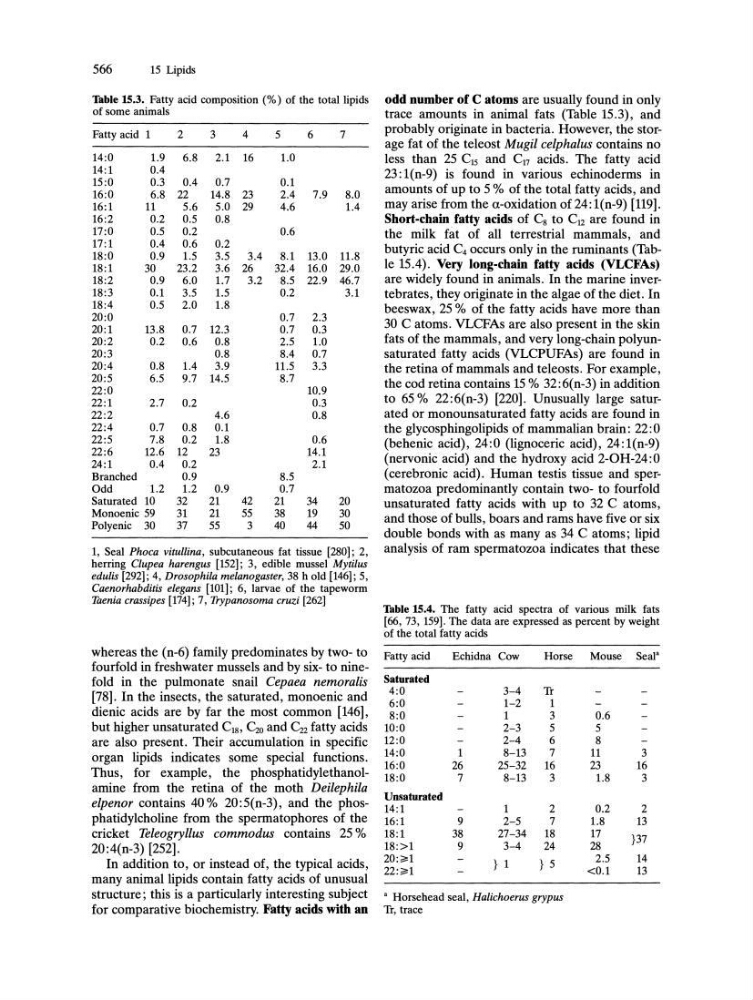
Table 15.3. Fatty acid composition (%) of the total lipids
of some animals
Fatty acid 1
2
3
4
5
6
7
14:0
1.9
6.8
2.1 16
1.0
14:1
0.4
15:0
0.3
0.4
0.7
0.1
16:0
6.8 22
14.8 23
2.4
7.9
8.0
16:1
11
5.6
5.0 29
4.6
1.4
16:2
0.2
0.5
0.8
17:0
0.5
0.2
0.6
17:1
0.4
0.6
0.2
18:0
0.9
1.5
3.5
3.4
8.1 13.0 11.8
18:1
30
23.2
3.6 26
32.4 16.0 29.0
18:2
0.9
6.0
1.7
3.2
8.5 22.9 46.7
18:3
0.1
3.5
1.5
0.2
3.1
18:4
0.5
2.0
1.8
20:0
0.7
2.3
20:1
13.8
0.7 12.3
0.7
0.3
20:2
0.2
0.6
0.8
2.5
1.0
20:3
0.8
8.4
0.7
20:4
0.8
1.4
3.9
11.5
3.3
20:5
6.5
9.7 14.5
8.7
22:0
10.9
22:1
2.7
0.2
0.3
22:2
4.6
0.8
22:4
0.7
0.8
0.1
22:5
7.8
0.2
1.8
0.6
22:6
12.6 12
23
14.1
24:1
0.4
0.2
2.1
Branched
0.9
8.5
Odd
1.2
1.2
0.9
0.7
Saturated 10
32
21
42
21
34
20
Monoenic 59
31
21
55
38
19
30
Polyenic 30
37
55
3
40
44
50
1, Seal Phoca vitullina, subcutaneous fat tissue [280]; 2,
herring Clupea harengus [152]; 3, edible mussel Mytilus
edulis [292]; 4, Drosophila melanogaster, 38 hold [146]; 5,
Caenorhabditis elegans [101]; 6, larvae of the tapeworm
Taenia crassipes [174]; 7, Trypanosoma cruzi [262]
whereas the (n-6) family predominates by two- to
fourfold in freshwater mussels and by six- to ninefold in the pulmonate snail Cepaea nemoralis
[78]. In the insects, the saturated, monoenic and
dienic acids are by far the most common [146],
but higher unsaturated CIS, ~o and C22 fatty acids
are also present. Their accumulation in specific
organ lipids indicates some special functions.
Thus, for example, the phosphatidylethanolamine from the retina of the moth Deilephila
elpenor contains 40% 20:5(n-3), and the phosphatidylcholine from the spermatophores of the
cricket Teleogryllus commodus contains 25 %
20:4(n-3) [252].
In addition to, or instead of, the typical acids,
many animal lipids contain fatty acids of unusual
structure; this is a particularly interesting subject
for comparative biochemistry. Fatty acids with an
odd number of C atoms are usually found in only
trace amounts in animal fats (Table 15.3), and
probably originate in bacteria. However, the storage fat of the teleost Mugil celphalus contains no
less than 25 CIS and C17 acids. The fatty acid
23: 1(n-9) is found in various echinoderms in
amounts of up to 5 % of the total fatty acids, and
may arise from the a-oxidation of 24: 1(n-9) [119].
Short-chain fatty acids of Cs to C12 are found in
the milk fat of all terrestrial mammals, and
butyric acid C4 occurs only in the ruminants (Table 15.4). Very long-chain fatty acids (VLCFAs)
are widely found in animals. In the marine invertebrates, they originate in the algae of the diet. In
beeswax, 25 % of the fatty acids have more than
30 C atoms. VLCFAs are also present in the skin
fats of the mammals, and very long-chain polyunsaturated fatty acids (VLCPUFAs) are found in
the retina of mammals and teleosts. For example,
the cod retina contains 15 % 32:6(n-3) in addition
to 65 % 22:6(n-3) [220]. Unusually large saturated or monounsaturated fatty acids are found in
the glycosphingolipids of mammalian brain: 22: 0
(behenic acid), 24:0 (lignoceric acid), 24: 1(n-9)
(nervonic acid) and the hydroxy acid 2-0H-24:0
(cerebronic acid). Human testis tissue and spermatozoa predominantly contain two- to fourfold
unsaturated fatty acids with up to 32 C atoms,
and those of bulls, boars and rams have five or six
double bonds with as many as 34 C atoms; lipid
analysis of ram spermatozoa indicates that these
Table 15.4. The fatty acid spectra of various milk fats
[66, 73, 159]. The data are expressed as percent by weight
of the total fatty acids
Fatty acid
Echidna Cow
Horse
Mouse Seal"
Saturated
4:0
3-4
Tr
6:0
1-2
1
8:0
1
3
0.6
10:0
2-3
5
5
12:0
2-4
6
8
14:0
1
8-13
7
11
3
16:0
26
25-32
16
23
16
18:0
7
8-13
3
1.8
3
Unsaturated
14:1
1
2
0.2
2
16:1
9
2-5
7
1.8
13
18:1
38
27-34
18
17
}37
18:>1
9
3-4
24
28
20: ;;.1
} 1
} 5
2.5
14
22: ;;.1
<0.1
13
" Horsehead seal, Halichoerus grypus
Tr, trace