

14.10.2 End Products of Anaerobic Metabolism
539
Glycogen
I
I
I
,
Aspartate ---o-Oxaloacetate ..... ""---- Phosphoenolpyruvate
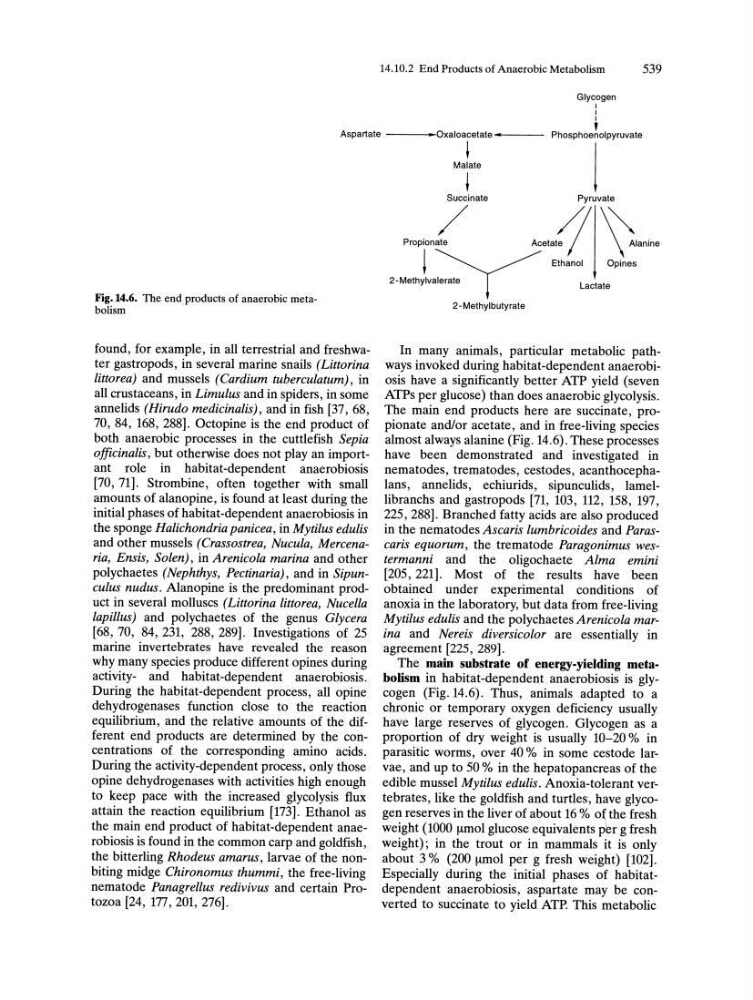
Fig.14.6. The end products of anaerobic metabolism
found, for example, in all terrestrial and freshwater gastropods, in several marine snails (Littorina
littorea) and mussels (Cardium tuberculatum), in
all crustaceans, in Limulus and in spiders, in some
annelids (Hirudo medicinalis), and in fish [37, 68,
70, 84, 168, 288]. Octopine is the end product of
both anaerobic processes in the cuttlefish Sepia
officinalis, but otherwise does not play an important role in habitat-dependent anaerobiosis
[70, 71]. Strombine, often together with small
amounts of alanopine, is found at least during the
initial phases of habitat-dependent anaerobiosis in
the sponge Halichondria panicea, in Mytilus edulis
and other mussels (Crassostrea, Nucula, Mercenaria, Ensis, Solen), in Arenicola marina and other
polychaetes (Nephthys, Pectinaria), and in Sipunculus nudus. Alanopine is the predominant product in several molluscs (Littorina littorea, Nucella
lapillus) and polychaetes of the genus Glycera
[68, 70, 84, 231, 288, 289]. Investigations of 25
marine invertebrates have revealed the reason
why many species produce different opines during
activity- and habitat-dependent anaerobiosis.
During the habitat-dependent process, all opine
dehydrogenases function close to the reaction
equilibrium, and the relative amounts of the different end products are determined by the concentrations of the corresponding amino acids.
During the activity-dependent process, only those
opine dehydrogenases with activities high enough
to keep pace with the increased glycolysis flux
attain the reaction equilibrium [173]. Ethanol as
the main end product of habitat-dependent anaerobiosis is found in the common carp and goldfish,
the bitterling Rhodeus amarus, larvae of the nonbiting midge Chironomus thummi, the free-living
nematode Panagrellus redivivus and certain Protozoa [24, 177,201,276].
I
~
Malate
~
Succinate
Pyruvate
prop;,,! , , " . . 1./ \:.' ";"
! ~ Ethanol Opines
2-Methylvalerate
~
Lactate
2 - Methylbutyrate
In many animals, particular metabolic pathways invoked during habitat-dependent anaerobiosis have a significantly better ATP yield (seven
ATPs per glucose) than does anaerobic glycolysis.
The main end products here are succinate, propionate and/or acetate, and in free-living species
almost always alanine (Fig. 14.6). These processes
have been demonstrated and investigated in
nematodes, trematodes, cestodes, acanthocephalans, annelids, echiurids, sipunculids, lamellibranchs and gastropods [71, 103, 112, 158, 197,
225,288]. Branched fatty acids are also produced
in the nematodes Ascaris lumbricoides and Parascaris equorum, the trematode Paragonimus westermanni and the oligochaete Alma emini
[205, 221]. Most of the results have been
obtained under experimental conditions of
anoxia in the laboratory, but data from free-living
Mytilus edulis and the polychaetes Arenicola marina and Nereis diversicolor are essentially in
agreement [225, 289].
The main substrate of energy-yielding metabolism in habitat-dependent anaerobiosis is glycogen (Fig. 14.6). Thus, animals adapted to a
chronic or temporary oxygen deficiency usually
have large reserves of glycogen. Glycogen as a
proportion of dry weight is usually 10-20 % in
parasitic worms, over 40 % in some cestode larvae, and up to 50 % in the hepatopancreas of the
edible mussel Mytilus edulis. Anoxia-tolerant vertebrates, like the goldfish and turtles, have glycogen reserves in the liver of about 16 % o~ the fresh
weight (1000 !-tmol glucose equivalents p'er g fresh
weight); in the trout or in mammals it is only
about 3 % (200 !-tmol per g fresh weight) [102].
Especially during the initial phases of habitatdependent anaerobiosis, aspartate may be converted to succinate to yield ATP. This metabolic