

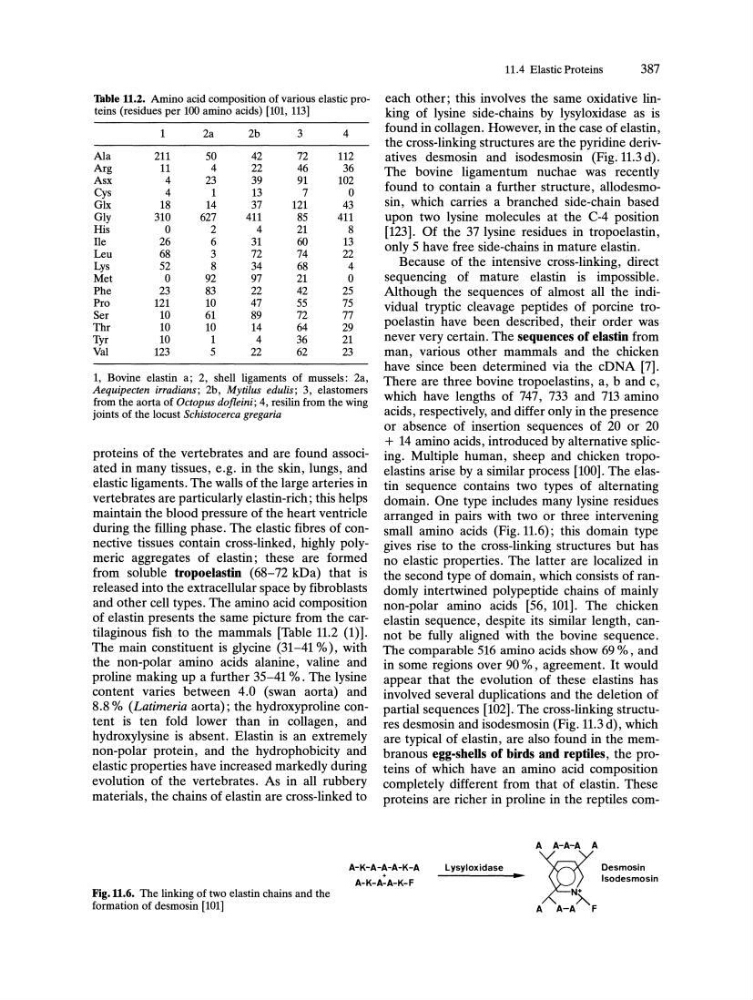
Table 11.2. Amino acid composition of various elastic proteins (residues per 100 amino acids) [101, 113]
1
2a
2b
3
4
Ala
211
50
42
72
112
Arg
11
4
22
46
36
Asx
4
23
39
91
102
Cys
4
1
13
7
0
Glx
18
14
37
121
43
Gly
310
627
411
85
411
His
0
2
4
21
8
He
26
6
31
60
13
Leu
68
3
72
74
22
Lys
52
8
34
68
4
Met
0
92
97
21
0
Phe
23
83
22
42
25
Pro
121
10
47
55
75
Ser
10
61
89
72
77
Thr
10
10
14
64
29
Tyr
10
1
4
36
21
Val
123
5
22
62
23
1, Bovine elastin a; 2, shell ligaments of mussels: 2a,
Aequipecten irradians; 2b, M ytilus edulis; 3, elastomers
from the aorta of Octopus dofleini; 4, resilin from the wing
joints of the locust Schistocerca gregaria
proteins of the vertebrates and are found associated in many tissues, e.g. in the skin, lungs, and
elastic ligaments. The walls of the large arteries in
vertebrates are particularly elastin-rich; this helps
maintain the blood pressure of the heart ventricle
during the filling phase. The elastic fibres of connective tissues contain cross-linked, highly polymeric aggregates of elastin; these are formed
from soluble tropoelastin (68-72 kDa) that is
released into the extracellular space by fibroblasts
and other cell types. The amino acid composition
of elastin presents the same picture from the cartilaginous fish to the mammals [Table 11.2 (1)].
The main constituent is glycine (31-41 %), with
the non-polar amino acids alanine, valine and
proline making up a further 35-41 %. The lysine
content varies between 4.0 (swan aorta) and
8.8 % (Latimeria aorta); the hydroxyproline content is ten fold lower than in collagen, and
hydroxylysine is absent. Elastin is an extremely
non-polar protein, and the hydrophobicity and
elastic properties have increased markedly during
evolution of the vertebrates. As in all rubbery
materials, the chains of elastin are cross-linked to
11.4 Elastic Proteins
387
each other; this involves the same oxidative linking of lysine side-chains by lysyloxidase as is
found in collagen. However, in the case of elastin,
the cross-linking structures are the pyridine derivatives desmosin and isodesmosin (Fig. 11.3 d).
The bovine ligamentum nuchae was recently
found to contain a further structure, allodesmosin, which carries a branched side-chain based
upon two lysine molecules at the C-4 position
[123]. Of the 37 lysine residues in tropoelastin,
only 5 have free side-chains in mature elastin.
Because of the intensive cross-linking, direct
sequencing of mature elastin is impossible.
Although the sequences of almost all the individual tryptic cleavage peptides of porcine tropo elastin have been described, their order was
never very certain. The sequences of elastin from
man, various other mammals and the chicken
have since been determined via the cDNA [7].
There are three bovine tropoelastins, a, band c,
which have lengths of 747, 733 and 713 amino
acids, respectively, and differ only in the presence
or absence of insertion sequences of 20 or 20
+ 14 amino acids, introduced by alternative splicing. Multiple human, sheep and chicken tropoelastins arise by a similar process [100]. The elastin sequence contains two types of alternating
domain. One type includes many lysine residues
arranged in pairs with two or three intervening
small amino acids (Fig. 11.6); this domain type
gives rise to the cross-linking structures but has
no elastic properties. The latter are localized in
the second type of domain, which consists of randomly intertwined polypeptide chains of mainly
non-polar amino acids [56, 101]. The chicken
elastin sequence, despite its similar length, cannot be fully aligned with the bovine sequence.
The comparable 516 amino acids show 69 %, and
in some regions over 90 %, agreement. It would
appear that the evolution of these elastins has
involved several duplications and the deletion of
partial sequences [102]. The cross-linking structures desmosin and isodesmosin (Fig. 11.3 d), which
are typical of elastin, are also found in the membranous egg-shells of birds and reptiles, the proteins of which have an amino acid composition
completely different from that of elastin. These
proteins are richer in proline in the reptiles comA A-A-A A
A-K-A-A-A-K-A
Lysyloxidase
~
Desmosin
Fig.11.6. The linking of two elastin chains and the
formation of desmosin [101]
+
A-K-A-A-K-F
Isodesmosin
N+
A A-/'F
1
2a
2b
3
4
Ala
211
50
42
72
112
Arg
11
4
22
46
36
Asx
4
23
39
91
102
Cys
4
1
13
7
0
Glx
18
14
37
121
43
Gly
310
627
411
85
411
His
0
2
4
21
8
He
26
6
31
60
13
Leu
68
3
72
74
22
Lys
52
8
34
68
4
Met
0
92
97
21
0
Phe
23
83
22
42
25
Pro
121
10
47
55
75
Ser
10
61
89
72
77
Thr
10
10
14
64
29
Tyr
10
1
4
36
21
Val
123
5
22
62
23
1, Bovine elastin a; 2, shell ligaments of mussels: 2a,
Aequipecten irradians; 2b, M ytilus edulis; 3, elastomers
from the aorta of Octopus dofleini; 4, resilin from the wing
joints of the locust Schistocerca gregaria
proteins of the vertebrates and are found associated in many tissues, e.g. in the skin, lungs, and
elastic ligaments. The walls of the large arteries in
vertebrates are particularly elastin-rich; this helps
maintain the blood pressure of the heart ventricle
during the filling phase. The elastic fibres of connective tissues contain cross-linked, highly polymeric aggregates of elastin; these are formed
from soluble tropoelastin (68-72 kDa) that is
released into the extracellular space by fibroblasts
and other cell types. The amino acid composition
of elastin presents the same picture from the cartilaginous fish to the mammals [Table 11.2 (1)].
The main constituent is glycine (31-41 %), with
the non-polar amino acids alanine, valine and
proline making up a further 35-41 %. The lysine
content varies between 4.0 (swan aorta) and
8.8 % (Latimeria aorta); the hydroxyproline content is ten fold lower than in collagen, and
hydroxylysine is absent. Elastin is an extremely
non-polar protein, and the hydrophobicity and
elastic properties have increased markedly during
evolution of the vertebrates. As in all rubbery
materials, the chains of elastin are cross-linked to
11.4 Elastic Proteins
387
each other; this involves the same oxidative linking of lysine side-chains by lysyloxidase as is
found in collagen. However, in the case of elastin,
the cross-linking structures are the pyridine derivatives desmosin and isodesmosin (Fig. 11.3 d).
The bovine ligamentum nuchae was recently
found to contain a further structure, allodesmosin, which carries a branched side-chain based
upon two lysine molecules at the C-4 position
[123]. Of the 37 lysine residues in tropoelastin,
only 5 have free side-chains in mature elastin.
Because of the intensive cross-linking, direct
sequencing of mature elastin is impossible.
Although the sequences of almost all the individual tryptic cleavage peptides of porcine tropo elastin have been described, their order was
never very certain. The sequences of elastin from
man, various other mammals and the chicken
have since been determined via the cDNA [7].
There are three bovine tropoelastins, a, band c,
which have lengths of 747, 733 and 713 amino
acids, respectively, and differ only in the presence
or absence of insertion sequences of 20 or 20
+ 14 amino acids, introduced by alternative splicing. Multiple human, sheep and chicken tropoelastins arise by a similar process [100]. The elastin sequence contains two types of alternating
domain. One type includes many lysine residues
arranged in pairs with two or three intervening
small amino acids (Fig. 11.6); this domain type
gives rise to the cross-linking structures but has
no elastic properties. The latter are localized in
the second type of domain, which consists of randomly intertwined polypeptide chains of mainly
non-polar amino acids [56, 101]. The chicken
elastin sequence, despite its similar length, cannot be fully aligned with the bovine sequence.
The comparable 516 amino acids show 69 %, and
in some regions over 90 %, agreement. It would
appear that the evolution of these elastins has
involved several duplications and the deletion of
partial sequences [102]. The cross-linking structures desmosin and isodesmosin (Fig. 11.3 d), which
are typical of elastin, are also found in the membranous egg-shells of birds and reptiles, the proteins of which have an amino acid composition
completely different from that of elastin. These
proteins are richer in proline in the reptiles comA A-A-A A
A-K-A-A-A-K-A
Lysyloxidase
~
Desmosin
Fig.11.6. The linking of two elastin chains and the
formation of desmosin [101]
+
A-K-A-A-K-F
Isodesmosin
N+
A A-/'F