

a)
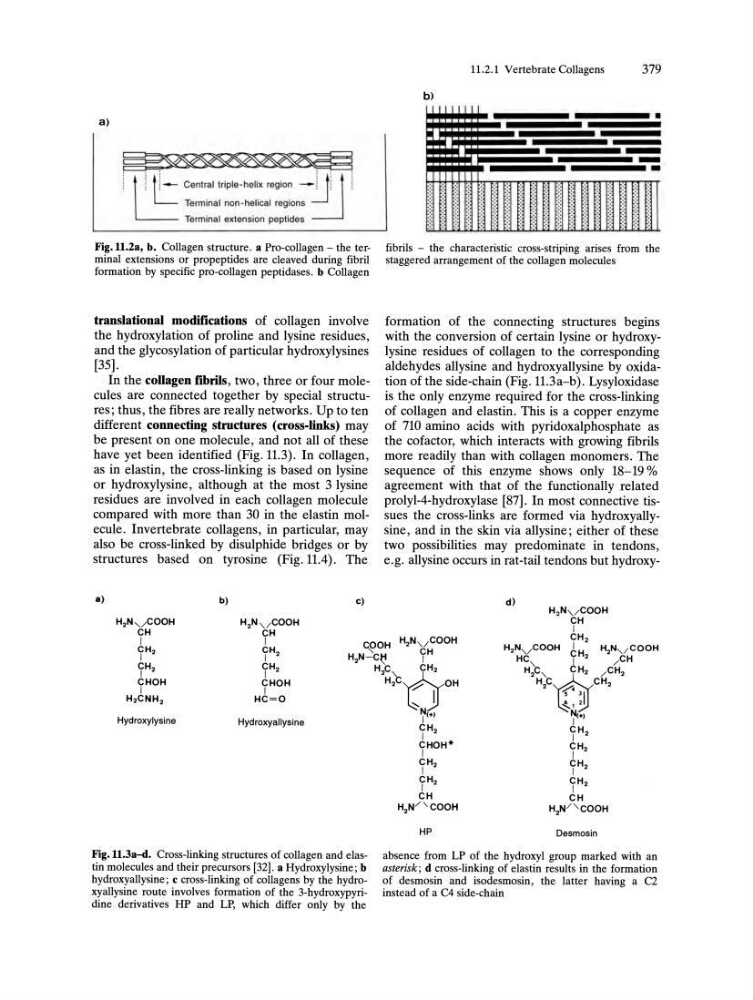
Fig. 11.2a, b. Collagen structure. a Pro-collagen - the terminal extensions or propeptides are cleaved during fibril
formation by specific pro-collagen peptidases. b Collagen
translational modifications of collagen involve
the hydroxylation of proline and lysine residues,
and the glycosylation of particular hydroxylysines
[35].
In the collagen fibrils, two, three or four molecules are connected together by special structures; thus, the fibres are really networks. Up to ten
different connecting structures (cross-links) may
be present on one molecule, and not all of these
have yet been identified (Fig. 11.3). In collagen,
as in elastin, the cross-linking is based on lysine
or hydroxylysine, although at the most 3 lysine
residues are involved in each collagen molecule
compared with more than 30 in the elastin molecule. Invertebrate collagens, in particular, may
also be cross-linked by disulphide bridges or by
structures based on tyrosine (Fig. 11.4). The
a)
b)
Hydroxylysine
H 2 N,/COOH
CH
I
CH 2
I
CH2
I
CHOH
I
HC=O
Hydroxyallysine
c)
Fig.ll.3a-d. Cross-linking structures of collagen and elastin molecules and their precursors [32]. a Hydroxylysine; b
hydroxyallysine; c cross-linking of collagens by the hydroxyallysine route involves formation of the 3-hydroxypyridine derivatives HP and LP, which differ only by the
11.2.1 Vertebrate Collagens
379
b)
•
- -•
fibrils - the characteristic cross-striping arises from the
staggered arrangement of the collagen molecules
formation of the connecting structures begins
with the conversion of certain lysine or hydroxylysine residues of collagen to the corresponding
aldehydes allysine and hydroxyallysine by oxidation ofthe side-chain (Fig. 11.3a-b). Lysyloxidase
is the only enzyme required for the cross-linking
of collagen and elastin. This is a copper enzyme
of 710 amino acids with pyridoxalphosphate as
the cofactor, which interacts with growing fibrils
more readily than with collagen monomers. The
sequence of this enzyme shows only 18-19 %
agreement with that of the functionally related
prolyl-4-hydroxylase [87]. In most connective tissues the cross-links are formed via hydroxyallysine, and in the skin via ally sine ; either of these
two possibilities may predominate in tendons,
e.g. allysine occurs in rat-tail tendons but hydroxyHP
Desmosin
absence from LP of the hydroxyl group marked with an
asterisk; d cross-linking of elastin results in the formation
of desmosin and isodesmosin, the latter having a C2
instead of a C4 side-chain
Fig. 11.2a, b. Collagen structure. a Pro-collagen - the terminal extensions or propeptides are cleaved during fibril
formation by specific pro-collagen peptidases. b Collagen
translational modifications of collagen involve
the hydroxylation of proline and lysine residues,
and the glycosylation of particular hydroxylysines
[35].
In the collagen fibrils, two, three or four molecules are connected together by special structures; thus, the fibres are really networks. Up to ten
different connecting structures (cross-links) may
be present on one molecule, and not all of these
have yet been identified (Fig. 11.3). In collagen,
as in elastin, the cross-linking is based on lysine
or hydroxylysine, although at the most 3 lysine
residues are involved in each collagen molecule
compared with more than 30 in the elastin molecule. Invertebrate collagens, in particular, may
also be cross-linked by disulphide bridges or by
structures based on tyrosine (Fig. 11.4). The
a)
b)
Hydroxylysine
H 2 N,/COOH
CH
I
CH 2
I
CH2
I
CHOH
I
HC=O
Hydroxyallysine
c)
Fig.ll.3a-d. Cross-linking structures of collagen and elastin molecules and their precursors [32]. a Hydroxylysine; b
hydroxyallysine; c cross-linking of collagens by the hydroxyallysine route involves formation of the 3-hydroxypyridine derivatives HP and LP, which differ only by the
11.2.1 Vertebrate Collagens
379
b)
•
- -•
fibrils - the characteristic cross-striping arises from the
staggered arrangement of the collagen molecules
formation of the connecting structures begins
with the conversion of certain lysine or hydroxylysine residues of collagen to the corresponding
aldehydes allysine and hydroxyallysine by oxidation ofthe side-chain (Fig. 11.3a-b). Lysyloxidase
is the only enzyme required for the cross-linking
of collagen and elastin. This is a copper enzyme
of 710 amino acids with pyridoxalphosphate as
the cofactor, which interacts with growing fibrils
more readily than with collagen monomers. The
sequence of this enzyme shows only 18-19 %
agreement with that of the functionally related
prolyl-4-hydroxylase [87]. In most connective tissues the cross-links are formed via hydroxyallysine, and in the skin via ally sine ; either of these
two possibilities may predominate in tendons,
e.g. allysine occurs in rat-tail tendons but hydroxyHP
Desmosin
absence from LP of the hydroxyl group marked with an
asterisk; d cross-linking of elastin results in the formation
of desmosin and isodesmosin, the latter having a C2
instead of a C4 side-chain