

338
10 Proteins of Muscle and the Cytoskeleton
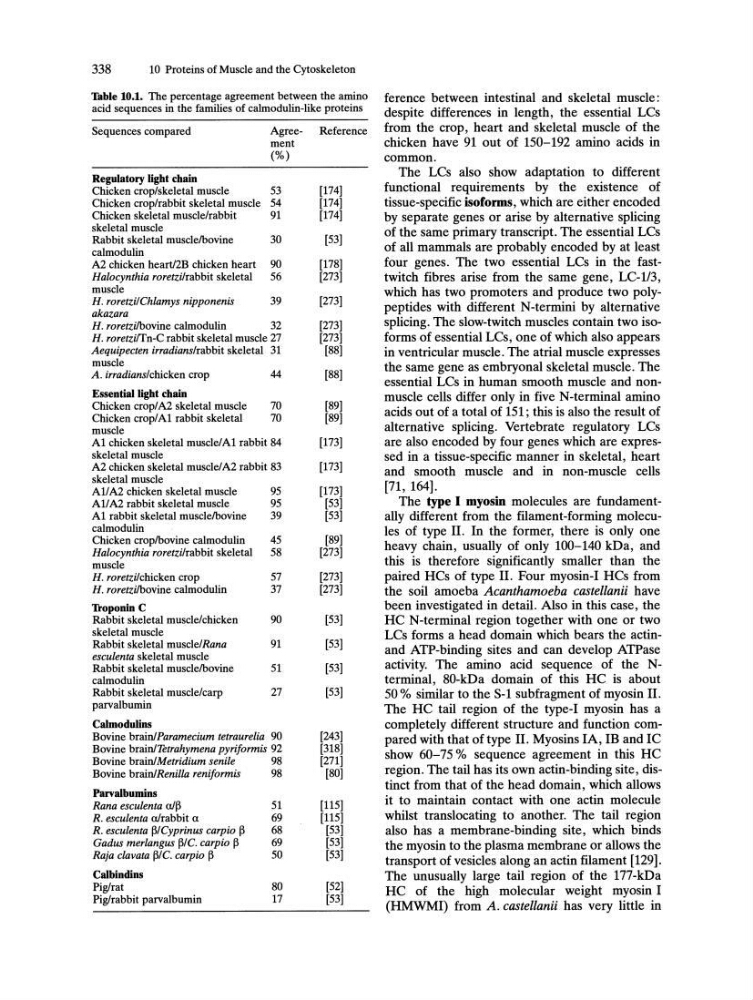
Table 10.1. The percentage agreement between the amino
acid sequences in the families of calmodulin-like proteins
Sequences compared
AgreeReference
ment
(%)
Regulatory light chain
Chicken crop/skeletal muscle
53
[174]
Chicken crop/rabbit skeletal muscle 54
[174]
Chicken skeletal muscle/rabbit
91
[174]
skeletal muscle
Rabbit skeletal musclelbovine
30
[53]
calmodulin
A2 chicken heartl2B chicken heart 90
[178]
Halocynthia roretzi/rabbit skeletal
56
[273]
muscle
H. roretzi/Chlamys nipponenis
39
[273]
akazara
H. roretzilbovine calmodulin
32
[273]
H. roretzirrn-C rabbit skeletal muscle 27
[273]
Aequipecten irradians/rabbit skeletal 31
[88]
muscle
A. irradians/chicken crop
44
[88]
Essential light chain
Chicken crop/ A2 skeletal muscle
70
[89]
Chicken crop/AI rabbit skeletal
70
[89]
muscle
Al chicken skeletal muscle/AI rabbit 84
[173]
skeletal muscle
A2 chicken skeletal muscle/A2 rabbit 83
[173]
skeletal muscle
Al/A2 chicken skeletal muscle
95
[173]
Al/A2 rabbit skeletal muscle
95
[53]
Al rabbit skeletal musclelbovine
39
[53]
calmodulin
Chicken croplbovine calmodulin
45
[89]
Halocynthia roretzilrabbit skeletal
58
[273]
muscle
H. roretzi/chicken crop
57
[273]
H. roretzilbovine calmodulin
37
[273]
'Iroponin C
Rabbit skeletal muscle/chicken
90
[53]
skeletal muscle
Rabbit skeletal muscle/Rana
91
[53]
esculenta skeletal muscle
Rabbit skeletal musclelbovine
51
[53]
calmodulin
Rabbit skeletal muscle/carp
27
[53]
parvalbumin
Calmodulins
Bovine brainlParamecium tetraurelia 90
[243]
Bovine brainlTetrahymena pyriformis 92
[318]
Bovine brainlMetridium senile
98
[271]
Bovine brainlRenilla reniformis
98
[80]
Parvalbumins
Rana esculenta aI~
51
[115]
R. esculenta alrabbit a
69
[115]
R. esculenta WCyprinus carpio ~
68
[53]
Gadus merlangus We. carpio ~
69
[53]
Raja clavata We. carpio ~
50
[53]
Calbindins
Pig/rat
80
[52]
Pig/rabbit parvalbumin
17
[53]
ference between intestinal and skeletal muscle:
despite differences in length, the essential LCs
from the crop, heart and skeletal muscle of the
chicken have 91 out of 150-192 amino acids in
common.
The LCs also show adaptation to different
functional requirements by the existence of
tissue-specific isoforms, which are either encoded
by separate genes or arise by alternative splicing
of the same primary transcript. The essential LCs
of all mammals are probably encoded by at least
four genes. The two essential LCs in the fasttwitch fibres arise from the same gene, LC-1I3 ,
which has two promoters and produce two polypeptides with different N-termini by alternative
splicing. The slow-twitch muscles contain two isoforms of essential LCs, one of which also appears
in ventricular muscle. The atrial muscle expresses
the same gene as embryonal skeletal muscle. The
essential LCs in human smooth muscle and nonmuscle cells differ only in five N-terminal amino
acids out of a total of 151; this is also the result of
alternative splicing. Vertebrate regulatory LCs
are also encoded by four genes which are expressed in a tissue-specific manner in skeletal, heart
and smooth muscle and in non-muscle cells
[71, 164].
The type I myosin molecules are fundamentally different from the filament-forming molecules of type II. In the former, there is only one
heavy chain, usually of only 100-140 kDa, and
this is therefore significantly smaller than the
paired HCs of type II. Four myosin-I HCs from
the soil amoeba Acanthamoeba castellanii have
been investigated in detail. Also in this case, the
HC N-terminal region together with one or two
LCs forms a head domain which bears the actinand ATP-binding sites and can develop ATPase
activity. The amino acid sequence of the Nterminal, 80-kDa domain of this HC is about
50 % similar to the S-l subfragment of myosin II.
The HC tail region of the type-I myosin has a
completely different structure and function compared with that of type II. Myosins lA, IB and IC
show 60-75 % sequence agreement in this HC
region. The tail has its own actin-binding site, distinct from that of the head domain, which allows
it to maintain contact with one actin molecule
whilst translocating to another. The tail region
also has a membrane-binding site, which binds
the myosin to the plasma membrane or allows the
transport of vesicles along an actin filament [129].
The unusually large tail region of the 177-kDa
HC of the high molecular weight myosin I
(HMWMI) from A. castellanii has very little in
10 Proteins of Muscle and the Cytoskeleton
Table 10.1. The percentage agreement between the amino
acid sequences in the families of calmodulin-like proteins
Sequences compared
AgreeReference
ment
(%)
Regulatory light chain
Chicken crop/skeletal muscle
53
[174]
Chicken crop/rabbit skeletal muscle 54
[174]
Chicken skeletal muscle/rabbit
91
[174]
skeletal muscle
Rabbit skeletal musclelbovine
30
[53]
calmodulin
A2 chicken heartl2B chicken heart 90
[178]
Halocynthia roretzi/rabbit skeletal
56
[273]
muscle
H. roretzi/Chlamys nipponenis
39
[273]
akazara
H. roretzilbovine calmodulin
32
[273]
H. roretzirrn-C rabbit skeletal muscle 27
[273]
Aequipecten irradians/rabbit skeletal 31
[88]
muscle
A. irradians/chicken crop
44
[88]
Essential light chain
Chicken crop/ A2 skeletal muscle
70
[89]
Chicken crop/AI rabbit skeletal
70
[89]
muscle
Al chicken skeletal muscle/AI rabbit 84
[173]
skeletal muscle
A2 chicken skeletal muscle/A2 rabbit 83
[173]
skeletal muscle
Al/A2 chicken skeletal muscle
95
[173]
Al/A2 rabbit skeletal muscle
95
[53]
Al rabbit skeletal musclelbovine
39
[53]
calmodulin
Chicken croplbovine calmodulin
45
[89]
Halocynthia roretzilrabbit skeletal
58
[273]
muscle
H. roretzi/chicken crop
57
[273]
H. roretzilbovine calmodulin
37
[273]
'Iroponin C
Rabbit skeletal muscle/chicken
90
[53]
skeletal muscle
Rabbit skeletal muscle/Rana
91
[53]
esculenta skeletal muscle
Rabbit skeletal musclelbovine
51
[53]
calmodulin
Rabbit skeletal muscle/carp
27
[53]
parvalbumin
Calmodulins
Bovine brainlParamecium tetraurelia 90
[243]
Bovine brainlTetrahymena pyriformis 92
[318]
Bovine brainlMetridium senile
98
[271]
Bovine brainlRenilla reniformis
98
[80]
Parvalbumins
Rana esculenta aI~
51
[115]
R. esculenta alrabbit a
69
[115]
R. esculenta WCyprinus carpio ~
68
[53]
Gadus merlangus We. carpio ~
69
[53]
Raja clavata We. carpio ~
50
[53]
Calbindins
Pig/rat
80
[52]
Pig/rabbit parvalbumin
17
[53]
ference between intestinal and skeletal muscle:
despite differences in length, the essential LCs
from the crop, heart and skeletal muscle of the
chicken have 91 out of 150-192 amino acids in
common.
The LCs also show adaptation to different
functional requirements by the existence of
tissue-specific isoforms, which are either encoded
by separate genes or arise by alternative splicing
of the same primary transcript. The essential LCs
of all mammals are probably encoded by at least
four genes. The two essential LCs in the fasttwitch fibres arise from the same gene, LC-1I3 ,
which has two promoters and produce two polypeptides with different N-termini by alternative
splicing. The slow-twitch muscles contain two isoforms of essential LCs, one of which also appears
in ventricular muscle. The atrial muscle expresses
the same gene as embryonal skeletal muscle. The
essential LCs in human smooth muscle and nonmuscle cells differ only in five N-terminal amino
acids out of a total of 151; this is also the result of
alternative splicing. Vertebrate regulatory LCs
are also encoded by four genes which are expressed in a tissue-specific manner in skeletal, heart
and smooth muscle and in non-muscle cells
[71, 164].
The type I myosin molecules are fundamentally different from the filament-forming molecules of type II. In the former, there is only one
heavy chain, usually of only 100-140 kDa, and
this is therefore significantly smaller than the
paired HCs of type II. Four myosin-I HCs from
the soil amoeba Acanthamoeba castellanii have
been investigated in detail. Also in this case, the
HC N-terminal region together with one or two
LCs forms a head domain which bears the actinand ATP-binding sites and can develop ATPase
activity. The amino acid sequence of the Nterminal, 80-kDa domain of this HC is about
50 % similar to the S-l subfragment of myosin II.
The HC tail region of the type-I myosin has a
completely different structure and function compared with that of type II. Myosins lA, IB and IC
show 60-75 % sequence agreement in this HC
region. The tail has its own actin-binding site, distinct from that of the head domain, which allows
it to maintain contact with one actin molecule
whilst translocating to another. The tail region
also has a membrane-binding site, which binds
the myosin to the plasma membrane or allows the
transport of vesicles along an actin filament [129].
The unusually large tail region of the 177-kDa
HC of the high molecular weight myosin I
(HMWMI) from A. castellanii has very little in