

9.3.1 The Venoms of Scorpions and Other Arachnids
325
Bradykinin
Amphibia:
RPPGFSPFR-amide
Heleophryne purcelli ('Hyp-3-Bradykinin')
RPPGFSPFR-amide
I
OH
Rana nigromaculata ('Val-l-Thr-6-Bradykinin')
VPPGFTPFR-amide
RPPGFSPFRVAPAS
RPPGFSPFRIY-sulphate
('Kinin III')
Phyllomedusa rhodei ('Phyllokinin')
!!ymenoptera:
Vespa xanthoptera ('Vespakinin-X')
Vespa mandarinia ('Vespakinin-M')
Polistes sp. (' Polisteskinin-Rl')
Polistes rothneyi ('Polisteskinin-R2')
Polistes exclamans ('Polisteskinin')
Vespula maculifrons ('Vespulakinin-I')
ARPPGFSPFRIV
GRPPGFSPFRID
RPPGFTPFR-amide
ARRPPGFTPFR-amide
pETNKKKLRGRPPGFSPFR-amide
TATTRRRGRPPGFSPFR-amide
I I
GG
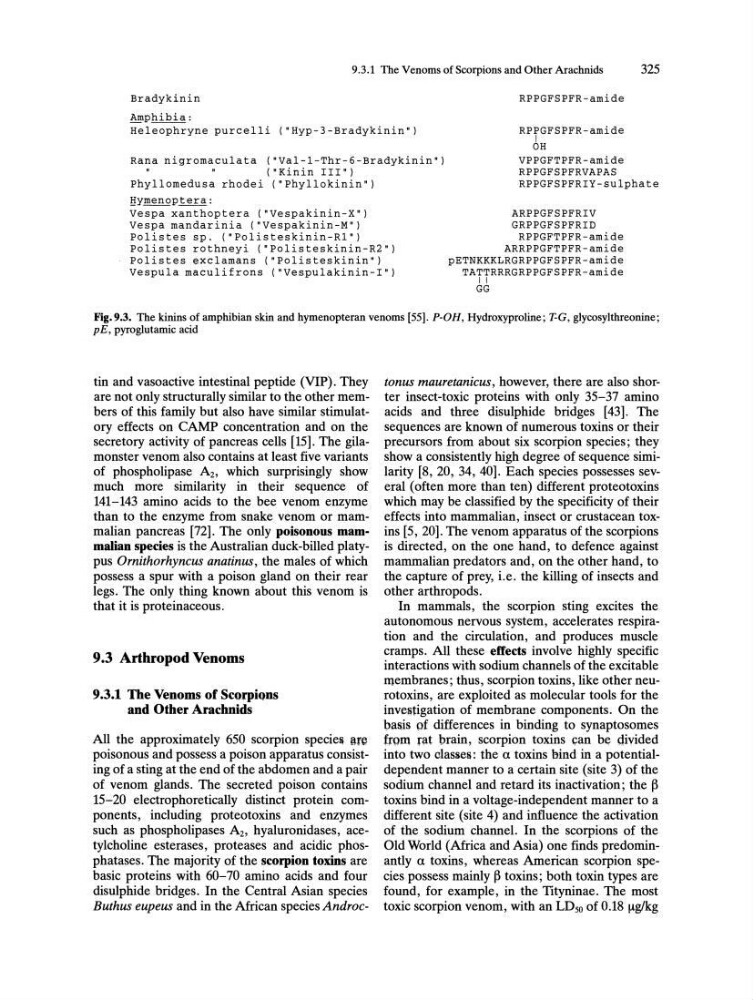
Fig.9.3. The kinins of amphibian skin and hymenopteran venoms [55]. P-OH, Hydroxyproline; T-G, glycosylthreonine;
pE, pyroglutamic acid
tin and vasoactive intestinal peptide (VIP). They
are not only structurally similar to the other members of this family but also have similar stimulatory effects on CAMP concentration and on the
secretory activity of pancreas cells [15]. The gilamonster venom also contains at least five variants
of phospholipase A2, which surprisingly show
much more similarity in their sequence of
141-143 amino acids to the bee venom enzyme
than to the enzyme from snake venom or mammalian pancreas [72]. The only poisonous mammalian species is the Australian duck-billed platypus Ornithorhyncus anatinus, the males of which
possess a spur with a poison gland on their rear
legs. The only thing known about this venom is
that it is proteinaceous.
9.3 Arthropod Venoms
9.3.1 The Venoms of Scorpions
and Other Arachnids
All the approximately 650 scorpion specieil ~f@
poisonous and possess a poison apparatus consisting of a sting at the end of the abdomen and a pair
of venom glands. The secreted poison contains
15-20 electrophoretically distinct protein components, including proteotoxins and enzymes
such as phospholipases A2, hyaluronidases, acetylcholine esterases, proteases and acidic phosphatases. The majority of the scorpion toxins are
basic proteins with 60-70 amino acids and four
disulphide bridges. In the Central Asian species
Buthus eupeus and in the African species Androctonus mauretanicus, however, there are also shorter insect-toxic proteins with only 35-37 amino
acids and three disulphide bridges [43]. The
sequences are known of numerous toxins or their
precursors from about six scorpion species; they
show a consistently high degree of sequence similarity [8, 20, 34, 40]. Each species possesses several (often more than ten) different proteotoxins
which may be classified by the specificity of their
effects into mammalian, insect or crustacean toxins [5,20]. The venom apparatus of the scorpions
is directed, on the one hand, to defence against
mammalian predators and, on the other hand, to
the capture of prey, i.e. the killing of insects and
other arthropods.
In mammals, the scorpion sting excites the
autonomous nervous system, accelerates respiration and the circulation, and produces muscle
cramps. All these effects involve highly specific
interactions with sodium channels of the excitable
membranes; thus, scorpion toxins, like other neurotoxins, are exploited as molecular tools for the
invel!!tigation of membrane components. On the
basis of differences in binding to synaptosomes
fTOm rat prain, scorpion toxins f;an be divided
into two classeil: the a toxins bind in a potentialdependent manner to a certain site (site 3) of the
sodium channel and retard its inactivation; the ~
toxins bind in a voltage-independent manner to a
different site (site 4) and influence the activation
of the sodium channel. In the scorpions of the
Old World (Africa and Asia) one finds predominantly a toxins, whereas American scorpion species possess mainly ~ toxins; both toxin types are
found, for example, in the Tityninae. The most
toxic scorpion venom, with an LDso of 0.18 I-tg/kg
325
Bradykinin
Amphibia:
RPPGFSPFR-amide
Heleophryne purcelli ('Hyp-3-Bradykinin')
RPPGFSPFR-amide
I
OH
Rana nigromaculata ('Val-l-Thr-6-Bradykinin')
VPPGFTPFR-amide
RPPGFSPFRVAPAS
RPPGFSPFRIY-sulphate
('Kinin III')
Phyllomedusa rhodei ('Phyllokinin')
!!ymenoptera:
Vespa xanthoptera ('Vespakinin-X')
Vespa mandarinia ('Vespakinin-M')
Polistes sp. (' Polisteskinin-Rl')
Polistes rothneyi ('Polisteskinin-R2')
Polistes exclamans ('Polisteskinin')
Vespula maculifrons ('Vespulakinin-I')
ARPPGFSPFRIV
GRPPGFSPFRID
RPPGFTPFR-amide
ARRPPGFTPFR-amide
pETNKKKLRGRPPGFSPFR-amide
TATTRRRGRPPGFSPFR-amide
I I
GG
Fig.9.3. The kinins of amphibian skin and hymenopteran venoms [55]. P-OH, Hydroxyproline; T-G, glycosylthreonine;
pE, pyroglutamic acid
tin and vasoactive intestinal peptide (VIP). They
are not only structurally similar to the other members of this family but also have similar stimulatory effects on CAMP concentration and on the
secretory activity of pancreas cells [15]. The gilamonster venom also contains at least five variants
of phospholipase A2, which surprisingly show
much more similarity in their sequence of
141-143 amino acids to the bee venom enzyme
than to the enzyme from snake venom or mammalian pancreas [72]. The only poisonous mammalian species is the Australian duck-billed platypus Ornithorhyncus anatinus, the males of which
possess a spur with a poison gland on their rear
legs. The only thing known about this venom is
that it is proteinaceous.
9.3 Arthropod Venoms
9.3.1 The Venoms of Scorpions
and Other Arachnids
All the approximately 650 scorpion specieil ~f@
poisonous and possess a poison apparatus consisting of a sting at the end of the abdomen and a pair
of venom glands. The secreted poison contains
15-20 electrophoretically distinct protein components, including proteotoxins and enzymes
such as phospholipases A2, hyaluronidases, acetylcholine esterases, proteases and acidic phosphatases. The majority of the scorpion toxins are
basic proteins with 60-70 amino acids and four
disulphide bridges. In the Central Asian species
Buthus eupeus and in the African species Androctonus mauretanicus, however, there are also shorter insect-toxic proteins with only 35-37 amino
acids and three disulphide bridges [43]. The
sequences are known of numerous toxins or their
precursors from about six scorpion species; they
show a consistently high degree of sequence similarity [8, 20, 34, 40]. Each species possesses several (often more than ten) different proteotoxins
which may be classified by the specificity of their
effects into mammalian, insect or crustacean toxins [5,20]. The venom apparatus of the scorpions
is directed, on the one hand, to defence against
mammalian predators and, on the other hand, to
the capture of prey, i.e. the killing of insects and
other arthropods.
In mammals, the scorpion sting excites the
autonomous nervous system, accelerates respiration and the circulation, and produces muscle
cramps. All these effects involve highly specific
interactions with sodium channels of the excitable
membranes; thus, scorpion toxins, like other neurotoxins, are exploited as molecular tools for the
invel!!tigation of membrane components. On the
basis of differences in binding to synaptosomes
fTOm rat prain, scorpion toxins f;an be divided
into two classeil: the a toxins bind in a potentialdependent manner to a certain site (site 3) of the
sodium channel and retard its inactivation; the ~
toxins bind in a voltage-independent manner to a
different site (site 4) and influence the activation
of the sodium channel. In the scorpions of the
Old World (Africa and Asia) one finds predominantly a toxins, whereas American scorpion species possess mainly ~ toxins; both toxin types are
found, for example, in the Tityninae. The most
toxic scorpion venom, with an LDso of 0.18 I-tg/kg