

324
9 Toxic Proteins and Peptides
amino acid sequences of the ~ NGFs of Naja naja
and the mouse agree in about 65 % of positions
[27]. The first venom lectin (thrombolectin) was
found in 1980 in the "fer de lance" Bothrops
atrox; this is a ~-galactoside-specific dime ric lectin of 28 kDa which is similar in specificity, quaternary structure and molecular size to other vertebrate lectins but is Ca 2 + -dependent. Similar lectins have since been found in the venoms of many
other snake species [22, 39].
9.2 Proteotoxins of Other Vertebrates
In the fish, one can differentiate between about
500 passively poisonous species, the consumption
of which leads to poisoning symptoms, and about
250 actively poisonous species, which possess specialized mechanisms for delivering the poison. In
both cases, the poisons serve as a defence
mechanism or warning factor against potential
predators. The passive toxicity of fish is mainly
caused by low molecular weight substances,
which are dealt with in Chapter 19; the blood of
eels and morays, however, contains a protein
which haemolyses the erythrocytes of warmblooded animals and is toxic when eaten. The actively poisonous fish probably all contain toxic
peptides or proteins, the chemical structures of
which are, however, largely undetermined. For
example, the poisonous secretion of the sting ray
(Dasyatidae) contains various enzymes as well as
several toxic proteins of about 100 kDa [20]. In
order to scare off sharks, the flatfish Pardachirus
marmoratus produces in its skin glands steroid
glycosides and three related peptides of 33 amino
acids, the "pardaxins", which are similar to the
melittin of bee venom in their postsynaptic neurotoxic activity but not in their sequences [59].
The skin secretions of the amphibians also
serve to scare away predators. In addition to toxic
amines, alkaloids and steroids, they contain a
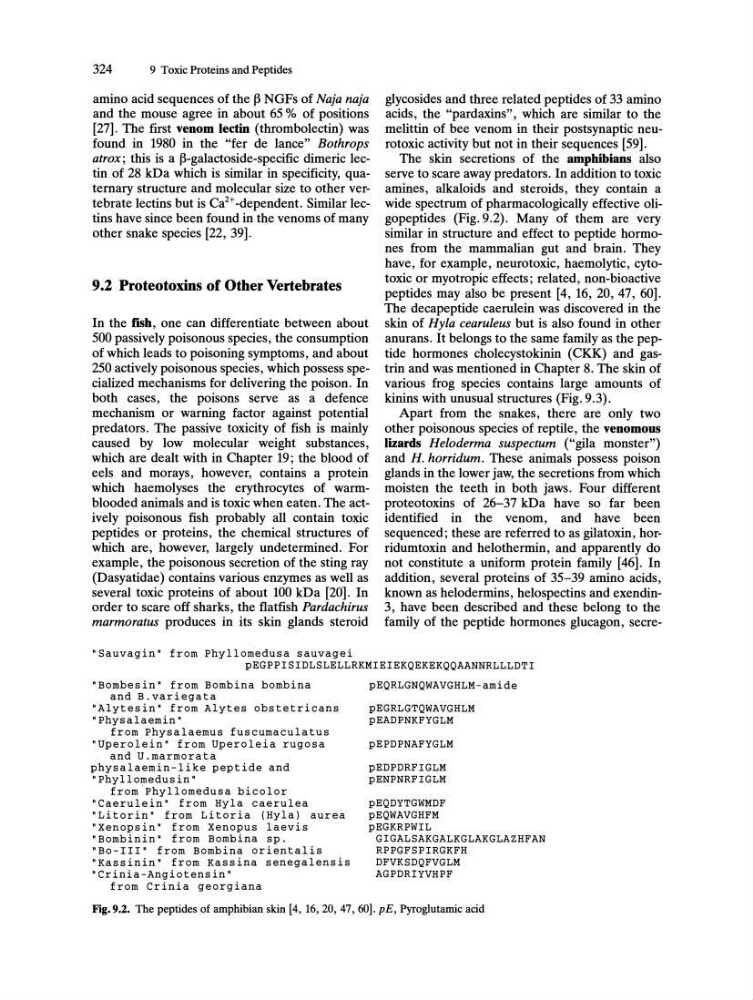
wide spectrum of pharmacologically effective oligopeptides (Fig. 9.2). Many of them are very
similar in structure and effect to peptide hormones from the mammalian gut and brain. They
have, for example, neurotoxic, haemolytic, cytotoxic or myotropic effects; related, non-bioactive
peptides may also be present [4, 16, 20, 47, 60].
The decapeptide caerulein was discovered in the
skin of Hyla cearuleus but is also found in other
anurans. It belongs to the same family as the peptide hormones cholecystokinin (CKK) and gastrin and was mentioned in Chapter 8. The skin of
various frog species contains large amounts of
kinins with unusual structures (Fig. 9.3).
Apart from the snakes, there are only two
other poisonous species of reptile, the venomous
lizards Heloderma suspectum ("gila monster")
and H. horridum. These animals possess poison
glands in the lower jaw, the secretions from which
moisten the teeth in both jaws. Four different
proteotoxins of 26-37 kDa have so far been
identified in the venom, and have been
sequenced; these are referred to as gilatoxin, horridumtoxin and helothermin, and apparently do
not constitute a uniform protein family [46]. In
addition, several proteins of 35-39 amino acids,
known as helodermins, helospectins and exendin3, have been described and these belong to the
family of the peptide hormones glucagon, secre"Sauvagin" from Phyllomedusa sauvagei
pEGPPISIDLSLELLRKMIEIEKQEKEKQQAANNRLLLDTI
'Bombesin" from Bombina bombina
and B.variegata
"Alytesin" from Alytes obstetricans
"Physalaemin"
from Physalaemus fuscumaculatus
"Uperolein" from Uperoleia rugosa
and U.marmorata
physalaemin-like peptide and
"Phyllomedusin"
fromPhyllomedusa bicolor
"Caerulein' from Hyla caerulea
"Litorin" from Litoria (Hyla) aurea
"Xenopsin" from Xenopus laevis
"Bombinin" from Bombina sp.
"Bo-III" from Bombina orientalis
"Kassinin" from Kassina senegalensis
'Crinia-Angiotensin'
from Crinia georgiana
pEQRLGNQWAVGHLM-amide
pEGRLGTQWAVGHLM
pEADPNKFYGLM
pEPDPNAFYGLM
pEDPDRFIGLM
pENPNRFIGLM
pEQDYTGWMDF
pEQWAVGHFM
pEGKRPWIL
GIGALSAKGALKGLAKGLAZHFAN
RPPGFSPIRGKFH
DFVKSDQFVGLM
AGPDRIYVHPF
Fig.9.2. The peptides of amphibian skin [4,16,20,47,60]. pE, Pyroglutamic acid
9 Toxic Proteins and Peptides
amino acid sequences of the ~ NGFs of Naja naja
and the mouse agree in about 65 % of positions
[27]. The first venom lectin (thrombolectin) was
found in 1980 in the "fer de lance" Bothrops
atrox; this is a ~-galactoside-specific dime ric lectin of 28 kDa which is similar in specificity, quaternary structure and molecular size to other vertebrate lectins but is Ca 2 + -dependent. Similar lectins have since been found in the venoms of many
other snake species [22, 39].
9.2 Proteotoxins of Other Vertebrates
In the fish, one can differentiate between about
500 passively poisonous species, the consumption
of which leads to poisoning symptoms, and about
250 actively poisonous species, which possess specialized mechanisms for delivering the poison. In
both cases, the poisons serve as a defence
mechanism or warning factor against potential
predators. The passive toxicity of fish is mainly
caused by low molecular weight substances,
which are dealt with in Chapter 19; the blood of
eels and morays, however, contains a protein
which haemolyses the erythrocytes of warmblooded animals and is toxic when eaten. The actively poisonous fish probably all contain toxic
peptides or proteins, the chemical structures of
which are, however, largely undetermined. For
example, the poisonous secretion of the sting ray
(Dasyatidae) contains various enzymes as well as
several toxic proteins of about 100 kDa [20]. In
order to scare off sharks, the flatfish Pardachirus
marmoratus produces in its skin glands steroid
glycosides and three related peptides of 33 amino
acids, the "pardaxins", which are similar to the
melittin of bee venom in their postsynaptic neurotoxic activity but not in their sequences [59].
The skin secretions of the amphibians also
serve to scare away predators. In addition to toxic
amines, alkaloids and steroids, they contain a
wide spectrum of pharmacologically effective oligopeptides (Fig. 9.2). Many of them are very
similar in structure and effect to peptide hormones from the mammalian gut and brain. They
have, for example, neurotoxic, haemolytic, cytotoxic or myotropic effects; related, non-bioactive
peptides may also be present [4, 16, 20, 47, 60].
The decapeptide caerulein was discovered in the
skin of Hyla cearuleus but is also found in other
anurans. It belongs to the same family as the peptide hormones cholecystokinin (CKK) and gastrin and was mentioned in Chapter 8. The skin of
various frog species contains large amounts of
kinins with unusual structures (Fig. 9.3).
Apart from the snakes, there are only two
other poisonous species of reptile, the venomous
lizards Heloderma suspectum ("gila monster")
and H. horridum. These animals possess poison
glands in the lower jaw, the secretions from which
moisten the teeth in both jaws. Four different
proteotoxins of 26-37 kDa have so far been
identified in the venom, and have been
sequenced; these are referred to as gilatoxin, horridumtoxin and helothermin, and apparently do
not constitute a uniform protein family [46]. In
addition, several proteins of 35-39 amino acids,
known as helodermins, helospectins and exendin3, have been described and these belong to the
family of the peptide hormones glucagon, secre"Sauvagin" from Phyllomedusa sauvagei
pEGPPISIDLSLELLRKMIEIEKQEKEKQQAANNRLLLDTI
'Bombesin" from Bombina bombina
and B.variegata
"Alytesin" from Alytes obstetricans
"Physalaemin"
from Physalaemus fuscumaculatus
"Uperolein" from Uperoleia rugosa
and U.marmorata
physalaemin-like peptide and
"Phyllomedusin"
fromPhyllomedusa bicolor
"Caerulein' from Hyla caerulea
"Litorin" from Litoria (Hyla) aurea
"Xenopsin" from Xenopus laevis
"Bombinin" from Bombina sp.
"Bo-III" from Bombina orientalis
"Kassinin" from Kassina senegalensis
'Crinia-Angiotensin'
from Crinia georgiana
pEQRLGNQWAVGHLM-amide
pEGRLGTQWAVGHLM
pEADPNKFYGLM
pEPDPNAFYGLM
pEDPDRFIGLM
pENPNRFIGLM
pEQDYTGWMDF
pEQWAVGHFM
pEGKRPWIL
GIGALSAKGALKGLAKGLAZHFAN
RPPGFSPIRGKFH
DFVKSDQFVGLM
AGPDRIYVHPF
Fig.9.2. The peptides of amphibian skin [4,16,20,47,60]. pE, Pyroglutamic acid