

280
7 Respiratory Pigments
also found in various tyrosinases. The second Cubinding site of the Helix subunit has not yet been
identified but is, in any case, completely different
to the Cu(A) of the arthropods [42]. It was previously assumed that the Helix Hc model was a generalization valid for all gastropod haemocyanins.
However, accurate measurements of the haemocyanin of the pulmonate snail Levantina hierosolima give 10.4 MDa for the whole molecule and
334 kDa for the subunit; also in this case, the
copper content of 0.23 % gives a mass of 55 kDa
per Oz-binding site. These data do not fit the
model of 20 subunits each with eight domains,
but rather correspond to a molecule with 30 subunits each with six domains [108].
It has recently been discovered that members
of the most primitive mussel order (Protobranchia) also possess haemocyanins. The pigments of
the species Acila castrensis, Yoldia thraciaefromis,
Y. limatula and Nucula hanleyi are very similar to
the gastropod haemocyanins, both in the size of
a)
b)
1/1
~
t[jJ
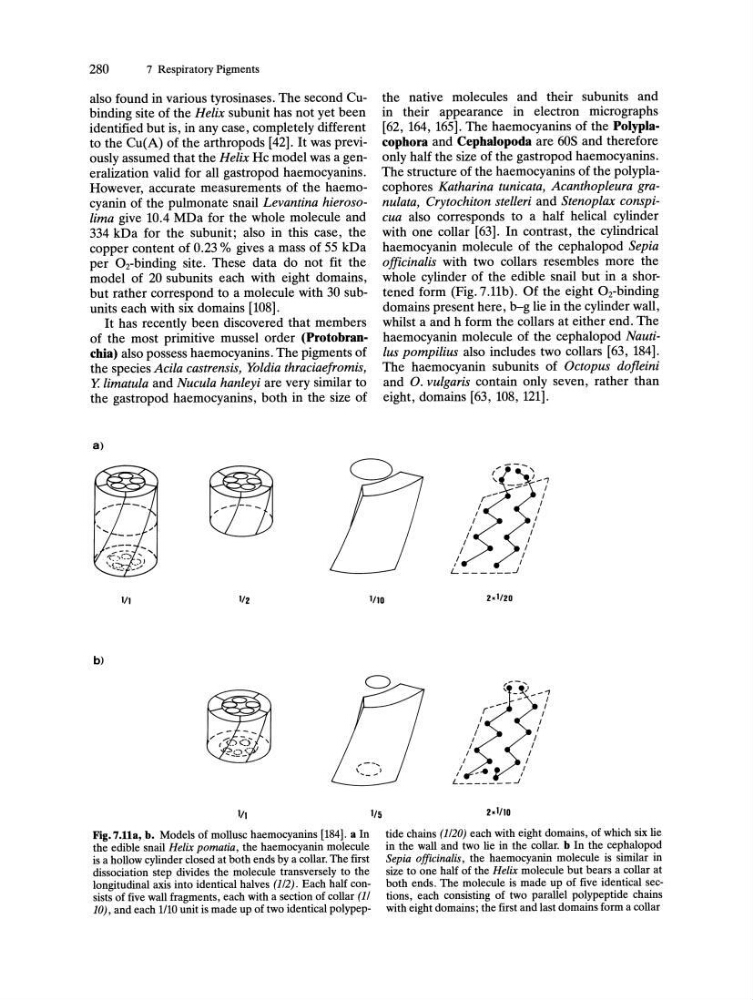
Fig.7.11a, b. Models of mollusc haemocyanins [184]. a In
the edible snail Helix pomatia, the haemocyanin molecule
is a hollow cylinder closed at both ends by a collar. The first
dissociation step divides the molecule transversely to the
longitudinal axis into identical halves (1/2). Each half consists of five wall fragments, each with a section of collar (1/
10), and each 1/10 unit is made up oftwo identical polypepthe native molecules and their subunits and
in their appearance in electron micrographs
[62, 164, 165]. The haemocyanins of the Polyplacophora and Cephalopoda are 60S and therefore
only half the size of the gastropod haemocyanins.
The structure of the haemocyanins of the polyplacophores Katharina tunicata, Acanthopleura granulata, Crytochiton stelleri and Stenoplax conspicua also corresponds to a half helical cylinder
with one collar [63]. In contrast, the cylindrical
haemocyanin molecule of the cephalopod Sepia
officinalis with two collars resembles more the
whole cylinder of the edible snail but in a shortened form (Fig.7.11b). Of the eight Oz-binding
domains present here, b-g lie in the cylinder wall,
whilst a and h form the collars at either end. The
haemocyanin molecule of the cephalopod Nautilus pompilius also includes two collars [63, 184].
The haemocyanin subunits of Octopus dofleini
and O. vulgaris contain only seven, rather than
eight, domains [63, 108, 121].
--,"
'\
\,
1_"7
I
I
I
I
I
I
L ______ J
I
I
I
I
I
I
I
1/10
2.1/20
1/5
,,-- ....
, - ) -"7
- -
I
I
I
/...
"
L _______ -'
2. 1/10
I
I
I
I
I
I
tide chains (1/20) each with eight domains, of which six lie
in the wall and two lie in the collar. b In the cephalopod
Sepia officinalis, the haemocyanin molecule is similar in
size to one half of the Helix molecule but bears a collar at
both ends. The molecule is made up of five identical sections, each consisting of two parallel polypeptide chains
with eight domains; the first and last domains form a collar
7 Respiratory Pigments
also found in various tyrosinases. The second Cubinding site of the Helix subunit has not yet been
identified but is, in any case, completely different
to the Cu(A) of the arthropods [42]. It was previously assumed that the Helix Hc model was a generalization valid for all gastropod haemocyanins.
However, accurate measurements of the haemocyanin of the pulmonate snail Levantina hierosolima give 10.4 MDa for the whole molecule and
334 kDa for the subunit; also in this case, the
copper content of 0.23 % gives a mass of 55 kDa
per Oz-binding site. These data do not fit the
model of 20 subunits each with eight domains,
but rather correspond to a molecule with 30 subunits each with six domains [108].
It has recently been discovered that members
of the most primitive mussel order (Protobranchia) also possess haemocyanins. The pigments of
the species Acila castrensis, Yoldia thraciaefromis,
Y. limatula and Nucula hanleyi are very similar to
the gastropod haemocyanins, both in the size of
a)
b)
1/1
~
t[jJ
Fig.7.11a, b. Models of mollusc haemocyanins [184]. a In
the edible snail Helix pomatia, the haemocyanin molecule
is a hollow cylinder closed at both ends by a collar. The first
dissociation step divides the molecule transversely to the
longitudinal axis into identical halves (1/2). Each half consists of five wall fragments, each with a section of collar (1/
10), and each 1/10 unit is made up oftwo identical polypepthe native molecules and their subunits and
in their appearance in electron micrographs
[62, 164, 165]. The haemocyanins of the Polyplacophora and Cephalopoda are 60S and therefore
only half the size of the gastropod haemocyanins.
The structure of the haemocyanins of the polyplacophores Katharina tunicata, Acanthopleura granulata, Crytochiton stelleri and Stenoplax conspicua also corresponds to a half helical cylinder
with one collar [63]. In contrast, the cylindrical
haemocyanin molecule of the cephalopod Sepia
officinalis with two collars resembles more the
whole cylinder of the edible snail but in a shortened form (Fig.7.11b). Of the eight Oz-binding
domains present here, b-g lie in the cylinder wall,
whilst a and h form the collars at either end. The
haemocyanin molecule of the cephalopod Nautilus pompilius also includes two collars [63, 184].
The haemocyanin subunits of Octopus dofleini
and O. vulgaris contain only seven, rather than
eight, domains [63, 108, 121].
--,"
'\
\,
1_"7
I
I
I
I
I
I
L ______ J
I
I
I
I
I
I
I
1/10
2.1/20
1/5
,,-- ....
, - ) -"7
- -
I
I
I
/...
"
L _______ -'
2. 1/10
I
I
I
I
I
I
tide chains (1/20) each with eight domains, of which six lie
in the wall and two lie in the collar. b In the cephalopod
Sepia officinalis, the haemocyanin molecule is similar in
size to one half of the Helix molecule but bears a collar at
both ends. The molecule is made up of five identical sections, each consisting of two parallel polypeptide chains
with eight domains; the first and last domains form a collar