

224
6 Immunoproteins
a)
Poly(A)
VOJ
l
P,s -mRNA
3'NT
VOJ 'CH I , CH 2' CH 3' CH 4' Sp, ~ (A).
3'NT
r-V-O-J-','C-H-I T,-C-H-2',-C-H- 3 --r,-C-H-4',-M-P,"'"~ (A).
b)
CH4 -~---- C-TERMINUS (41 aa) -------t---- 3'-NT (270 nt)
557
598
Ser Thr Glu Gly Glu Val Asn
Phe Lys Val Lys ***
5' -TCC ACT GAG GGG GAG GTG AAT-- HC AAG GTG AAA TGA-- AATAAA--TGA 200
f's-mRNA
CH4-~~---C-TERMINUS (20 aa)---t----3'-NT (128 nt)
557
577
Ser Thr Gly Lys Pro Thr Leu
Cys Tyr ***
5 ' - TCC ACT GGT AAA CCC ACA CTG--TGC TAT TGA-- AATAAA-TGA 200
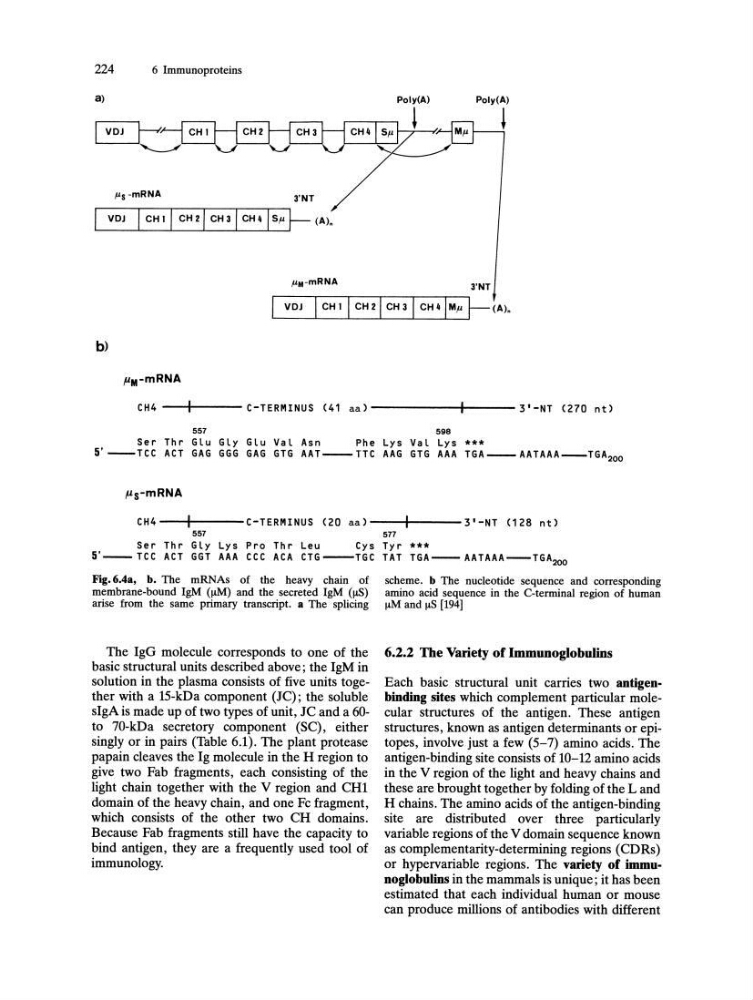
Fig. 6.48, b. The mRNAs of the heavy chain of
membrane-bound IgM (!JM) and the secreted IgM (IlS)
arise from the same primary transcript. 8 The splicing
The IgG molecule corresponds to one of the
basic structural units described above; the IgM in
solution in the plasma consists of five units together with a 15-kDa component (JC); the soluble
sIgA is made up of two types of unit, JC and a 60to 70-kDa secretory component (SC), either
singly or in pairs (Table 6.1). The plant protease
papain cleaves the Ig molecule in the H region to
give two Fab fragments, each consisting of the
light chain together with the V region and CH1
domain of the heavy chain, and one Fc fragment,
which consists of the other two CH domains.
Because Fab fragments still have the capacity to
bind antigen, they are a frequently used tool of
immunology.
scheme. b The nucleotide sequence and corresponding
amino acid sequence in the C-terminal region of human
IlM and IlS [194]
6.2.2 The Variety of Immunoglobulins
Each basic structural unit carries two antigenbinding sites which complement particular molecular structures of the antigen. These antigen
structures, known as antigen determinants or epitopes, involve just a few (5-7) amino acids. The
antigen-binding site consists of 10-12 amino acids
in the V region of the light and heavy chains and
these are brought together by folding of the Land
H chains. The amino acids of the antigen-binding
site are distributed over three particularly
variable regions of the V domain sequence known
as complementarity-determining regions (CDRs)
or hypervariable regions. The variety of immunoglobulins in the mammals is unique; it has been
estimated that each individual human or mouse
can produce millions of antibodies with different
6 Immunoproteins
a)
Poly(A)
VOJ
l
P,s -mRNA
3'NT
VOJ 'CH I , CH 2' CH 3' CH 4' Sp, ~ (A).
3'NT
r-V-O-J-','C-H-I T,-C-H-2',-C-H- 3 --r,-C-H-4',-M-P,"'"~ (A).
b)
CH4 -~---- C-TERMINUS (41 aa) -------t---- 3'-NT (270 nt)
557
598
Ser Thr Glu Gly Glu Val Asn
Phe Lys Val Lys ***
5' -TCC ACT GAG GGG GAG GTG AAT-- HC AAG GTG AAA TGA-- AATAAA--TGA 200
f's-mRNA
CH4-~~---C-TERMINUS (20 aa)---t----3'-NT (128 nt)
557
577
Ser Thr Gly Lys Pro Thr Leu
Cys Tyr ***
5 ' - TCC ACT GGT AAA CCC ACA CTG--TGC TAT TGA-- AATAAA-TGA 200
Fig. 6.48, b. The mRNAs of the heavy chain of
membrane-bound IgM (!JM) and the secreted IgM (IlS)
arise from the same primary transcript. 8 The splicing
The IgG molecule corresponds to one of the
basic structural units described above; the IgM in
solution in the plasma consists of five units together with a 15-kDa component (JC); the soluble
sIgA is made up of two types of unit, JC and a 60to 70-kDa secretory component (SC), either
singly or in pairs (Table 6.1). The plant protease
papain cleaves the Ig molecule in the H region to
give two Fab fragments, each consisting of the
light chain together with the V region and CH1
domain of the heavy chain, and one Fc fragment,
which consists of the other two CH domains.
Because Fab fragments still have the capacity to
bind antigen, they are a frequently used tool of
immunology.
scheme. b The nucleotide sequence and corresponding
amino acid sequence in the C-terminal region of human
IlM and IlS [194]
6.2.2 The Variety of Immunoglobulins
Each basic structural unit carries two antigenbinding sites which complement particular molecular structures of the antigen. These antigen
structures, known as antigen determinants or epitopes, involve just a few (5-7) amino acids. The
antigen-binding site consists of 10-12 amino acids
in the V region of the light and heavy chains and
these are brought together by folding of the Land
H chains. The amino acids of the antigen-binding
site are distributed over three particularly
variable regions of the V domain sequence known
as complementarity-determining regions (CDRs)
or hypervariable regions. The variety of immunoglobulins in the mammals is unique; it has been
estimated that each individual human or mouse
can produce millions of antibodies with different