

4.2 The Mechanisms of Molecular Evolution
117
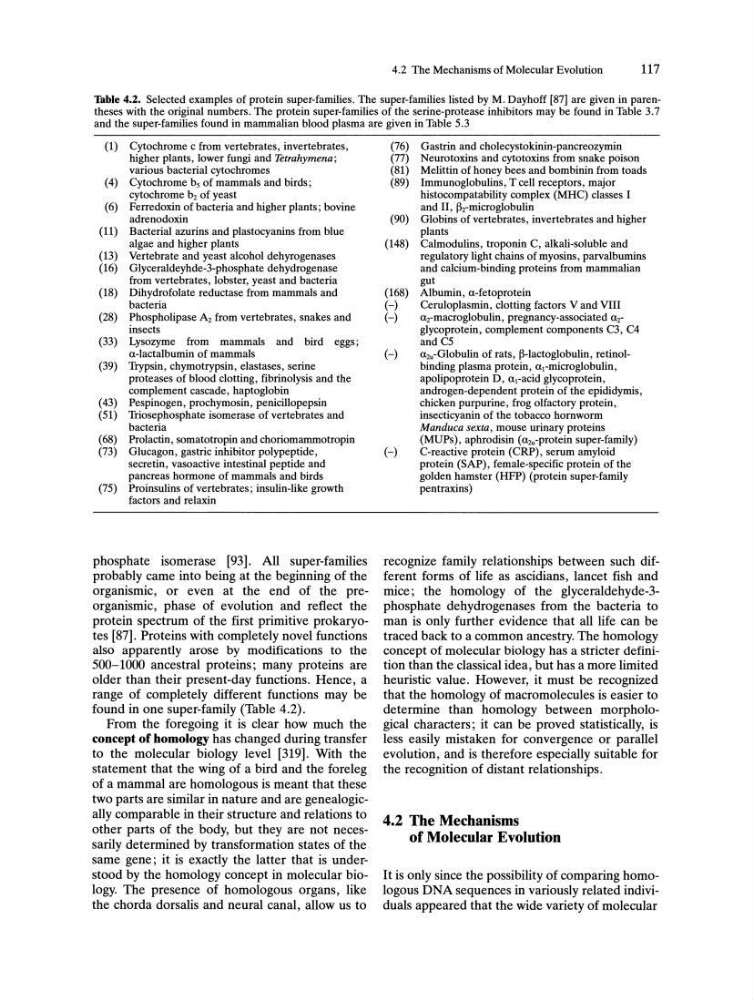
Table 4.2. Selected examples of protein super-families. The super-families listed by M. Dayhoff [87] are given in parentheses with the original numbers. The protein super-families of the serine-protease inhibitors may be found in Table 3.7
and the super-families found in mammalian blood plasma are given in Table 5.3
(1) Cytochrome c from vertebrates, invertebrates,
higher plants, lower fungi and Tetrahymena;
various bacterial cytochromes
(4) Cytochrome b5 of mammals and birds;
cytochrome b2 of yeast
(6) Ferredoxin of bacteria and higher plants; bovine
adrenodoxin
(11) Bacterial azurins and plastocyanins from blue
algae and higher plants
(13) Vertebrate and yeast alcohol dehyrogenases
(16) Glyceraldeyhde-3-phosphate dehydrogenase
from vertebrates, lobster, yeast and bacteria
(18) Dihydrofolate reductase from mammals and
bacteria
(28) Phospholipase A2 from vertebrates, snakes and
insects
(33) Lysozyme from mammals and bird eggs;
a-lactalbumin of mammals
(39) Trypsin, chymotrypsin, elastases, serine
proteases of blood clotting, fibrinolysis and the
complement cascade, haptoglobin
(43) Pespinogen, prochymosin, penicillopepsin
(51) Triosephosphate isomerase of vertebrates and
bacteria
(68) Prolactin, somatotropin and choriomammotropin
(73) Glucagon, gastric inhibitor polypeptide,
secretin, vasoactive intestinal peptide and
pancreas hormone of mammals and birds
(75) Proinsulins of vertebrates; insulin-like growth
factors and relaxin
phosphate isomerase [93]. All super-families
probably came into being at the beginning of the
organismic, or even at the end of the preorganismic, phase of evolution and reflect the
protein spectrum of the first primitive prokaryotes [87]. Proteins with completely novel functions
also apparently arose by modifications to the
500-1000 ancestral proteins; many proteins are
older than their present-day functions. Hence, a
range of completely different functions may be
found in one super-family (Table 4.2).
From the foregoing it is clear how much the
concept of homology has changed during transfer
to the molecular biology level [319]. With the
statement that the wing of a bird and the foreleg
of a mammal are homologous is meant that these
two parts are similar in nature and are genealogically comparable in their structure and relations to
other parts of the body, but they are not necessarily determined by transformation states of the
same gene; it is exactly the latter that is understood by the homology concept in molecular biology. The presence of homologous organs, like
the chorda dorsalis and neural canal, allow us to
(76)
(77)
(81)
(89)
(90)
(148)
(168)
(-)
(-)
(-)
(-)
Gastrin and cholecystokinin-pancreozymin
Neurotoxins and cytotoxins from snake poison
Melittin of honey bees and bombinin from toads
Immunoglobulins, T cell receptors, major
histocompatability complex (MHC) classes I
and II, ~2-microglobulin
Globins of vertebrates, invertebrates and higher
plants
Calmodulins, troponin C, alkali-soluble and
regulatory light chains of myosins, parvalbumins
and calcium-binding proteins from mammalian
gut
Albumin, a-fetoprotein
Ceruloplasmin, clotting factors V and VIII
az-macroglobulin, pregnancy-associated azglycoprotein, complement components C3, C4
andC5
a2u-Globulin of rats, ~-lactoglobulin, retinolbinding plasma protein, armicroglobulin,
apolipoprotein D, aracid glycoprotein,
androgen-dependent protein of the epididymis,
chicken purpurine, frog olfactory protein,
insecticyanin of the tobacco hornworm
Manduca sexta, mouse urinary proteins
(MUPs), aphrodisin (a2u-protein super-family)
C-reactive protein (CRP), serum amyloid
protein (SAP), female-specific protein of the
golden hamster (HFP) (protein super-family
pentraxins)
recognize family relationships between such different forms of life as ascidians, lancet fish and
mice; the homology of the glyceraldehyde-3phosphate dehydrogenases from the bacteria to
man is only further evidence that all life can be
traced back to a common ancestry. The homology
concept of molecular biology has a stricter definition than the classical idea, but has a more limited
heuristic value. However, it must be recognized
that the homology of macromolecules is easier to
determine than homology between morphological characters; it can be proved statistically, is
less easily mistaken for convergence or parallel
evolution, and is therefore especially suitable for
the recognition of distant relationships.
4.2 The Mechanisms
of Molecular Evolution
It is only since the possibility of comparing homologous DNA sequences in variously related individuals appeared that the wide variety of molecular
117
Table 4.2. Selected examples of protein super-families. The super-families listed by M. Dayhoff [87] are given in parentheses with the original numbers. The protein super-families of the serine-protease inhibitors may be found in Table 3.7
and the super-families found in mammalian blood plasma are given in Table 5.3
(1) Cytochrome c from vertebrates, invertebrates,
higher plants, lower fungi and Tetrahymena;
various bacterial cytochromes
(4) Cytochrome b5 of mammals and birds;
cytochrome b2 of yeast
(6) Ferredoxin of bacteria and higher plants; bovine
adrenodoxin
(11) Bacterial azurins and plastocyanins from blue
algae and higher plants
(13) Vertebrate and yeast alcohol dehyrogenases
(16) Glyceraldeyhde-3-phosphate dehydrogenase
from vertebrates, lobster, yeast and bacteria
(18) Dihydrofolate reductase from mammals and
bacteria
(28) Phospholipase A2 from vertebrates, snakes and
insects
(33) Lysozyme from mammals and bird eggs;
a-lactalbumin of mammals
(39) Trypsin, chymotrypsin, elastases, serine
proteases of blood clotting, fibrinolysis and the
complement cascade, haptoglobin
(43) Pespinogen, prochymosin, penicillopepsin
(51) Triosephosphate isomerase of vertebrates and
bacteria
(68) Prolactin, somatotropin and choriomammotropin
(73) Glucagon, gastric inhibitor polypeptide,
secretin, vasoactive intestinal peptide and
pancreas hormone of mammals and birds
(75) Proinsulins of vertebrates; insulin-like growth
factors and relaxin
phosphate isomerase [93]. All super-families
probably came into being at the beginning of the
organismic, or even at the end of the preorganismic, phase of evolution and reflect the
protein spectrum of the first primitive prokaryotes [87]. Proteins with completely novel functions
also apparently arose by modifications to the
500-1000 ancestral proteins; many proteins are
older than their present-day functions. Hence, a
range of completely different functions may be
found in one super-family (Table 4.2).
From the foregoing it is clear how much the
concept of homology has changed during transfer
to the molecular biology level [319]. With the
statement that the wing of a bird and the foreleg
of a mammal are homologous is meant that these
two parts are similar in nature and are genealogically comparable in their structure and relations to
other parts of the body, but they are not necessarily determined by transformation states of the
same gene; it is exactly the latter that is understood by the homology concept in molecular biology. The presence of homologous organs, like
the chorda dorsalis and neural canal, allow us to
(76)
(77)
(81)
(89)
(90)
(148)
(168)
(-)
(-)
(-)
(-)
Gastrin and cholecystokinin-pancreozymin
Neurotoxins and cytotoxins from snake poison
Melittin of honey bees and bombinin from toads
Immunoglobulins, T cell receptors, major
histocompatability complex (MHC) classes I
and II, ~2-microglobulin
Globins of vertebrates, invertebrates and higher
plants
Calmodulins, troponin C, alkali-soluble and
regulatory light chains of myosins, parvalbumins
and calcium-binding proteins from mammalian
gut
Albumin, a-fetoprotein
Ceruloplasmin, clotting factors V and VIII
az-macroglobulin, pregnancy-associated azglycoprotein, complement components C3, C4
andC5
a2u-Globulin of rats, ~-lactoglobulin, retinolbinding plasma protein, armicroglobulin,
apolipoprotein D, aracid glycoprotein,
androgen-dependent protein of the epididymis,
chicken purpurine, frog olfactory protein,
insecticyanin of the tobacco hornworm
Manduca sexta, mouse urinary proteins
(MUPs), aphrodisin (a2u-protein super-family)
C-reactive protein (CRP), serum amyloid
protein (SAP), female-specific protein of the
golden hamster (HFP) (protein super-family
pentraxins)
recognize family relationships between such different forms of life as ascidians, lancet fish and
mice; the homology of the glyceraldehyde-3phosphate dehydrogenases from the bacteria to
man is only further evidence that all life can be
traced back to a common ancestry. The homology
concept of molecular biology has a stricter definition than the classical idea, but has a more limited
heuristic value. However, it must be recognized
that the homology of macromolecules is easier to
determine than homology between morphological characters; it can be proved statistically, is
less easily mistaken for convergence or parallel
evolution, and is therefore especially suitable for
the recognition of distant relationships.
4.2 The Mechanisms
of Molecular Evolution
It is only since the possibility of comparing homologous DNA sequences in variously related individuals appeared that the wide variety of molecular