

98
3 The Structural Variety and Metabolism of Proteins
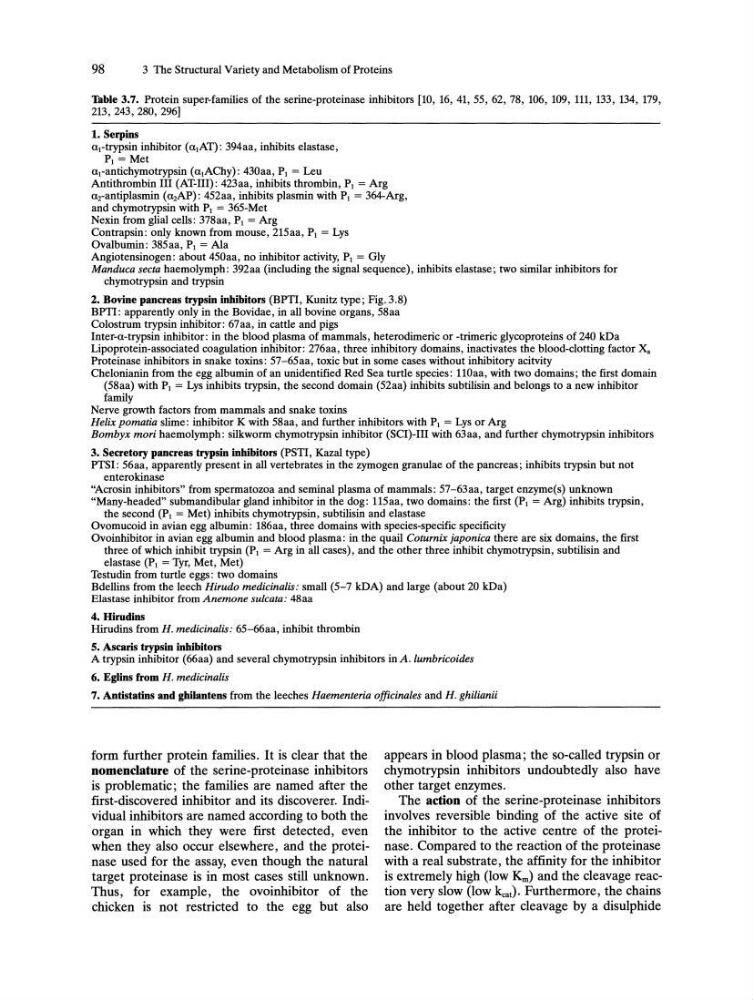
Table 3.7. Protein super-families of the serine-proteinase inhibitors [10, 16, 41, 55, 62, 78, 106, 109, 111, 133, 134, 179,
213, 243,280, 296]
1. Serpins
urtrypsin inhibitor (uIAT): 394aa, inhibits elastase,
PI = Met
urantichymotrypsin (uIAChy): 430aa, PI = Leu
Antithrombin III (AT-III): 423aa, inhibits thrombin, PI = Arg
uz-antiplasmin (uzAP): 452aa, inhibits plasmin with PI = 364-Arg,
and chymotrypsin with PI = 365-Met
Nexin from glial cells: 378aa, PI = Arg
Contrapsin: only known from mouse, 215aa, PI = Lys
Ovalbumin: 385aa, PI = Ala
Angiotensinogen: about 450aa, no inhibitor activity, PI = Gly
Manduca secta haemolymph: 392aa (including the signal sequence), inhibits elastase; two similar inhibitors for
chymotrypsin and trypsin
2. Bovine pancreas trypsin inhibitors (BPTI, Kunitz type; Fig. 3.8)
BPTI: apparently only in the Bovidae, in all bovine organs, 58aa
Colostrum trypsin inhibitor: 67aa, in cattle and pigs
Inter-u-trypsin inhibitor: in the blood plasma of mammals, heterodimeric or -trimeric glycoproteins of 240 kDa
Lipoprotein-associated coagulation inhibitor: 276aa, three inhibitory domains, inactivates the blood-clotting factor X.
Proteinase inhibitors in snake toxins: 57-65aa, toxic but in some cases without inhibitory acitvity
Chelonianin from the egg albumin of an unidentified Red Sea turtle species: 110aa, with two domains; the first domain
(58aa) with PI = Lys inhibits trypsin, the second domain (52aa) inhibits subtilisin and belongs to a new inhibitor
family
Nerve growth factors from mammals and snake toxins
Helix pomatia slime: inhibitor K with 58aa, and further inhibitors with PI = Lys or Arg
Bombyx mori haemolymph: silkworm chymotrypsin inhibitor (SCI)-III with 63aa, and further chymotrypsin inhibitors
3. Secretory pancreas trypsin inhibitors (PSTI, Kazal type)
PTSI: 56aa, apparently present in all vertebrates in the zymogen granulae of the pancreas; inhibits trypsin but not
enterokinase
"Acrosin inhibitors" from spermatozoa and seminal plasma of mammals: 57-63aa, target enzyme(s) unknown
"Many-headed" submandibular gland inhibitor in the dog: 115aa, two domains: the first (PI = Arg) inhibits trypsin,
the second (PI = Met) inhibits chymotrypsin, subtilisin and elastase
Ovomucoid in avian egg albumin: 186aa, three domains with species-specific specificity
Ovoinhibitor in avian egg albumin and blood plasma: in the quail Coturnix japonica there are six domains, the first
three of which inhibit trypsin (PI = Arg in all cases), and the other three inhibit chymotrypsin, subtilisin and
elastase (PI = Tyr, Met, Met)
Testudin from turtle eggs: two domains
Bdellins from the leech Hirudo medicinalis: small (5-7 kDA) and large (about 20 kDa)
Elastase inhibitor from Anemone sulcata: 48aa
4. Hirudins
Hirudins from H. medicinalis: 65-66aa, inhibit thrombin
5. Ascaris trypsin inhibitors
A trypsin inhibitor (66aa) and several chymotrypsin inhibitors in A.lumbricoides
6. Eglins from H. medicinalis
7. Antistatins and ghilantens from the leeches Haementeria officinales and H. ghilianii
form further protein families. It is clear that the
nomenclature of the serine-proteinase inhibitors
is problematic; the families are named after the
first-discovered inhibitor and its discoverer. Individual inhibitors are named according to both the
organ in which they were first detected, even
when they also occur elsewhere, and the proteinase used for the assay, even though the natural
target proteinase is in most cases still unknown.
Thus, for example, the ovoinhibitor of the
chicken is not restricted to the egg but also
appears in blood plasma; the so-called trypsin or
chymotrypsin inhibitors undoubtedly also have
other target enzymes.
The action of the serine-proteinase inhibitors
involves reversible binding of the active site of
the inhibitor to the active centre of the proteinase. Compared to the reaction of the proteinase
with a real substrate, the affinity for the inhibitor
is extremely high (low Km) and the cleavage reaction very slow (low kcat). Furthermore, the chains
are held together after cleavage by a disulphide
3 The Structural Variety and Metabolism of Proteins
Table 3.7. Protein super-families of the serine-proteinase inhibitors [10, 16, 41, 55, 62, 78, 106, 109, 111, 133, 134, 179,
213, 243,280, 296]
1. Serpins
urtrypsin inhibitor (uIAT): 394aa, inhibits elastase,
PI = Met
urantichymotrypsin (uIAChy): 430aa, PI = Leu
Antithrombin III (AT-III): 423aa, inhibits thrombin, PI = Arg
uz-antiplasmin (uzAP): 452aa, inhibits plasmin with PI = 364-Arg,
and chymotrypsin with PI = 365-Met
Nexin from glial cells: 378aa, PI = Arg
Contrapsin: only known from mouse, 215aa, PI = Lys
Ovalbumin: 385aa, PI = Ala
Angiotensinogen: about 450aa, no inhibitor activity, PI = Gly
Manduca secta haemolymph: 392aa (including the signal sequence), inhibits elastase; two similar inhibitors for
chymotrypsin and trypsin
2. Bovine pancreas trypsin inhibitors (BPTI, Kunitz type; Fig. 3.8)
BPTI: apparently only in the Bovidae, in all bovine organs, 58aa
Colostrum trypsin inhibitor: 67aa, in cattle and pigs
Inter-u-trypsin inhibitor: in the blood plasma of mammals, heterodimeric or -trimeric glycoproteins of 240 kDa
Lipoprotein-associated coagulation inhibitor: 276aa, three inhibitory domains, inactivates the blood-clotting factor X.
Proteinase inhibitors in snake toxins: 57-65aa, toxic but in some cases without inhibitory acitvity
Chelonianin from the egg albumin of an unidentified Red Sea turtle species: 110aa, with two domains; the first domain
(58aa) with PI = Lys inhibits trypsin, the second domain (52aa) inhibits subtilisin and belongs to a new inhibitor
family
Nerve growth factors from mammals and snake toxins
Helix pomatia slime: inhibitor K with 58aa, and further inhibitors with PI = Lys or Arg
Bombyx mori haemolymph: silkworm chymotrypsin inhibitor (SCI)-III with 63aa, and further chymotrypsin inhibitors
3. Secretory pancreas trypsin inhibitors (PSTI, Kazal type)
PTSI: 56aa, apparently present in all vertebrates in the zymogen granulae of the pancreas; inhibits trypsin but not
enterokinase
"Acrosin inhibitors" from spermatozoa and seminal plasma of mammals: 57-63aa, target enzyme(s) unknown
"Many-headed" submandibular gland inhibitor in the dog: 115aa, two domains: the first (PI = Arg) inhibits trypsin,
the second (PI = Met) inhibits chymotrypsin, subtilisin and elastase
Ovomucoid in avian egg albumin: 186aa, three domains with species-specific specificity
Ovoinhibitor in avian egg albumin and blood plasma: in the quail Coturnix japonica there are six domains, the first
three of which inhibit trypsin (PI = Arg in all cases), and the other three inhibit chymotrypsin, subtilisin and
elastase (PI = Tyr, Met, Met)
Testudin from turtle eggs: two domains
Bdellins from the leech Hirudo medicinalis: small (5-7 kDA) and large (about 20 kDa)
Elastase inhibitor from Anemone sulcata: 48aa
4. Hirudins
Hirudins from H. medicinalis: 65-66aa, inhibit thrombin
5. Ascaris trypsin inhibitors
A trypsin inhibitor (66aa) and several chymotrypsin inhibitors in A.lumbricoides
6. Eglins from H. medicinalis
7. Antistatins and ghilantens from the leeches Haementeria officinales and H. ghilianii
form further protein families. It is clear that the
nomenclature of the serine-proteinase inhibitors
is problematic; the families are named after the
first-discovered inhibitor and its discoverer. Individual inhibitors are named according to both the
organ in which they were first detected, even
when they also occur elsewhere, and the proteinase used for the assay, even though the natural
target proteinase is in most cases still unknown.
Thus, for example, the ovoinhibitor of the
chicken is not restricted to the egg but also
appears in blood plasma; the so-called trypsin or
chymotrypsin inhibitors undoubtedly also have
other target enzymes.
The action of the serine-proteinase inhibitors
involves reversible binding of the active site of
the inhibitor to the active centre of the proteinase. Compared to the reaction of the proteinase
with a real substrate, the affinity for the inhibitor
is extremely high (low Km) and the cleavage reaction very slow (low kcat). Furthermore, the chains
are held together after cleavage by a disulphide