

3.3.2 Serine Proteinases
93
Trypsinogens:
FPLEDDDK
FPVDDDDK
FPTDDDDK
FPIDDDDK
TPTDDDDK
VPIDDDDK
SSTDDDDK
APDDDDK
VDDDDK
DK
Rat I
Rat II, sheep, pig
Wild boar
Dog 2 and 3
Dog 1
Dromedary
Horse
Shark (Squalus acanthias)
Cow, goat, turkey
Man (cationic trypsin)
Chymotrypsinogens:
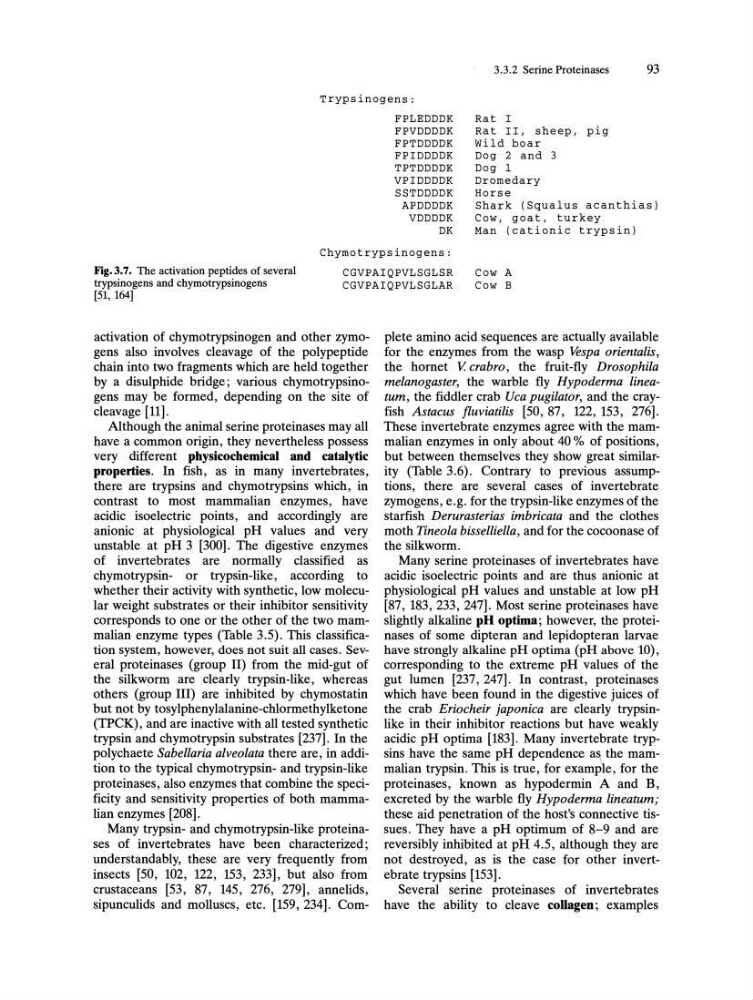
Fig. 3.7. The activation peptides of several
trypsinogens and chymotrypsinogens
CGVPAIQPVLSGLSR
CGVPAIQPVLSGLAR
Cow A
Cow B
[51, 164]
activation of chymotrypsinogen and other zymogens also involves cleavage of the polypeptide
chain into two fragments which are held together
by a disulphide bridge; various chymotrypsinogens may be formed, depending on the site of
cleavage [11].
Although the animal serine proteinases may all
have a common origin, they nevertheless possess
very different physicochemical and catalytic
properties. In fish, as in many invertebrates,
there are trypsins and chymotrypsins which, in
contrast to most mammalian enzymes, have
acidic isoelectric points, and accordingly are
anionic at physiological pH values and very
unstable at pH 3 [300]. The digestive enzymes
of invertebrates are normally classified as
chymotrypsin- or trypsin-like, according to
whether their activity with synthetic, low molecular weight substrates or their inhibitor sensitivity
corresponds to one or the other of the two mammalian enzyme types (Table 3.5). This classification system, however, does not suit all cases. Several proteinases (group II) from the mid-gut of
the silkworm are clearly trypsin-like, whereas
others (group III) are inhibited by chymostatin
but not by tosylphenylalanine-chlormethylketone
(TPCK), and are inactive with all tested synthetic
trypsin and chymotrypsin substrates [237]. In the
polychaete Sabellaria alveolata there are, in addition to the typical chymotrypsin- and trypsin-like
proteinases, also enzymes that combine the specificity and sensitivity properties of both mammalian enzymes [208].
Many trypsin- and chymotrypsin-like proteinases of invertebrates have been characterized;
understandably, these are very frequently from
insects [50, 102, 122, 153, 233], but also from
crustaceans [53, 87, 145, 276, 279], annelids,
sipunculids and molluscs, etc. [159, 234]. Complete amino acid sequences are actually available
for the enzymes from the wasp ~spa orienta lis ,
the hornet V. crabro, the fruit-fly Drosophila
melanogaster, the warble fly Hypoderma lineatum, the fiddler crab Uca pugilator, and the crayfish Astacus fluviatilis [50,87, 122, 153, 276].
These invertebrate enzymes agree with the mammalian enzymes in only about 40 % of positions,
but between themselves they show great similarity (Table 3.6). Contrary to previous assumptions, there are several cases of invertebrate
zymogens, e.g. for the trypsin-like enzymes of the
starfish Derurasterias imbricata and the clothes
moth Tineola bisselliella, and for the cocoonase of
the silkworm.
Many serine proteinases of invertebrates have
acidic isoelectric points and are thus anionic at
physiological pH values and unstable at low pH
[87, 183,233,247]. Most serine proteinases have
slightly alkaline pH optima; however, the proteinases of some dipteran and lepidopteran larvae
have strongly alkaline pH optima (pH above 10),
corresponding to the extreme pH values of the
gut lumen [237, 247]. In contrast, proteinases
which have been found in the digestive juices of
the crab Eriocheir japonica are clearly trypsinlike in their inhibitor reactions but have weakly
acidic pH optima [183]. Many invertebrate trypsins have the same pH dependence as the mammalian trypsin. This is true, for example, for the
proteinases, known as hypodermin A and B,
excreted by the warble fly Hypoderma lineatum;
these aid penetration of the host's connective tissues. They have a pH optimum of 8-9 and are
reversibly inhibited at pH 4.5, although they are
not destroyed, as is the case for other invertebrate trypsins [153].
Several serine proteinases of invertebrates
have the ability to cleave collagen; examples
93
Trypsinogens:
FPLEDDDK
FPVDDDDK
FPTDDDDK
FPIDDDDK
TPTDDDDK
VPIDDDDK
SSTDDDDK
APDDDDK
VDDDDK
DK
Rat I
Rat II, sheep, pig
Wild boar
Dog 2 and 3
Dog 1
Dromedary
Horse
Shark (Squalus acanthias)
Cow, goat, turkey
Man (cationic trypsin)
Chymotrypsinogens:
Fig. 3.7. The activation peptides of several
trypsinogens and chymotrypsinogens
CGVPAIQPVLSGLSR
CGVPAIQPVLSGLAR
Cow A
Cow B
[51, 164]
activation of chymotrypsinogen and other zymogens also involves cleavage of the polypeptide
chain into two fragments which are held together
by a disulphide bridge; various chymotrypsinogens may be formed, depending on the site of
cleavage [11].
Although the animal serine proteinases may all
have a common origin, they nevertheless possess
very different physicochemical and catalytic
properties. In fish, as in many invertebrates,
there are trypsins and chymotrypsins which, in
contrast to most mammalian enzymes, have
acidic isoelectric points, and accordingly are
anionic at physiological pH values and very
unstable at pH 3 [300]. The digestive enzymes
of invertebrates are normally classified as
chymotrypsin- or trypsin-like, according to
whether their activity with synthetic, low molecular weight substrates or their inhibitor sensitivity
corresponds to one or the other of the two mammalian enzyme types (Table 3.5). This classification system, however, does not suit all cases. Several proteinases (group II) from the mid-gut of
the silkworm are clearly trypsin-like, whereas
others (group III) are inhibited by chymostatin
but not by tosylphenylalanine-chlormethylketone
(TPCK), and are inactive with all tested synthetic
trypsin and chymotrypsin substrates [237]. In the
polychaete Sabellaria alveolata there are, in addition to the typical chymotrypsin- and trypsin-like
proteinases, also enzymes that combine the specificity and sensitivity properties of both mammalian enzymes [208].
Many trypsin- and chymotrypsin-like proteinases of invertebrates have been characterized;
understandably, these are very frequently from
insects [50, 102, 122, 153, 233], but also from
crustaceans [53, 87, 145, 276, 279], annelids,
sipunculids and molluscs, etc. [159, 234]. Complete amino acid sequences are actually available
for the enzymes from the wasp ~spa orienta lis ,
the hornet V. crabro, the fruit-fly Drosophila
melanogaster, the warble fly Hypoderma lineatum, the fiddler crab Uca pugilator, and the crayfish Astacus fluviatilis [50,87, 122, 153, 276].
These invertebrate enzymes agree with the mammalian enzymes in only about 40 % of positions,
but between themselves they show great similarity (Table 3.6). Contrary to previous assumptions, there are several cases of invertebrate
zymogens, e.g. for the trypsin-like enzymes of the
starfish Derurasterias imbricata and the clothes
moth Tineola bisselliella, and for the cocoonase of
the silkworm.
Many serine proteinases of invertebrates have
acidic isoelectric points and are thus anionic at
physiological pH values and unstable at low pH
[87, 183,233,247]. Most serine proteinases have
slightly alkaline pH optima; however, the proteinases of some dipteran and lepidopteran larvae
have strongly alkaline pH optima (pH above 10),
corresponding to the extreme pH values of the
gut lumen [237, 247]. In contrast, proteinases
which have been found in the digestive juices of
the crab Eriocheir japonica are clearly trypsinlike in their inhibitor reactions but have weakly
acidic pH optima [183]. Many invertebrate trypsins have the same pH dependence as the mammalian trypsin. This is true, for example, for the
proteinases, known as hypodermin A and B,
excreted by the warble fly Hypoderma lineatum;
these aid penetration of the host's connective tissues. They have a pH optimum of 8-9 and are
reversibly inhibited at pH 4.5, although they are
not destroyed, as is the case for other invertebrate trypsins [153].
Several serine proteinases of invertebrates
have the ability to cleave collagen; examples