

224
P. Drap et al.
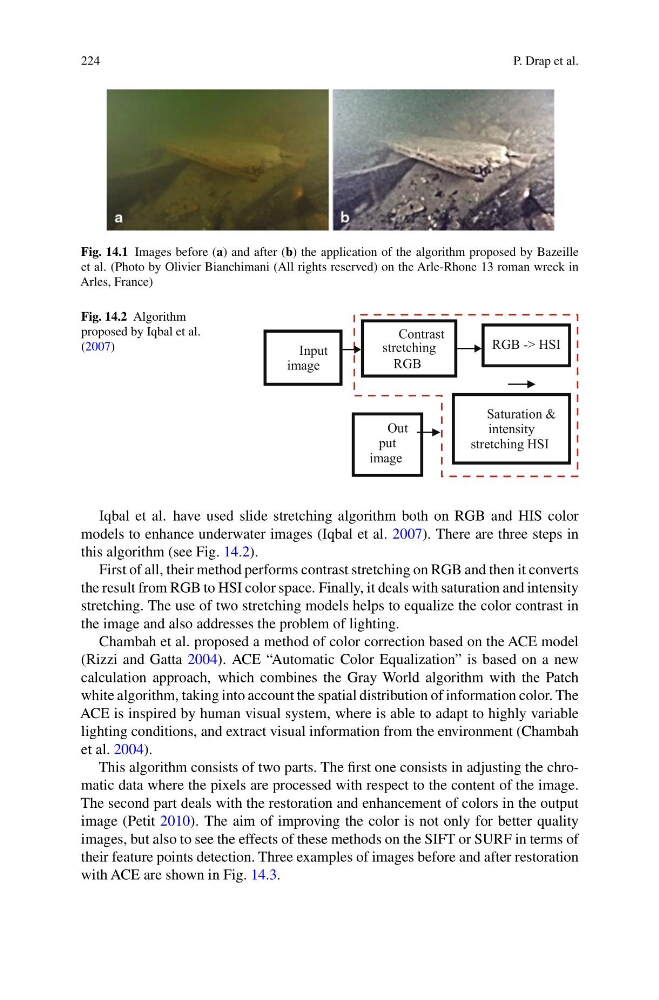
Fig. 14.1 Images before (a) and after (b) the application of the algorithm proposed by Bazeille
et al. (Photo by Olivier Bianchimani (All rights reserved) on the Arle-Rhone 13 roman wreck in
Arles, France)
Fig. 14.2 Algorithm
proposed by Iqbal et al.
(2007)
Input
image
Contrast
stretching
RGB
Saturation &
intensity
stretching HSI
RGB -> HSI
Out
put
image
Iqbal et al. have used slide stretching algorithm both on RGB and HIS color
models to enhance underwater images (Iqbal et al. 2007). There are three steps in
this algorithm (see Fig. 14.2).
First of all, their method performs contrast stretching on RGB and then it converts
the result from RGB to HSI color space. Finally, it deals with saturation and intensity
stretching. The use of two stretching models helps to equalize the color contrast in
the image and also addresses the problem of lighting.
Chambah et al. proposed a method of color correction based on the ACE model
(Rizzi and Gatta 2004). ACE “Automatic Color Equalization” is based on a new
calculation approach, which combines the Gray World algorithm with the Patch
white algorithm, taking into account the spatial distribution of information color. The
ACE is inspired by human visual system, where is able to adapt to highly variable
lighting conditions, and extract visual information from the environment (Chambah
et al. 2004).
This algorithm consists of two parts. The first one consists in adjusting the chromatic data where the pixels are processed with respect to the content of the image.
The second part deals with the restoration and enhancement of colors in the output
image (Petit 2010). The aim of improving the color is not only for better quality
images, but also to see the effects of these methods on the SIFT or SURF in terms of
their feature points detection. Three examples of images before and after restoration
with ACE are shown in Fig. 14.3.
P. Drap et al.
Fig. 14.1 Images before (a) and after (b) the application of the algorithm proposed by Bazeille
et al. (Photo by Olivier Bianchimani (All rights reserved) on the Arle-Rhone 13 roman wreck in
Arles, France)
Fig. 14.2 Algorithm
proposed by Iqbal et al.
(2007)
Input
image
Contrast
stretching
RGB
Saturation &
intensity
stretching HSI
RGB -> HSI
Out
put
image
Iqbal et al. have used slide stretching algorithm both on RGB and HIS color
models to enhance underwater images (Iqbal et al. 2007). There are three steps in
this algorithm (see Fig. 14.2).
First of all, their method performs contrast stretching on RGB and then it converts
the result from RGB to HSI color space. Finally, it deals with saturation and intensity
stretching. The use of two stretching models helps to equalize the color contrast in
the image and also addresses the problem of lighting.
Chambah et al. proposed a method of color correction based on the ACE model
(Rizzi and Gatta 2004). ACE “Automatic Color Equalization” is based on a new
calculation approach, which combines the Gray World algorithm with the Patch
white algorithm, taking into account the spatial distribution of information color. The
ACE is inspired by human visual system, where is able to adapt to highly variable
lighting conditions, and extract visual information from the environment (Chambah
et al. 2004).
This algorithm consists of two parts. The first one consists in adjusting the chromatic data where the pixels are processed with respect to the content of the image.
The second part deals with the restoration and enhancement of colors in the output
image (Petit 2010). The aim of improving the color is not only for better quality
images, but also to see the effects of these methods on the SIFT or SURF in terms of
their feature points detection. Three examples of images before and after restoration
with ACE are shown in Fig. 14.3.