

568
P. J. Ralph, D. Tomasko, K. Moore, S. Seddon, and C. M. O. Macinnis-Ng
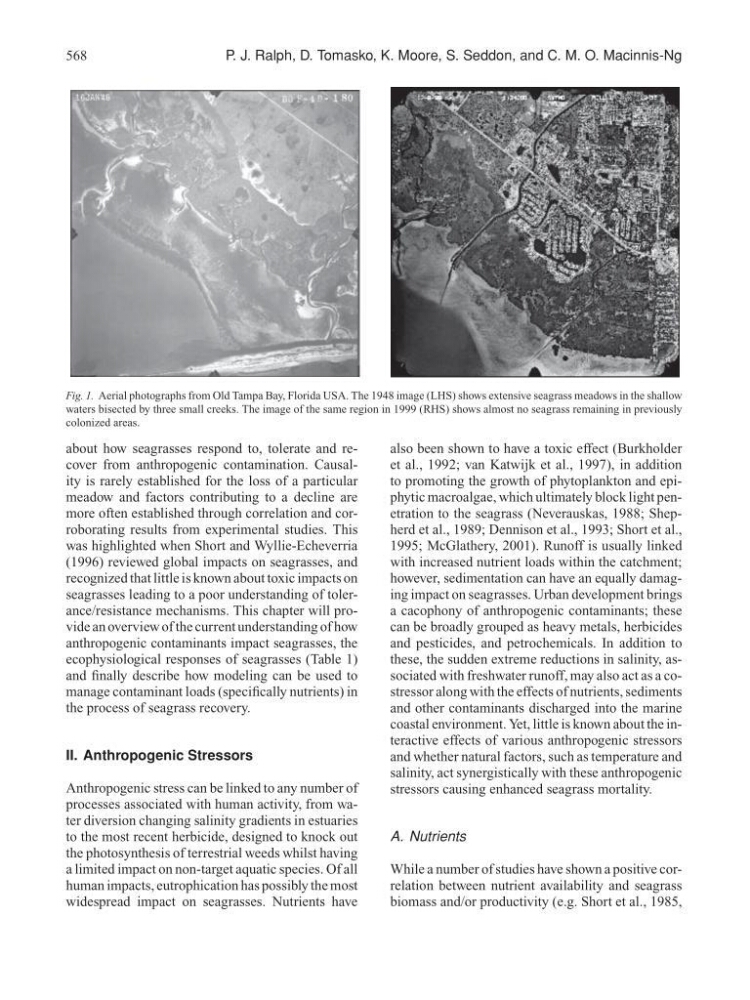
Fig. 1. Aerial photographs from Old Tampa Bay, Florida USA. The 1948 image (LHS) shows extensive seagrass meadows in the shallow
waters bisected by three small creeks. The image of the same region in 1999 (RHS) shows almost no seagrass remaining in previously
colonized areas.
about how seagrasses respond to, tolerate and recover from anthropogenic contamination. Causality is rarely established for the loss of a particular
meadow and factors contributing to a decline are
more often established through correlation and corroborating results from experimental studies. This
was highlighted when Short and Wyllie-Echeverria
(1996) reviewed global impacts on seagrasses, and
recognized that little is known about toxic impacts on
seagrasses leading to a poor understanding of tolerance/resistance mechanisms. This chapter will provide an overview of the current understanding of how
anthropogenic contaminants impact seagrasses, the
ecophysiological responses of seagrasses (Table 1)
and finally describe how modeling can be used to
manage contaminant loads (specifically nutrients) in
the process of seagrass recovery.
II. Anthropogenic Stressors
Anthropogenic stress can be linked to any number of
processes associated with human activity, from water diversion changing salinity gradients in estuaries
to the most recent herbicide, designed to knock out
the photosynthesis of terrestrial weeds whilst having
a limited impact on non-target aquatic species. Of all
human impacts, eutrophication has possibly the most
widespread impact on seagrasses. Nutrients have
also been shown to have a toxic effect (Burkholder
et al., 1992; van Katwijk et al., 1997), in addition
to promoting the growth of phytoplankton and epiphytic macroalgae, which ultimately block light penetration to the seagrass (Neverauskas, 1988; Shepherd et al., 1989; Dennison et al., 1993; Short et al.,
1995; McGlathery, 2001). Runoff is usually linked
with increased nutrient loads within the catchment;
however, sedimentation can have an equally damaging impact on seagrasses. Urban development brings
a cacophony of anthropogenic contaminants; these
can be broadly grouped as heavy metals, herbicides
and pesticides, and petrochemicals. In addition to
these, the sudden extreme reductions in salinity, associated with freshwater runoff, may also act as a costressor along with the effects of nutrients, sediments
and other contaminants discharged into the marine
coastal environment. Yet, little is known about the interactive effects of various anthropogenic stressors
and whether natural factors, such as temperature and
salinity, act synergistically with these anthropogenic
stressors causing enhanced seagrass mortality.
A. Nutrients
While a number of studies have shown a positive correlation between nutrient availability and seagrass
biomass and/or productivity (e.g. Short et al., 1985,
P. J. Ralph, D. Tomasko, K. Moore, S. Seddon, and C. M. O. Macinnis-Ng
Fig. 1. Aerial photographs from Old Tampa Bay, Florida USA. The 1948 image (LHS) shows extensive seagrass meadows in the shallow
waters bisected by three small creeks. The image of the same region in 1999 (RHS) shows almost no seagrass remaining in previously
colonized areas.
about how seagrasses respond to, tolerate and recover from anthropogenic contamination. Causality is rarely established for the loss of a particular
meadow and factors contributing to a decline are
more often established through correlation and corroborating results from experimental studies. This
was highlighted when Short and Wyllie-Echeverria
(1996) reviewed global impacts on seagrasses, and
recognized that little is known about toxic impacts on
seagrasses leading to a poor understanding of tolerance/resistance mechanisms. This chapter will provide an overview of the current understanding of how
anthropogenic contaminants impact seagrasses, the
ecophysiological responses of seagrasses (Table 1)
and finally describe how modeling can be used to
manage contaminant loads (specifically nutrients) in
the process of seagrass recovery.
II. Anthropogenic Stressors
Anthropogenic stress can be linked to any number of
processes associated with human activity, from water diversion changing salinity gradients in estuaries
to the most recent herbicide, designed to knock out
the photosynthesis of terrestrial weeds whilst having
a limited impact on non-target aquatic species. Of all
human impacts, eutrophication has possibly the most
widespread impact on seagrasses. Nutrients have
also been shown to have a toxic effect (Burkholder
et al., 1992; van Katwijk et al., 1997), in addition
to promoting the growth of phytoplankton and epiphytic macroalgae, which ultimately block light penetration to the seagrass (Neverauskas, 1988; Shepherd et al., 1989; Dennison et al., 1993; Short et al.,
1995; McGlathery, 2001). Runoff is usually linked
with increased nutrient loads within the catchment;
however, sedimentation can have an equally damaging impact on seagrasses. Urban development brings
a cacophony of anthropogenic contaminants; these
can be broadly grouped as heavy metals, herbicides
and pesticides, and petrochemicals. In addition to
these, the sudden extreme reductions in salinity, associated with freshwater runoff, may also act as a costressor along with the effects of nutrients, sediments
and other contaminants discharged into the marine
coastal environment. Yet, little is known about the interactive effects of various anthropogenic stressors
and whether natural factors, such as temperature and
salinity, act synergistically with these anthropogenic
stressors causing enhanced seagrass mortality.
A. Nutrients
While a number of studies have shown a positive correlation between nutrient availability and seagrass
biomass and/or productivity (e.g. Short et al., 1985,