

508
Bronwyn M. Gillanders
some of these have only sampled the area adjacent to the mangrove prop root habitat and have
not used quantitative methods (Sheridan and Hays,
2003). Densities of juvenile fish were significantly
lower in seagrass than adjacent mangrove habitats
(Robertson and Duke, 1987; Laegdsgaard and Johnson, 1995; Nagelkerken et al., 2000b; Nagelkerken
and van der Velde, 2002). Sheridan (1992), however, noted that the majority of species either exhibited no difference in densities or lower densities
within mangrove habitats as compared to seagrass
habitats. In a recent review that only used studies that utilized quantitative methods, Sheridan and
Hays (2003) found that nekton densities were not
consistently enhanced in mangroves relative to other
habitat types including seagrass. While quantitative
methods have been used to compare seagrass to mangrove habitats, most studies have used different sampling methods in each habitat. Given that different
types of sampling equipment can result in differences in densities of organisms within a habitat,
it is difficult to draw strong conclusions from any
of the comparative studies. Distinct differences in
mangrove and seagrass assemblages have also been
found (Robertson and Duke, 1987; Laegdsgaard and
Johnson, 1995). The presence of adjacent mangroves
enhanced the abundance and species richness of fish
in seagrass beds (Nagelkerken et al., 2001). However, it should be noted that mangrove habitats in
some regions may only be available to fish and invertebrates at high tide and organisms must move
to other habitats at low tide, thus, the overall importance of mangrove habitats may be overestimated.
Few studies have compared survival of organisms between seagrass and mangroves. Survival
of tethered fish did not vary between mangrove
and seagrass habitats, but was significantly less in
non-vegetated habitats (Laegdsgaard and Johnson,
2001). In contrast, predation on tethered spiny lobsters was greater in seagrass than in mangrove habitats (Acosta and Butler, 1997). No comparisons have
been done of growth of organisms between seagrass
and mangrove habitats (Sheridan and Hays, 2003).
E. Seagrass/Marshes
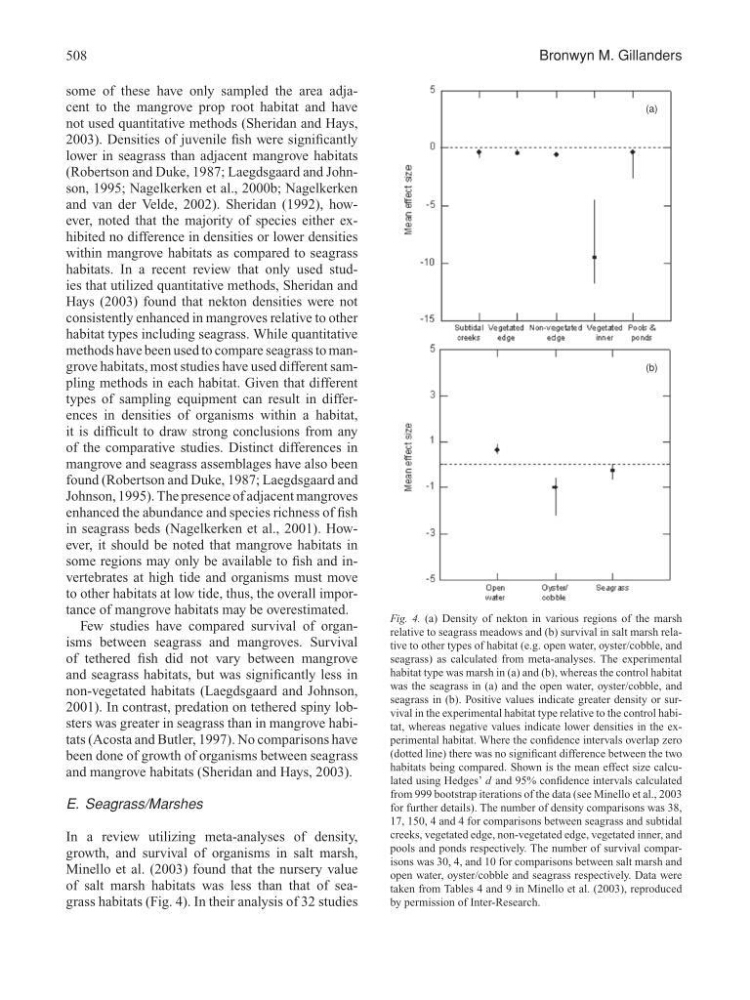
In a review utilizing meta-analyses of density,
growth, and survival of organisms in salt marsh,
Minello et al. (2003) found that the nursery value
of salt marsh habitats was less than that of seagrass habitats (Fig. 4). In their analysis of 32 studies
(a)
(b)
Fig. 4. (a) Density of nekton in various regions of the marsh
relative to seagrass meadows and (b) survival in salt marsh relative to other types of habitat (e.g. open water, oyster/cobble, and
seagrass) as calculated from meta-analyses. The experimental
habitat type was marsh in (a) and (b), whereas the control habitat
was the seagrass in (a) and the open water, oyster/cobble, and
seagrass in (b). Positive values indicate greater density or survival in the experimental habitat type relative to the control habitat, whereas negative values indicate lower densities in the experimental habitat. Where the confidence intervals overlap zero
(dotted line) there was no significant difference between the two
habitats being compared. Shown is the mean effect size calculated using Hedges’ d and 95% confidence intervals calculated
from 999 bootstrap iterations of the data (see Minello et al., 2003
for further details). The number of density comparisons was 38,
17, 150, 4 and 4 for comparisons between seagrass and subtidal
creeks, vegetated edge, non-vegetated edge, vegetated inner, and
pools and ponds respectively. The number of survival comparisons was 30, 4, and 10 for comparisons between salt marsh and
open water, oyster/cobble and seagrass respectively. Data were
taken from Tables 4 and 9 in Minello et al. (2003), reproduced
by permission of Inter-Research.
Bronwyn M. Gillanders
some of these have only sampled the area adjacent to the mangrove prop root habitat and have
not used quantitative methods (Sheridan and Hays,
2003). Densities of juvenile fish were significantly
lower in seagrass than adjacent mangrove habitats
(Robertson and Duke, 1987; Laegdsgaard and Johnson, 1995; Nagelkerken et al., 2000b; Nagelkerken
and van der Velde, 2002). Sheridan (1992), however, noted that the majority of species either exhibited no difference in densities or lower densities
within mangrove habitats as compared to seagrass
habitats. In a recent review that only used studies that utilized quantitative methods, Sheridan and
Hays (2003) found that nekton densities were not
consistently enhanced in mangroves relative to other
habitat types including seagrass. While quantitative
methods have been used to compare seagrass to mangrove habitats, most studies have used different sampling methods in each habitat. Given that different
types of sampling equipment can result in differences in densities of organisms within a habitat,
it is difficult to draw strong conclusions from any
of the comparative studies. Distinct differences in
mangrove and seagrass assemblages have also been
found (Robertson and Duke, 1987; Laegdsgaard and
Johnson, 1995). The presence of adjacent mangroves
enhanced the abundance and species richness of fish
in seagrass beds (Nagelkerken et al., 2001). However, it should be noted that mangrove habitats in
some regions may only be available to fish and invertebrates at high tide and organisms must move
to other habitats at low tide, thus, the overall importance of mangrove habitats may be overestimated.
Few studies have compared survival of organisms between seagrass and mangroves. Survival
of tethered fish did not vary between mangrove
and seagrass habitats, but was significantly less in
non-vegetated habitats (Laegdsgaard and Johnson,
2001). In contrast, predation on tethered spiny lobsters was greater in seagrass than in mangrove habitats (Acosta and Butler, 1997). No comparisons have
been done of growth of organisms between seagrass
and mangrove habitats (Sheridan and Hays, 2003).
E. Seagrass/Marshes
In a review utilizing meta-analyses of density,
growth, and survival of organisms in salt marsh,
Minello et al. (2003) found that the nursery value
of salt marsh habitats was less than that of seagrass habitats (Fig. 4). In their analysis of 32 studies
(a)
(b)
Fig. 4. (a) Density of nekton in various regions of the marsh
relative to seagrass meadows and (b) survival in salt marsh relative to other types of habitat (e.g. open water, oyster/cobble, and
seagrass) as calculated from meta-analyses. The experimental
habitat type was marsh in (a) and (b), whereas the control habitat
was the seagrass in (a) and the open water, oyster/cobble, and
seagrass in (b). Positive values indicate greater density or survival in the experimental habitat type relative to the control habitat, whereas negative values indicate lower densities in the experimental habitat. Where the confidence intervals overlap zero
(dotted line) there was no significant difference between the two
habitats being compared. Shown is the mean effect size calculated using Hedges’ d and 95% confidence intervals calculated
from 999 bootstrap iterations of the data (see Minello et al., 2003
for further details). The number of density comparisons was 38,
17, 150, 4 and 4 for comparisons between seagrass and subtidal
creeks, vegetated edge, non-vegetated edge, vegetated inner, and
pools and ponds respectively. The number of survival comparisons was 30, 4, and 10 for comparisons between salt marsh and
open water, oyster/cobble and seagrass respectively. Data were
taken from Tables 4 and 9 in Minello et al. (2003), reproduced
by permission of Inter-Research.