

Chapter 21 Seagrasses, Fish, and Fisheries
505
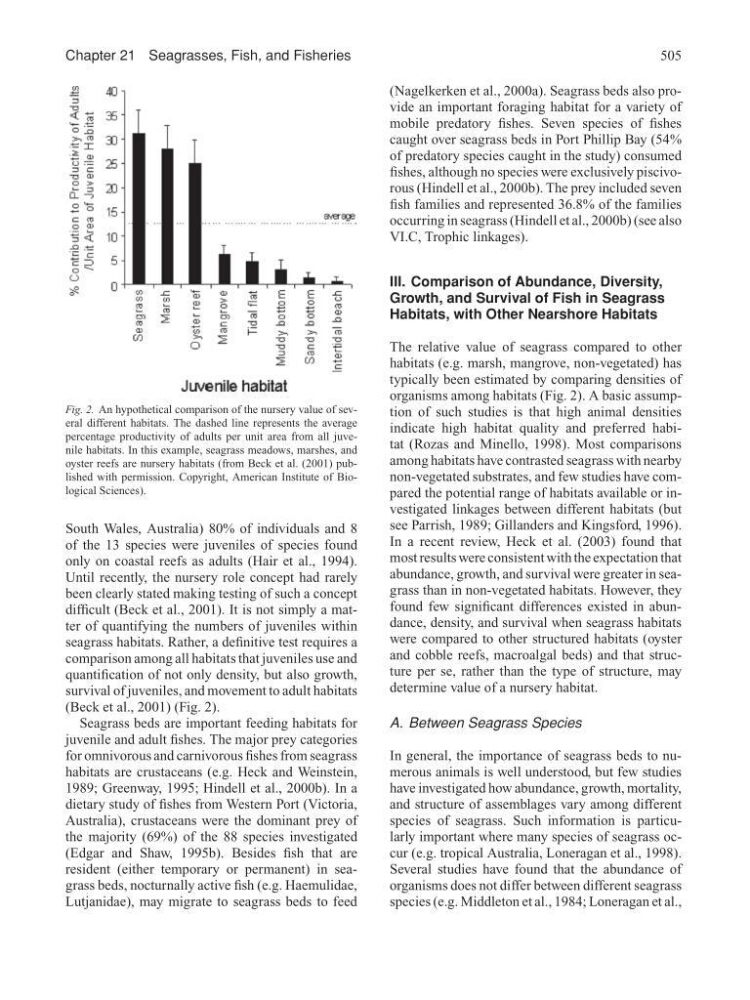
Fig. 2. An hypothetical comparison of the nursery value of several different habitats. The dashed line represents the average
percentage productivity of adults per unit area from all juvenile habitats. In this example, seagrass meadows, marshes, and
oyster reefs are nursery habitats (from Beck et al. (2001) published with permission. Copyright, American Institute of Biological Sciences).
South Wales, Australia) 80% of individuals and 8
of the 13 species were juveniles of species found
only on coastal reefs as adults (Hair et al., 1994).
Until recently, the nursery role concept had rarely
been clearly stated making testing of such a concept
difficult (Beck et al., 2001). It is not simply a matter of quantifying the numbers of juveniles within
seagrass habitats. Rather, a definitive test requires a
comparison among all habitats that juveniles use and
quantification of not only density, but also growth,
survival of juveniles, and movement to adult habitats
(Beck et al., 2001) (Fig. 2).
Seagrass beds are important feeding habitats for
juvenile and adult fishes. The major prey categories
for omnivorous and carnivorous fishes from seagrass
habitats are crustaceans (e.g. Heck and Weinstein,
1989; Greenway, 1995; Hindell et al., 2000b). In a
dietary study of fishes from Western Port (Victoria,
Australia), crustaceans were the dominant prey of
the majority (69%) of the 88 species investigated
(Edgar and Shaw, 1995b). Besides fish that are
resident (either temporary or permanent) in seagrass beds, nocturnally active fish (e.g. Haemulidae,
Lutjanidae), may migrate to seagrass beds to feed
(Nagelkerken et al., 2000a). Seagrass beds also provide an important foraging habitat for a variety of
mobile predatory fishes. Seven species of fishes
caught over seagrass beds in Port Phillip Bay (54%
of predatory species caught in the study) consumed
fishes, although no species were exclusively piscivorous (Hindell et al., 2000b). The prey included seven
fish families and represented 36.8% of the families
occurring in seagrass (Hindell et al., 2000b) (see also
VI.C, Trophic linkages).
III. Comparison of Abundance, Diversity,
Growth, and Survival of Fish in Seagrass
Habitats, with Other Nearshore Habitats
The relative value of seagrass compared to other
habitats (e.g. marsh, mangrove, non-vegetated) has
typically been estimated by comparing densities of
organisms among habitats (Fig. 2). A basic assumption of such studies is that high animal densities
indicate high habitat quality and preferred habitat (Rozas and Minello, 1998). Most comparisons
among habitats have contrasted seagrass with nearby
non-vegetated substrates, and few studies have compared the potential range of habitats available or investigated linkages between different habitats (but
see Parrish, 1989; Gillanders and Kingsford, 1996).
In a recent review, Heck et al. (2003) found that
most results were consistent with the expectation that
abundance, growth, and survival were greater in seagrass than in non-vegetated habitats. However, they
found few significant differences existed in abundance, density, and survival when seagrass habitats
were compared to other structured habitats (oyster
and cobble reefs, macroalgal beds) and that structure per se, rather than the type of structure, may
determine value of a nursery habitat.
A. Between Seagrass Species
In general, the importance of seagrass beds to numerous animals is well understood, but few studies
have investigated how abundance, growth, mortality,
and structure of assemblages vary among different
species of seagrass. Such information is particularly important where many species of seagrass occur (e.g. tropical Australia, Loneragan et al., 1998).
Several studies have found that the abundance of
organisms does not differ between different seagrass
species (e.g. Middleton et al., 1984; Loneragan et al.,
505
Fig. 2. An hypothetical comparison of the nursery value of several different habitats. The dashed line represents the average
percentage productivity of adults per unit area from all juvenile habitats. In this example, seagrass meadows, marshes, and
oyster reefs are nursery habitats (from Beck et al. (2001) published with permission. Copyright, American Institute of Biological Sciences).
South Wales, Australia) 80% of individuals and 8
of the 13 species were juveniles of species found
only on coastal reefs as adults (Hair et al., 1994).
Until recently, the nursery role concept had rarely
been clearly stated making testing of such a concept
difficult (Beck et al., 2001). It is not simply a matter of quantifying the numbers of juveniles within
seagrass habitats. Rather, a definitive test requires a
comparison among all habitats that juveniles use and
quantification of not only density, but also growth,
survival of juveniles, and movement to adult habitats
(Beck et al., 2001) (Fig. 2).
Seagrass beds are important feeding habitats for
juvenile and adult fishes. The major prey categories
for omnivorous and carnivorous fishes from seagrass
habitats are crustaceans (e.g. Heck and Weinstein,
1989; Greenway, 1995; Hindell et al., 2000b). In a
dietary study of fishes from Western Port (Victoria,
Australia), crustaceans were the dominant prey of
the majority (69%) of the 88 species investigated
(Edgar and Shaw, 1995b). Besides fish that are
resident (either temporary or permanent) in seagrass beds, nocturnally active fish (e.g. Haemulidae,
Lutjanidae), may migrate to seagrass beds to feed
(Nagelkerken et al., 2000a). Seagrass beds also provide an important foraging habitat for a variety of
mobile predatory fishes. Seven species of fishes
caught over seagrass beds in Port Phillip Bay (54%
of predatory species caught in the study) consumed
fishes, although no species were exclusively piscivorous (Hindell et al., 2000b). The prey included seven
fish families and represented 36.8% of the families
occurring in seagrass (Hindell et al., 2000b) (see also
VI.C, Trophic linkages).
III. Comparison of Abundance, Diversity,
Growth, and Survival of Fish in Seagrass
Habitats, with Other Nearshore Habitats
The relative value of seagrass compared to other
habitats (e.g. marsh, mangrove, non-vegetated) has
typically been estimated by comparing densities of
organisms among habitats (Fig. 2). A basic assumption of such studies is that high animal densities
indicate high habitat quality and preferred habitat (Rozas and Minello, 1998). Most comparisons
among habitats have contrasted seagrass with nearby
non-vegetated substrates, and few studies have compared the potential range of habitats available or investigated linkages between different habitats (but
see Parrish, 1989; Gillanders and Kingsford, 1996).
In a recent review, Heck et al. (2003) found that
most results were consistent with the expectation that
abundance, growth, and survival were greater in seagrass than in non-vegetated habitats. However, they
found few significant differences existed in abundance, density, and survival when seagrass habitats
were compared to other structured habitats (oyster
and cobble reefs, macroalgal beds) and that structure per se, rather than the type of structure, may
determine value of a nursery habitat.
A. Between Seagrass Species
In general, the importance of seagrass beds to numerous animals is well understood, but few studies
have investigated how abundance, growth, mortality,
and structure of assemblages vary among different
species of seagrass. Such information is particularly important where many species of seagrass occur (e.g. tropical Australia, Loneragan et al., 1998).
Several studies have found that the abundance of
organisms does not differ between different seagrass
species (e.g. Middleton et al., 1984; Loneragan et al.,