

Chapter 20 Grazing in Seagrass Ecosystems
483
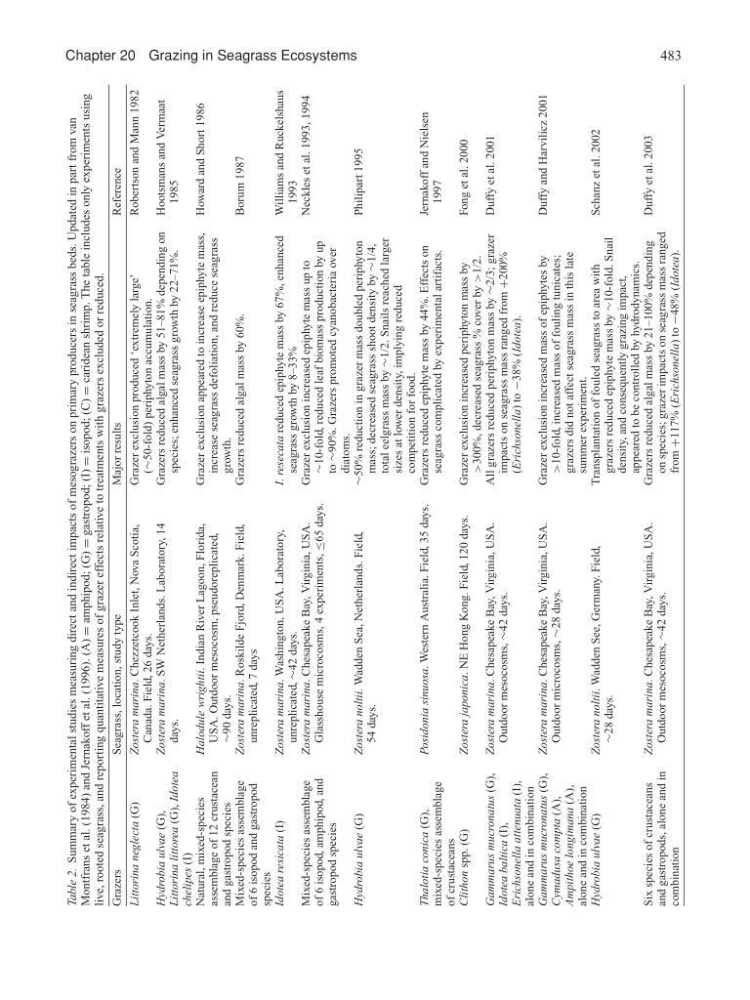
Table 2. Summary of experimental studies measuring direct and indirect impacts of mesograzers on primary producers in seagrass beds. Updated in part from van
Montfrans et al. (1984) and Jernakoff et al. (1996). (A)
= amphipod; (G)
= gastropod; (I)
= isopod; (C)
= caridean shrimp. The table includes only experiments using
live, rooted seagrass, and reporting quantitative measures of grazer effects relative to treatments with grazers excluded or reduced.
Grazers
Seagrass, location, study type
Major results
Reference
Littorina neglecta (G)
Zostera marina. Chezzetcook Inlet, Nova Scotia,
Canada. Field, 26 days.
Grazer exclusion produced ‘extremely large’
(∼50-fold) periphyton accumulation.
Robertson and Mann 1982
Hydrobia ulvae (G),
Littorina littorea (G), Idotea
chelipes (I)
Zostera marina. SW Netherlands. Laboratory, 14
days.
Grazers reduced algal mass by 51–81% depending on
species; enhanced seagrass growth by 22–71%.
Hootsmans and Vermaat
1985
Natural, mixed-species
assemblage of 12 crustacean
and gastropod species
Halodule wrightii. Indian River Lagoon, Florida,
USA. Outdoor mesocosm, pseudoreplicated,
∼90 days.
Grazer exclusion appeared to increase epiphyte mass,
increase seagrass defoliation, and reduce seagrass
growth.
Howard and Short 1986
Mixed-species assemblage
of 6 isopod and gastropod
species
Zostera marina. Roskilde Fjord, Denmark. Field,
unreplicated, 7 days
Grazers reduced algal mass by 60%.
Borum 1987
Idotea resicata (I)
Zostera marina. Washington, USA. Laboratory,
unreplicated,
∼42 days.
I. resecata reduced epiphyte mass by 67%, enhanced
seagrass growth by 8–33%
Williams and Ruckelshaus
1993
Mixed-species assemblage
of 6 isopod, amphipod, and
gastropod species
Zostera marina. Chesapeake Bay, Virginia, USA.
Glasshouse microcosms, 4 experiments,
≤65 days.
Grazer exclusion increased epiphyte mass up to
∼10-fold, reduced leaf biomass production by up
to
∼90%. Grazers promoted cyanobacteria over
diatoms.
Neckles et al. 1993, 1994
Hydrobia ulvae (G)
Zostera noltii. Wadden Sea, Netherlands. Field,
54 days.
∼50% reduction in grazer mass doubled periphyton
mass; decreased seagrass shoot density by
∼1/4,
total eelgrass mass by
∼1/2. Snails reached larger
sizes at lower density, implying reduced
competition for food.
Philipart 1995
Thalotia conica (G),
mixed-species assemblage
of crustaceans
Posidonia sinuosa. Western Australia. Field, 35 days.
Grazers reduced epiphyte mass by 44%. Effects on
seagrass complicated by experimental artifacts.
Jernakoff and Nielsen
1997
Clithon spp. (G)
Zostera japonica. NE Hong Kong. Field, 120 days.
Grazer exclusion increased periphyton mass by
>300%, decreased seagrass % cover by
>1/2.
Fong et al. 2000
Gammarus mucronatus (G),
Idotea baltica (I),
Erichsonella attenuata (I),
alone and in combination
Zostera marina. Chesapeake Bay, Virginia, USA.
Outdoor mesocosms,
∼42 days.
All grazers reduced periphyton mass by
∼2/3; grazer
impacts on seagrass mass ranged from
+200%
(Erichsonella) to
−38% (Idotea).
Duffy et al. 2001
Gammarus mucronatus (G),
Cymadusa compta (A),
Ampithoe longimana (A),
alone and in combination
Zostera marina. Chesapeake Bay, Virginia, USA.
Outdoor microcosms,
∼28 days.
Grazer exclusion increased mass of epiphytes by
>10-fold, increased mass of fouling tunicates;
grazers did not affect seagrass mass in this late
summer experiment.
Duffy and Harvilicz 2001
Hydrobia ulvae (G)
Zostera noltii. Wadden See, Germany. Field,
∼28 days.
Transplantation of fouled seagrass to area with
grazers reduced epiphyte mass by
∼10-fold. Snail
density, and consequently grazing impact,
appeared to be controlled by hydrodynamics.
Schanz et al. 2002
Six species of crustaceans
and gastropods, alone and in
combination
Zostera marina. Chesapeake Bay, Virginia, USA.
Outdoor mesocosms,
∼42 days.
Grazers reduced algal mass by 21–100% depending
on species; grazer impacts on seagrass mass ranged
from
+117% (Erichsonella) to
−48% (Idotea).
Duffy et al. 2003
483
Table 2. Summary of experimental studies measuring direct and indirect impacts of mesograzers on primary producers in seagrass beds. Updated in part from van
Montfrans et al. (1984) and Jernakoff et al. (1996). (A)
= amphipod; (G)
= gastropod; (I)
= isopod; (C)
= caridean shrimp. The table includes only experiments using
live, rooted seagrass, and reporting quantitative measures of grazer effects relative to treatments with grazers excluded or reduced.
Grazers
Seagrass, location, study type
Major results
Reference
Littorina neglecta (G)
Zostera marina. Chezzetcook Inlet, Nova Scotia,
Canada. Field, 26 days.
Grazer exclusion produced ‘extremely large’
(∼50-fold) periphyton accumulation.
Robertson and Mann 1982
Hydrobia ulvae (G),
Littorina littorea (G), Idotea
chelipes (I)
Zostera marina. SW Netherlands. Laboratory, 14
days.
Grazers reduced algal mass by 51–81% depending on
species; enhanced seagrass growth by 22–71%.
Hootsmans and Vermaat
1985
Natural, mixed-species
assemblage of 12 crustacean
and gastropod species
Halodule wrightii. Indian River Lagoon, Florida,
USA. Outdoor mesocosm, pseudoreplicated,
∼90 days.
Grazer exclusion appeared to increase epiphyte mass,
increase seagrass defoliation, and reduce seagrass
growth.
Howard and Short 1986
Mixed-species assemblage
of 6 isopod and gastropod
species
Zostera marina. Roskilde Fjord, Denmark. Field,
unreplicated, 7 days
Grazers reduced algal mass by 60%.
Borum 1987
Idotea resicata (I)
Zostera marina. Washington, USA. Laboratory,
unreplicated,
∼42 days.
I. resecata reduced epiphyte mass by 67%, enhanced
seagrass growth by 8–33%
Williams and Ruckelshaus
1993
Mixed-species assemblage
of 6 isopod, amphipod, and
gastropod species
Zostera marina. Chesapeake Bay, Virginia, USA.
Glasshouse microcosms, 4 experiments,
≤65 days.
Grazer exclusion increased epiphyte mass up to
∼10-fold, reduced leaf biomass production by up
to
∼90%. Grazers promoted cyanobacteria over
diatoms.
Neckles et al. 1993, 1994
Hydrobia ulvae (G)
Zostera noltii. Wadden Sea, Netherlands. Field,
54 days.
∼50% reduction in grazer mass doubled periphyton
mass; decreased seagrass shoot density by
∼1/4,
total eelgrass mass by
∼1/2. Snails reached larger
sizes at lower density, implying reduced
competition for food.
Philipart 1995
Thalotia conica (G),
mixed-species assemblage
of crustaceans
Posidonia sinuosa. Western Australia. Field, 35 days.
Grazers reduced epiphyte mass by 44%. Effects on
seagrass complicated by experimental artifacts.
Jernakoff and Nielsen
1997
Clithon spp. (G)
Zostera japonica. NE Hong Kong. Field, 120 days.
Grazer exclusion increased periphyton mass by
>300%, decreased seagrass % cover by
>1/2.
Fong et al. 2000
Gammarus mucronatus (G),
Idotea baltica (I),
Erichsonella attenuata (I),
alone and in combination
Zostera marina. Chesapeake Bay, Virginia, USA.
Outdoor mesocosms,
∼42 days.
All grazers reduced periphyton mass by
∼2/3; grazer
impacts on seagrass mass ranged from
+200%
(Erichsonella) to
−38% (Idotea).
Duffy et al. 2001
Gammarus mucronatus (G),
Cymadusa compta (A),
Ampithoe longimana (A),
alone and in combination
Zostera marina. Chesapeake Bay, Virginia, USA.
Outdoor microcosms,
∼28 days.
Grazer exclusion increased mass of epiphytes by
>10-fold, increased mass of fouling tunicates;
grazers did not affect seagrass mass in this late
summer experiment.
Duffy and Harvilicz 2001
Hydrobia ulvae (G)
Zostera noltii. Wadden See, Germany. Field,
∼28 days.
Transplantation of fouled seagrass to area with
grazers reduced epiphyte mass by
∼10-fold. Snail
density, and consequently grazing impact,
appeared to be controlled by hydrodynamics.
Schanz et al. 2002
Six species of crustaceans
and gastropods, alone and in
combination
Zostera marina. Chesapeake Bay, Virginia, USA.
Outdoor mesocosms,
∼42 days.
Grazers reduced algal mass by 21–100% depending
on species; grazer impacts on seagrass mass ranged
from
+117% (Erichsonella) to
−48% (Idotea).
Duffy et al. 2003